

How Is Cottonseed Oil Separated into Olein and Stearin? A 4-Step Guide to Fractionation
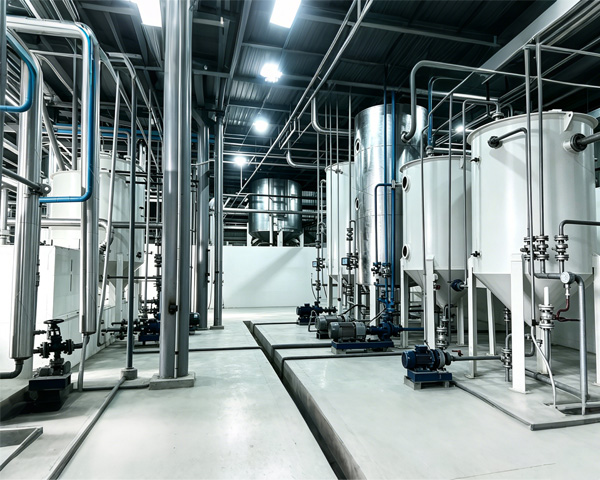
Cottonseed oil is one of the world’s major edible oils. Its fatty acid composition contains approximately 21.6%–24.8% palmitic acid and up to 44.9%–55.0% linoleic acid. However, with a melting point of about 10–15.6°C, cottonseed oil tends to become cloudy and crystallize in low-temperature winter conditions, limiting its application as a high-grade edible oil.
Cottonseed oil fractionation is the key to solving this problem. Through dry fractionation, refined cottonseed oil can be separated into liquid olein (cottonseed olein) and solid stearin – two products that significantly enhance the added value and market adaptability of cottonseed oil. This article breaks down the complete fractionation process in 4 detailed steps.
I. What Is Cottonseed Oil Fractionation?
Cottonseed oil fractionation, also known as dry fractionation, is a solvent-free, zero-wastewater physical separation process. It utilizes the differences in melting points and solubility of various triglycerides in cottonseed oil, separating liquid oil (olein) from solid stearin (stearic fat) through controlled cooling crystallization and solid-liquid separation.
Fractionation Products at a Glance
| Product | Characteristics | Typical Ratio | Main Applications |
|---|---|---|---|
| Cottonseed Olein (Liquid Oil) | Rich in unsaturated fatty acids, smoke point ≥220°C, good oxidative stability | 70%-75% | Premium salad oil, frying oil, blended oil |
| Cottonseed Stearin (Solid Stearin) | Higher melting point, high saturated fatty acid content | 25%-30% | Shortening, margarine, cocoa butter substitute |
💡 Key Data: Over 95% of industrial cottonseed oil fractionation uses dry fractionation, achieving the best balance between cost efficiency and environmental protection.
II. Detailed 4-Step Cottonseed Oil Fractionation Process
Step 1: Melting and Heating – Eliminating the “Memory Effect”
Refined cottonseed oil first enters the crystallization tank, where it is heated to 50–60°C and continuously stirred at this temperature for at least 30–60 minutes.
Why is this step necessary?
Oils form various crystal structures during storage and transportation. If these “crystal memories” are not thoroughly eliminated, subsequent cooling will result in poor crystal formation and excessive oil entrapment, severely affecting separation efficiency. The purpose of melting and heating is to destroy the original crystal structure in the oil, ensuring all lipid components are completely melted and reach a uniform state, laying a solid foundation for subsequent crystallization.
Core Equipment: Crystallization tank (with heating and agitation functions)
Step 2: Cooling Crystallization – Precision Temperature Control Is Key
This is the most critical step in the fractionation process, divided into two stages:
Stage 1: Rapid Cooling to Nucleation (5-10°C per hour)
The melted cottonseed oil is cooled at a relatively fast rate to 30–35°C. At this point, high-melting-point triglycerides begin to reach saturation and prepare to form crystal nuclei.
Stage 2: Slow Cooling to Final Crystallization Temperature (0.5-3°C per hour)
Once the crystallization point is reached, the cooling rate must be reduced to 0.5–3°C per hour, allowing crystals to grow slowly. Slow cooling promotes the formation of large, stable β’ crystals, which are easy to filter and do not entrap excessive liquid oil.
Selecting the Final Temperature:
- Lower temperature (15-20°C) → Produces more and clearer liquid oil
- Higher temperature → Produces more stearin
After reaching the final temperature, continue slow stirring for 4-12 hours to ensure a stable and uniform crystal structure, facilitating solid-liquid separation. Agitation speed is typically controlled at 10-15 RPM.
Three-Stage Fractionation Depth (Huatai Process Example)
| Stage | Temperature | Objective |
|---|---|---|
| Primary Fractionation (Dewaxing) | 15°C | Removes waxes and high-melting-point solid fats |
| Secondary Fractionation (Main Fractionation) | 6-8°C | Separates palmitic triglycerides to obtain primary olein |
| Tertiary Fractionation (Deep Fractionation) | -5 to -10°C | Removes monoglycerides, diglycerides, and stearin to obtain high-quality olein that remains clear at 0°C for ≥8 hours |
Core Equipment: Crystallization tank (with cooling jacket and low-speed agitation system), refrigeration system (chilled water 15-20°C + coolant -5-0°C)
Step 3: Solid-Liquid Separation – Determining Yield and Quality
After crystal growth is complete, the crystallized oil slurry (a mixture of liquid oil and solid stearin crystals) is separated at a low temperature of 15–25°C. The main separation equipment includes:
🔹 Membrane Filter Press (Mainstream Choice)
The membrane filter press is currently the mainstream separation equipment in the cottonseed oil fractionation industry. After filtration, the system applies controlled pressure (0.4–1.5 MPa) to the filter cake, extracting residual liquid oil from the crystals through cake compression.
💡 Key Data: The membrane filter press can increase liquid oil yield by over 5% and produce stearin with lower oil content.
🔹 Vacuum Filter
Uses vacuum suction for filtration, with extremely high requirements for the stability and uniformity of β’ crystals. Advantages include continuous feeding and high automation.
🔹 Centrifuge
Suitable for separation scenarios with specific process requirements.
Core Equipment: Membrane filter press, vacuum filter, centrifuge
Step 4: Product Output – Liquid Olein and Solid Stearin
After solid-liquid separation, two independent products are obtained:
Liquid Oil (Cottonseed Olein)
Rich in unsaturated fatty acids, with high smoke point and flash point, and good oxidative stability. Premium salad oil can remain clear at 0°C for ≥5.5 hours. High-cold-resistance oil does not solidify at -5°C, making it suitable for northern regions and export markets. It serves as a premium base oil for frying oil and salad oil.
Solid Stearin (Cottonseed Stearin)
Has a higher melting point and can be used as raw material for shortening, margarine, and cocoa butter substitutes. It is also a hydrogenation feedstock and can partially replace palm stearin.
Core Equipment: Finished oil storage tanks, filling equipment
III. 5 Key Factors Affecting Cottonseed Oil Fractionation
| Factor | Impact | Optimization Suggestions |
|---|---|---|
| Crystallization Temperature | Determines product type and yield | Select final temperature based on target product (6-8°C for main fractionation, -5 to -10°C for deep fractionation) |
| Cooling Rate | Too fast produces fine crystals that entrap oil; too slow reduces efficiency | Control at 0.5-3°C per hour to promote large crystal formation |
| Raw Material Quality | Impurities interfere with crystal formation; palmitic acid content (21.6%-24.8%) determines stearin yield | Ensure refining quality meets standards – this is the foundation of fractionation |
| Agitation Intensity | Moderate agitation promotes uniform crystal growth; excessive agitation destroys crystals | Control at 10-15 RPM |
| Filtration Process | Improper pressure and temperature control affects separation efficiency | Precisely control pressure (membrane press 0.2-0.4 MPa), add filter aids when necessary |
Core Equipment: PLC automation control system – enables precise control of temperature, agitation, and cooling rate to ensure batch-to-batch stability
IV. Fractionated Cottonseed Oil vs Refined Cottonseed Oil vs Crude Cottonseed Oil
| Comparison Item | Fractionated Cottonseed Oil | Refined Cottonseed Oil | Crude Cottonseed Oil |
|---|---|---|---|
| Processing Steps | Further physical fractionation after refining (heating → crystallization → filtration) | Chemical/physical refining: degumming, neutralization, bleaching, deodorization | Direct pressing or solvent extraction, no refining |
| Appearance | Liquid oil clear and transparent; stearin white solid | Light yellow, transparent; crystallizes at low temperatures | Dark color, cloudy appearance |
| Smoke Point | Liquid oil: ≥220°C | ≥210°C | Approx. 160-180°C |
| Gossypol Content | None | <0.02% | Approx. 1%, rich in free gossypol |
| Main Uses | Liquid oil: premium salad oil, frying oil; stearin: shortening, margarine | General edible oil | Not for direct consumption; industrial oil raw material only |
V. Cottonseed Oil Fractionation Plant Investment Cost Reference
| Processing Capacity (Tons/Day) | Estimated Investment Cost (USD) | Main Components |
|---|---|---|
| 1-10 tons/day | $80,000–$200,000 | Crystallization tanks, filter presses, cooling units, basic control system |
| 10-20 tons/day | $200,000–$420,000 | Continuous crystallization system, large-area filter presses, PLC automation control |
| 20-50 tons/day | $420,000–$850,000 | Multiple crystallization towers, large filter presses, central control room |
When selecting cottonseed oil fractionation equipment, processing scale, automation level, and budget constraints should all be considered.
VI. Huatai Cottonseed Oil Fractionation Solutions
Henan Huatai Intelligent Equipment Group specializes in the design and installation of cottonseed oil fractionation equipment and cottonseed oil production lines, with over 38 years of industry experience:
Core Equipment Configuration:
- Crystallization System: Horizontal/vertical crystallization tanks (with cooling jacket, low-speed agitation)
- Refrigeration System: Chilled water (15-20°C) + coolant (-5-0°C)
- Separation Equipment: Membrane filter press (mainstream), vacuum filter, centrifuge
- Automation Control System: PLC temperature control, agitation control, cooling rate control
Service Scope:
- 10–5,000 tons/day oilseed pretreatment projects
- 10–500 tons/day oil fractionation projects
- Full support from initial consultation to installation and personnel training
- Turnkey projects: design, manufacturing, installation, commissioning, training
Cottonseed oil fractionation efficiently separates refined cottonseed oil into two high-value products – liquid olein and solid stearin – through 4 key steps: melting and heating, cooling crystallization, solid-liquid separation, and product output.
The core of the fractionation process lies in precise temperature control and scientific cooling rate management. Whether choosing a membrane filter press or a vacuum filter, a reliable set of oil fractionation equipment is the key to ensuring fractionation results and product yield.
If you are planning a cottonseed oil fractionation project, Huatai Group can provide full-process services from process design and equipment manufacturing to installation and commissioning. Please contact Huatai for a customized cottonseed oil fractionation solution and quotation.