

Cold-Pressed Oil vs Refined Oil: A Complete Comparison of Process, Nutrition, Flavor, and Applications
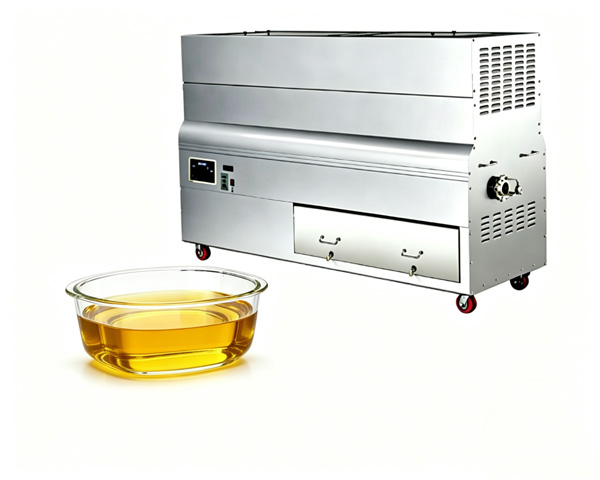
In the edible oil market, cold-pressed oil and refined oil are the two most common product types. Each has its own characteristics and is suitable for different cooking needs and health goals. So what exactly is the difference between cold-pressed and refined oils? Which one is right for you? This article provides a detailed comparison across five dimensions – processing technology, nutritional content, flavor and color, health effects, and applications – to help you make an informed choice.
I. Processing Technology: Low-Temperature Physical vs Multi-Step Refining
Cold-Pressed Oil Process
Cold-pressed oil is edible oil extracted directly from oilseeds through low-temperature pressing (typically between 40-60°C). The entire process uses no chemical solvents and involves no high-temperature treatment. The typical process flow is: oilseed cleaning → low-temperature pressing → filtration → filling.
Core equipment includes: cold press equipment (such as hydraulic oil presses or low-temperature screw presses), plate-and-frame filters, and filling machines. The cold-pressing process maximizes the retention of the oil’s natural state.
Refined Oil Process
Refined oil, on the other hand, is crude oil that undergoes a series of refining treatments to remove impurities, pigments, free fatty acids, and odors, improving the oil’s stability and safety. The refining process typically includes degumming, deacidification, bleaching, and deodorization, involving various methods such as sedimentation, centrifugation, alkali refining, adsorption, and steam distillation.
A complete edible oil refining production line includes degumming tanks, alkali refining reactors, bleaching towers, deodorization towers, leaf filters, and other equipment. Refined oils are clear, transparent, mild in flavor, and have a long shelf life.
Summary
– Cold-pressed oil: Physical low-temperature extraction, no chemical additives
– Refined oil: Multi-step chemical + physical refining, thorough impurity removal
II. Nutritional Content: Cold-Pressed Oils Retain More Nutrients
Because the cold-pressing process uses low temperatures (40-60°C) and no chemical solvents or additives, cold-pressed oils retain more natural nutrients, including:
– Unsaturated fatty acids (such as linoleic acid, linolenic acid, and oleic acid)
– Vitamin E (natural antioxidant)
– Phytosterols
– Polyphenolic compounds
These components have positive effects on the nervous system, bone health, and brain development, and help prevent atherosclerosis and cardiovascular diseases.
During the refining process, however – especially under high temperatures (180-240°C) and chemical treatment – some heat-sensitive nutrients may be destroyed or degraded. For example, vitamin E loss can reach 20-40%, and polyphenolic compounds are also significantly reduced. Therefore, refined oils are inferior to cold-pressed oils in terms of nutrient retention.
III. Flavor and Color: Rich and Natural vs Light and Transparent
Cold-Pressed Oil
Cold-pressed oils have rich, natural flavors and aromas because low-temperature pressing better preserves the raw material’s color, aroma, and taste. For example, cold-pressed peanut oil has a strong peanut aroma, and cold-pressed sesame oil has a rich, mellow fragrance. Cold-pressed oils are typically golden or dark yellow in color and may be slightly cloudy.
Refined Oil
Refined oils have pigments and odorous substances removed during bleaching and deodorization, resulting in relatively mild flavors – almost colorless, odorless, or very light in color. For example, refined soybean oil and refined rapeseed oil are clear and transparent, making them suitable for cooking scenarios where a neutral flavor profile is desired.
IV. Health Effects: Each Has Advantages and Risks
Health Benefits and Risks of Cold-Pressed Oil
– Advantages: Retains more nutrients beneficial to human health. For example, unsaturated fatty acids help lower cholesterol and prevent cardiovascular diseases.
– Potential risks: If the oilseed crops have issues such as pesticide residues, heavy metals, or mycotoxins, these harmful substances may also remain in the cold-pressed oil, as the cold-pressing process does not include refining steps to remove them.
Health Benefits and Risks of Refined Oil
– Advantages: The refining process removes impurities, free fatty acids, pigments, odors, and potential harmful substances from crude oil (such as pesticide residues, polycyclic aromatic hydrocarbons, and aflatoxins), resulting in lower potential health risks.
– Potential risks: If excessive chemical additives are used during refining or if improper treatment methods are applied (such as excessive heat leading to trans fatty acid formation), it may also pose health risks. Refined oils produced by reputable manufacturers generally meet food safety standards.
V. Applications: Each Excels in Different Areas
| Application Scenario | Recommended Oil | Reason |
| Premium cooking, cold dishes, low-temperature stir-frying | Cold-pressed oil | Preserves natural flavor and nutrition |
| Direct consumption (e.g., bread dipping, salad dressing) | Cold-pressed oil | Rich flavor, high nutritional value |
| Health supplements, cosmetics | Cold-pressed oil | Natural ingredients, high bioactivity |
| High-temperature frying, deep-frying | Refined oil | High smoke point (up to 220°C+), good thermal stability |
| Food industry (baking, fried snacks) | Refined oil | Neutral flavor, long shelf life, cost-effective |
| Pharmaceuticals (softgels, injectable oils) | Refined oil | High purity, excellent safety profile |
Cold-pressed oils are commonly used in premium cooking, direct consumption, health supplements, and cosmetics. Refined oils are widely used in high-temperature cooking, food processing, pharmaceuticals, and especially in applications requiring high-temperature treatment.
VI. How to Choose – Based on Your Needs
If you prioritize:
– Natural flavor, nutritional content, and no chemical additives → Choose cold-pressed oil, and ensure the raw material source is safe and reliable
– Stability, shelf life, high-temperature safety, and lower health risks → Choose refined oil, preferably from reputable manufacturers
Practical application suggestions:
– Daily cold dishes and low-temperature cooking at home: choose cold-pressed flaxseed oil, cold-pressed olive oil, or cold-pressed peanut oil
– Frying, baking, and large-scale food processing: choose refined soybean oil, refined palm oil, or refined rapeseed oil
– Use both in combination: cold-pressed oil for flavor enhancement and nutritional supplementation, refined oil for high-temperature cooking
VII. Equipment Support: Choosing Between Cold-Pressing and Refining Production Lines
For oil mill investors, the choice between producing cold-pressed oil or refined oil determines the configuration direction of pressing equipment and refining equipment.
– Cold-pressed oil production line: Main configurations include cold press equipment (hydraulic oil presses or low-temperature screw presses), plate-and-frame filters, and filling machines. Suitable for small-scale, high-value-added production.
– Refined oil production line: Requires a complete edible oil refining production line, including degumming, deacidification, bleaching, deodorization sections, as well as supporting vacuum systems, thermal oil heaters, heat exchangers, etc. Suitable for large-scale industrial production.
Huatai Group has 38 years of experience in oil equipment manufacturing and provides complete edible oil processing equipment from cold-pressing to refining, meeting the needs of different scales and product positioning. Whether you plan to produce premium cold-pressed oils or mass-market refined oils, we can tailor solutions for you.
Cold-pressed oils and refined oils each have their own characteristics and advantages – neither is inherently better than the other. Cold-pressed oils excel in natural flavor and rich nutrition, making them ideal for consumers seeking natural and healthy products. Refined oils are known for their purity, stability, safety, and high-temperature resistance, making them suitable for everyday cooking and the food industry. The choice should be based on your personal needs, cooking habits, and health considerations.
If you are planning an edible oil processing project, please contact Huatai Group. We will recommend the most suitable cold press equipment or refining equipment solution based on your product positioning, helping you produce high-quality edible oils.