Unpowered Drum Magnetic Separator | Permanent Magnet Iron Remover | Grain and Oilseed Magnetic Separation Equipment | Huatai Magnetic Separator
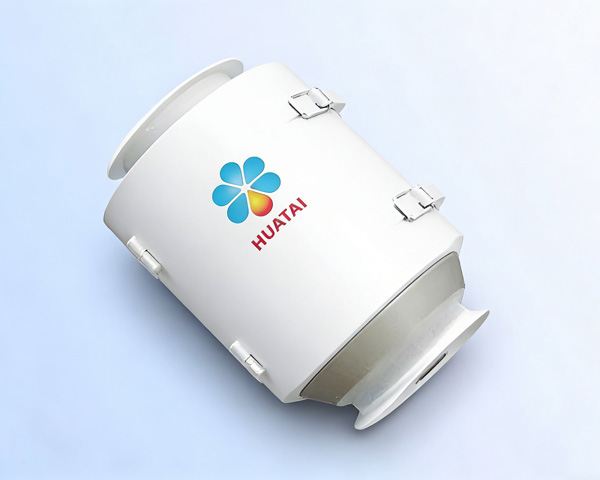
The magnetic separator is a piece of equipment frequently used in oilseed pretreatment. Although the content of metal impurities in oilseeds is generally low, they are highly harmful, easily causing damage to equipment, especially some high-speed rotating machinery, and may even lead to serious equipment accidents and safety incidents. The Huatai unpowered drum magnetic separator uses high-strength permanent magnets to efficiently remove ferromagnetic impurities from grain and oilseeds without the need for electricity, effectively protecting downstream equipment such as crushers and flaking mills. The equipment consists of an upper flange inlet, a diverging umbrella cap, multi-stage magnetic core assembly, a rotating door, a housing, and a lower flange outlet, featuring a compact structure. The magnetic core can be withdrawn with the rotating door, facilitating manual cleaning of adsorbed iron debris. The multi-ring magnetic circuit design creates a gradient magnetic field, ensuring even fine iron filings are effectively captured, resulting in high iron removal efficiency. Suitable for industries such as feed, grain and oil, brewing, and solvents, it is an ideal iron removal pretreatment device.
Working Principle of Magnetic Separator
Material flows vertically into the equipment through the upper flange port, first striking the diverging umbrella cap, where it is evenly dispersed and falls as an annular curtain. As the material flows past the three strong magnetic rings, the ferromagnetic impurities within are instantly adsorbed onto the surface of the magnetic rings, while the clean material continues to fall and is discharged through the outlet. The magnetic core adopts an open magnetic circuit design, providing a large magnetic field penetration depth, ensuring effective iron removal even with thicker material layers. Periodically open the rotating door, withdraw the magnetic core, manually clean off the adsorbed iron debris, and it is ready for use again.
Product Features
- Efficient Magnetic Circuit Design: Three magnetic rings form magnetic fields of different strengths, with the middle ring having the strongest field, effectively adsorbing fine iron filings.
- Zero Energy Consumption Operation: No motor or electromagnet required, operates entirely on permanent magnets, energy-saving with no temperature rise.
- Simple Structure, Easy Maintenance: The magnetic core can be completely withdrawn for quick cleaning; the housing uses flange connections, making it easy to connect in series within existing pipelines.
- Strong Adaptability: Material flow velocity 0.15~0.25 m/s, material layer thickness ≤12mm, distance between magnetic pole face and material ≤10mm, ensuring optimal iron removal effect.
- Long-lasting Magnetic Force: Uses high-quality permanent magnet materials, with magnetic decay rate less than 5% over five years; periodic magnetization allows for long-term use.
- Multiple Material Options: Housing can be made of painted carbon steel or stainless steel to meet food-grade hygiene requirements.
- Safe and Reliable: Purely mechanical structure, no electrical hazards, suitable for explosion-proof environments.
| Model | Capacity (t/h) | Diameter (mm) | Magnetic Field Intensity (GS) |
| TXCT15 | 15 t/h | 150 mm | ≥3000 |
| TXCT25 | 50 t/h | 250 mm | ≥3000 |
| TXCT30 | 70 t/h | 300 mm | ≥3000 |
| TXCT40 | 75 t/h | 400 mm | ≥3000 |
| TXCT50 | 80 t/h | 460 mm | ≥3000 |
Usage Precautions of Magnetic Separator
- Flow Velocity Control: The flow velocity of material through the magnetic separator should be controlled at 0.15~0.25 m/s; excessive speed will reduce iron removal efficiency.
- Uniform Material Layer: Ensure the material falls in a uniform thin layer via the diverging umbrella cap, with thickness not exceeding 12mm.
- Gap Adjustment: The distance between the magnetic pole face and the material surface should be ≤10mm, achievable by adjusting the position of the diverging umbrella.
- Regular Cleaning: Depending on the iron content of the raw material, clean the magnetic core at least 1-2 times per shift to prevent iron accumulation from causing magnetic field short-circuiting.
- Magnetic Force Check: Use a Tesla meter every six months to check the surface magnetic field strength of the magnetic rings; if significant decay occurs, recharge or replace the magnetic core promptly.
- Installation Orientation: Must be installed vertically, with upper and lower flanges sealed and connected to the pipeline to avoid material flow deviation.
Installation and Maintenance Guide
- Installation Location: Should be positioned as close as possible to the equipment being protected (e.g., before a crusher) and installed on a vertical pipe section.
- Connection Method: Connect upper and lower flanges to the pipeline using flexible connections or direct bolting to ensure a leak-proof seal.
- First Use: Check if the sealing strip of the magnetic core rotating door is intact, ensuring it closes tightly.
- Daily Maintenance: Clean the magnetic core every shift, record the amount of iron debris removed; a significant increase should prompt an inspection for upstream equipment wear.
- Annual Maintenance: Dismantle the magnetic core, rinse with clean water and air dry, check magnetic field strength, and recharge if necessary.
FAQ
Q: Does the magnetic separator require power?
A: No. This equipment uses permanent magnets and relies entirely on the magnetic field to adsorb iron impurities; no external power source is required.
Q: Will the magnetic force weaken over time?
A: High-quality permanent magnet materials have extremely slow magnetic decay under normal use conditions, generally requiring no re-magnetization within five years. Prolonged exposure to high temperatures (>80°C) or strong vibration environments may accelerate decay, and regular testing is recommended.
Q: How to clean the adsorbed iron impurities?
A: Open the rotating door, withdraw the entire magnetic core, and wipe or brush off the surface iron debris with a cloth or brush. Be careful not to strike the magnetic rings with hard objects to avoid demagnetization.
Q: Can multiple units be used in series?
A: Yes. For raw materials with high iron content, it is recommended to connect two magnetic separators in series at the feed section, or use them in combination with permanent magnetic drums or magnetic grate bars to achieve multi-stage iron removal.
Q: Is the magnetic core corrosion-resistant?
A: The magnetic core is typically enclosed in stainless steel, providing good rust resistance. When processing corrosive materials, all-stainless steel housings and specially surface-treated magnetic cores can be selected.