

How Is Oilseed Pretreatment Done? 6 Steps from Cleaning to Conditioning Explained Simply
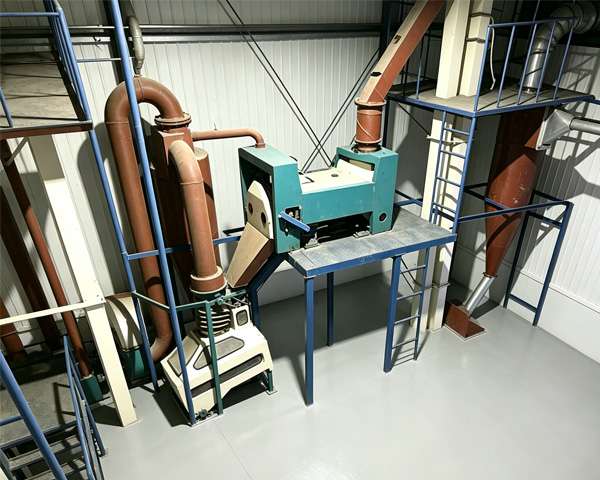
In the edible oil processing industry, there’s a well-known saying: “70% of the yield comes from pretreatment; 30% comes from pressing.” It means that the final oil yield largely depends on what happens before the oilseeds ever reach the press—the pretreatment stage.
Whether you’re processing soybeans, sunflower seeds, peanuts, rapeseed, or cottonseed, raw oilseeds inevitably contain impurities from harvesting and storage. Their cellular structure also naturally “locks” the oil inside. Pressing oilseeds without pretreatment leads to lower yields, faster equipment wear, and inconsistent oil quality.
So what exactly does oilseed pretreatment involve, and what does each step accomplish? This article walks you through 6 essential steps from start to finish.
I. Cleaning: Keeping Contaminants Out of Your Plant
When oilseeds arrive from the field, they often carry stones, dirt, twine, metal fragments, and even insect-damaged kernels. Skipping proper cleaning creates three major problems:
- Stones and metal damage core equipment like crushers and flaking mills
- Dust and soil contaminate the oil, affecting final product quality
- Moldy kernels introduce harmful substances, increasing the burden on downstream refining
Typical equipment in the cleaning section includes:
- Vibrating Screens: Separate oilseeds from coarse impurities by particle size
- Gravity Destoners: Remove stones using differences in density
- Magnetic Separators: Capture iron filings and metal debris
After this stage, impurity levels can be reduced to below 0.1%, providing clean feed material for downstream equipment.
II. Dehulling: Removing the “Jacket” to Release Oil
Oilseeds such as sunflower seeds, cottonseed, and peanuts have hard outer shells. While these hulls protect the kernel, they are obstacles to efficient oil extraction:
- Hulls contain no oil, diluting the oil-bearing material and reducing processing efficiency
- Hulls are abrasive, accelerating wear on screw shafts and pressing chambers
- Pigments and waxes in hulls can leach into the oil, increasing refining difficulty
The key equipment in the dehulling section is the centrifugal dehuller. It uses high-speed rotation to fling oilseeds against an impact ring, cracking and separating the hulls from the kernels. For sunflower seeds, dehulling can achieve over 90% kernel-hull separation, delivering a significant boost in oil yield.
Not all oilseeds require dehulling. Soybean seed coats are thin and are typically not removed, while sunflower seeds and cottonseed must be dehulled.
III. Crushing: Breaking Large Pieces into Uniform Fragments
After dehulling, kernels are often still too large (such as peanut halves or sunflower kernels) to be flaked evenly. Crushing reduces these larger pieces into uniform fragments, creating ideal feed for the flaking step.
The core equipment in the crushing section is the roller crusher (cracking mill). A pair of counter-rotating toothed rollers draw the oilseeds in and break them into smaller pieces. The particle size after crushing is typically controlled at 4–6 mm—too large and flaking becomes uneven, too small and excessive fines are generated.
Crushing also serves another important function: breaking down part of the cell walls, making the oil easier to release in later stages.
IV. Softening: Giving Oilseeds a “Warm-Up”
At room temperature, the proteins and oils inside oilseed cells are rigid and brittle. Without proper preparation, flaking generates excessive fines and the resulting flakes tend to crumble. Softening applies heat and moisture to make oilseeds more pliable and elastic.
The core equipment in the softening section is the softening conditioner. By injecting steam and hot air, oilseeds are heated to 60–75°C and moisture is adjusted to 10–12%.
After softening, the oilseeds become significantly more flexible and easier to flake, with less breakage and less sticking to the rolls. Different oilseeds require different softening temperatures—high-oil seeds like sunflower need lower temperatures to prevent oil from exuding and sticking to the rolls.
V. Flaking: Rolling Oilseeds into Thin, Uniform Flakes
Flaking is the most critical step in determining extraction efficiency. The goal is simple: roll oilseeds into the thinnest possible uniform flakes, maximizing cell disruption so that oil can flow freely during pressing or extraction.
The core equipment in the flaking section is the high-pressure roller flaker (flaking mill). Material passes between a pair of counter-rotating smooth high-pressure rolls and is compressed into flakes 0.3–0.5 mm thick.
Thinner flakes mean more thorough cell disruption and easier oil release. But flakes that are too thin generate excess fines that impair permeability. The ideal flake thickness for soybeans is typically 0.25–0.35 mm.
A high-performance flaking mill maximizes cell rupture while maintaining flake integrity, delivering the optimal feed material for downstream pressing or extraction.
VI. Conditioning: Bringing Material to “Optimal State”
After flaking, the oilseed is now in flake form—but one final step remains: conditioning. This step applies final adjustments to temperature and moisture just before the flakes enter the press or extractor.
The core equipment in this section is the vertical conditioner or conditioning tower. Flakes are held inside the unit for a set period, heated with steam and ventilated with air to stabilize temperature at 75–85°C and moisture at 7–10%.
Conditioning serves two main purposes:
- Moderate protein denaturation, which reduces the binding force between oil and solid particles for easier separation
- Uniform moisture distribution, ensuring every flake is in the same physical and chemical state when it enters the press or extractor, guaranteeing consistent product quality between batches
After conditioning, the oilseed flakes are in optimal physical and chemical condition—ready to enter the pressing or extraction section and release their valuable oil.
From 30 to 5,000 Tons: Matching Pretreatment Capacity to Your Needs
Oilseed pretreatment is not a “one-size-fits-all” solution. Different plant scales require completely different equipment configurations.
Huatai Intelligent Equipment Group offers pretreatment equipment with daily processing capacities ranging from 30 to 5,000 tons. Whether you’re a small specialty oil mill or a large-scale vegetable oil processing base, there is a capacity option to match your needs.
The equipment can process over a dozen different oilseeds: sunflower seeds, soybeans, peanuts, cottonseed, rapeseed, rice bran, corn germ, castor seeds, tea seeds, sesame, safflower seeds, and more. While the process combination varies by oilseed type, the six-step framework—Cleaning → Dehulling → Crushing → Softening → Flaking → Conditioning—remains the universal core logic.
When Pretreatment Falls Short, Oil Yield Pays the Price
Oilseed pretreatment may seem like just “washing and rolling seeds,” but every step plays an irreplaceable role:
- Cleaning protects equipment and safeguards quality
- Dehulling releases oil and reduces wear
- Crushing increases surface area and disrupts cells
- Softening improves plasticity and reduces fines
- Flaking maximizes cell wall disruption
- Conditioning ensures consistent material state and stable quality
These 6 steps are interlinked—skip any one, and you’ll pay for it in reduced oil yield or compromised oil quality.
If you’re planning an edible oil processing project, Huatai Intelligent Equipment Group brings over 38 years of experience in oil machinery manufacturing, offering end-to-end solutions from oilseed pretreatment to pressing, extraction, and refining. Our equipment has been exported to more than 130 countries and regions, backed by over 80 national patents, including 9 invention patents. Whether your daily capacity is 30 tons or 5,000 tons, Huatai can customize an efficient, energy-saving, and intelligent pretreatment line for your needs.