

From Crude Oil to Premium Oil: A Detailed Guide to Walnut Oil Refining Equipment and Process
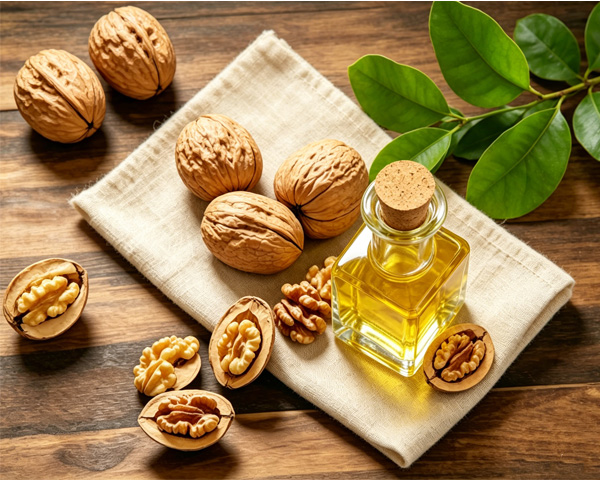
Walnut oil is loved by consumers for its rich nutritional value (high unsaturated fatty acids, vitamin E, etc.) and unique flavor. However, whether obtained by cold pressing or hot pressing, crude walnut oil contains impurities such as phospholipids, free fatty acids, pigments, odorous substances, and waxes. Only through a scientific and complete refining process can crude oil be transformed into premium walnut oil with bright color, pure taste, and stable quality.
This article will explain in detail the refining process of walnut oil, introduce the refining solutions for different crude oil qualities, and help you understand the core walnut oil refining equipment to build an efficient and stable walnut oil refining production line.
I. Why Is Crude Walnut Oil Refining Necessary?
The main impurities in crude walnut oil and their effects:
– Phospholipids: cause foaming, smoking, and black precipitation when heated
– Free fatty acids: cause rancidity and off-flavors
– Pigments: affect oil color and reduce consumer acceptance
– Odorous substances: bring unpleasant raw oil taste or bitterness
– Waxes: make the oil cloudy at low temperatures
Through refining, these impurities can be effectively removed, enabling the walnut oil to meet national edible oil standards, extend shelf life, improve flavor, and be suitable for a wider range of culinary uses.
II. Impact of Crude Walnut Oil Quality on the Refining Process
Depending on the initial quality of the crude oil, walnut oil refining can be divided into two paths:
Path 1: Good quality crude oil (mild refining)
If the raw walnuts are of high quality and the pressing process is well controlled, the crude oil will have low acid value and few impurities. In this case, only three steps are needed: water degumming → drying → dewaxing to meet healthy oil standards. This mild refining preserves the natural nutrients and flavor of walnut oil to the greatest extent.
Path 2: Average quality crude oil (full refining)
If the crude oil has a high initial acid value, dark color, and many impurities, a complete five-step refining process is required: degumming → deacidification → bleaching → deodorization → dewaxing. Although the process is more complex, it ensures stable product quality, long shelf life, and a light, pure flavor, making it suitable for large-scale production and long-term sales.
Whichever path is chosen, modern walnut oil refining equipment can be automatically controlled, significantly reducing labor intensity and ensuring batch-to-batch consistency.
III. Core Refining Processes and Equipment for Walnut Oil – Detailed Explanation
The following introduces each section’s purpose, principle, and required equipment according to the “full refining” path.
1. Degumming (removing colloidal impurities)
Purpose: Remove colloidal impurities such as phospholipids, proteins, and mucilage from crude oil. These impurities cause foaming and blackening when the oil is heated.
Principle: Add hot water or dilute phosphoric/citric acid to hydrate and swell the phospholipids, forming gum particles, which are then removed by centrifugal separation.
Core equipment:
– Degumming tank (with agitation and heating)
– Centrifugal separator (e.g., water degumming centrifuge)
Choosing efficient degumming equipment is a prerequisite for smooth subsequent deacidification and bleaching.
2. Deacidification (removing free fatty acids)
Purpose: Remove free fatty acids (FFA), lower the acid value, and improve oil stability and smoke point.
Principle: Add alkali solution (sodium hydroxide) to saponify free fatty acids into soapstock, which is then removed by centrifugation. Physical refining (steam distillation) can also be used, but alkali refining is more common for walnut oil.
Core equipment:
– Alkali refining reactor
– Centrifugal soap separator
– Alkali refining equipment (complete system)
After deacidification, the free fatty acid content can be reduced to below 0.1%, significantly improving the oil’s taste and shelf life.
3. Bleaching (adsorbing pigments)
Purpose: Remove natural pigments such as chlorophyll and carotenoids, as well as residual soapstock and metal ions.
Principle: Under vacuum, add adsorbents such as activated clay or activated carbon, mix thoroughly to adsorb pigments, then remove the adsorbent by filtration.
Core equipment:
– Bleaching tank (with vacuum system and agitation)
– Leaf filter (pressure filter)
– Bleaching equipment (including adsorbent dosing system)
After bleaching, the walnut oil becomes significantly lighter in color (pale yellow or nearly colorless) and more stable.
4. Deodorization (removing odorous substances)
Purpose: Remove volatile odorous substances such as aldehydes, ketones, and free fatty acids to obtain a light, pure flavor.
Principle: Under high temperature (180–240°C) and high vacuum (absolute pressure 2–5 mbar), introduce direct steam to carry away volatile odorous compounds.
Core equipment:
– Deodorization tower (tray or packed type)
– Vacuum system (steam jet ejector or multi-stage vacuum pump)
– Heat recovery system (energy-saving design)
Deodorization is the last chemical treatment step in refining. After deodorization, the smoke point of walnut oil rises significantly (to over 210°C), making it suitable for high-temperature cooking such as frying.
Note: Deodorized oil must be cooled immediately and protected with nitrogen to prevent oxidation.
5. Dewaxing (removing waxes to improve low-temperature appearance)
Purpose: Remove naturally occurring waxes from walnut oil to prevent cloudiness or precipitation at low temperatures, improving marketability.
Principle: Slowly cool the oil to a certain temperature (e.g., 4–8°C) to crystallize the waxes, then remove them by filtration.
Core equipment:
– Crystallization tank (with temperature control)
– Wax filter (e.g., plate-and-frame filter or drum filter)
– Dewaxing equipment (complete system)
For walnut oil, dewaxing is almost an essential step, because the presence of waxes seriously affects the oil’s clarity at low temperatures.
IV. Selection Guide for Refining Processes
| Crude Oil Quality | Recommended Process Route | Suitable Scenarios |
| High (low acid value, light color) | Water degumming → Drying → Dewaxing | Small oil mills, high-end cold-pressed walnut oil, flavor preservation |
| Average (medium acid value, more impurities) | Degumming → Deacidification → Bleaching → Deodorization → Dewaxing | Large-scale production, long shelf life, export or supermarket sales |
Automation advantage: The walnut oil refining equipment provided by Huatai Grain and Oil Machinery Equipment Manufacturer uses a fully automatic control system, which automatically adjusts temperature, pressure, and flow according to preset parameters, greatly reducing manual operation difficulty and ensuring batch stability.
V. From Crude Oil to Premium Oil: Equipment Configuration List
A complete walnut oil refining production line typically includes the following main units:
1. Degumming unit: degumming tank, centrifuge, heat exchanger
2. Deacidification unit: alkali refining tank, soapstock separator, washing tank
3. Bleaching unit: bleaching tank, vacuum drying system, leaf filter, adsorbent dosing system
4. Deodorization unit: deodorization tower, vacuum system, fatty acid trap, heat recovery unit
5. Dewaxing unit: crystallization tank, wax filter, refrigeration system
In addition, auxiliary equipment such as oil pumps, piping, oil storage tanks, and nitrogen protection systems are required. The complete edible oil refining production line can be designed as batch, semi-continuous, or full-continuous to meet different capacity requirements.
From crude oil to premium walnut oil, a scientific and rigorous refining process is indispensable. Depending on the initial quality of the crude oil, you can choose mild refining (degumming + drying + dewaxing) or full refining (degumming + deacidification + bleaching + deodorization + dewaxing). Each process step targets specific impurities and requires specialized walnut oil refining equipment.
Investing in an automated and flexible walnut oil refining production line not only produces high-quality walnut oil that meets international standards but also enhances the competitiveness and profitability of your oil mill.
If you are planning or upgrading a walnut oil processing project, please contact Huatai Grain and Oil Machinery Equipment Manufacturer. We will provide a complete solution – from process design and equipment selection to installation, commissioning, and training – to help you achieve the perfect transformation from crude oil to premium oil.