

Why Does Huatai’s Refining Line Achieve 15% Energy Savings? The Secrets of Intelligent Control
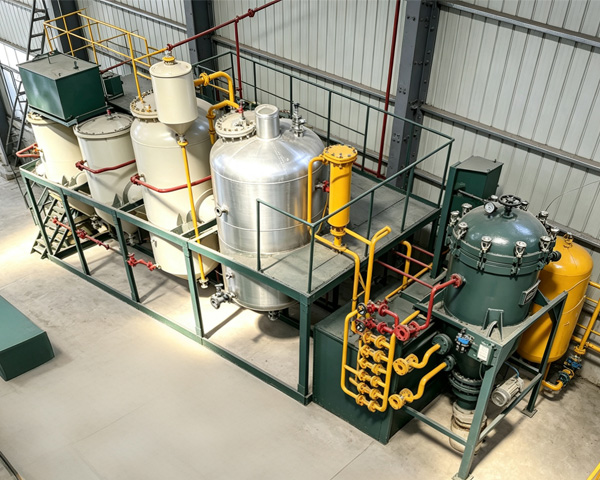
In edible oil refining production, energy consumption is the second largest operating expense after raw material costs. Steam, electricity, and cooling water – every step consumes energy and eats into profits. A refining line processing 500 tons per day can incur annual energy costs of up to several million dollars. Therefore, achieving 15% energy savings is not merely a technical metric – it directly translates into a core competitive advantage.
Huatai Group’s soybean oil refining production line achieves over 15% energy savings through optimized heat exchange systems, waste heat recovery technology, and fully automated PLC intelligent control. So how exactly is this 15% energy saving achieved? This article will provide an in-depth analysis of the energy-saving secrets behind Huatai’s refining line.
I. Why Is Energy Consumption High in the Refining Process?
To understand energy savings, we must first understand where energy consumption comes from.
A complete edible oil refining production line typically consists of four core sections: Degumming, Neutralization, Bleaching, and Deodorization. Among them, deodorization is the most energy-intensive step – the oil must be subjected to steam distillation at 230–260°C under high vacuum (0.1–1 mmHg) to remove volatile odorous compounds such as aldehydes and ketones.
High vacuum requires high-power vacuum pumps to run continuously, high temperatures require large amounts of steam for heating, and the deodorized oil must be cooled with cooling water. In traditional refining lines, this thermal energy is often discharged directly, resulting in significant energy waste. Additionally, degumming, bleaching, and other sections also require heating and cooling. The entire refining process demands extremely precise control of temperature, pressure, and flow rate – and traditional manual operations are incapable of achieving this precision, often leading to overheating or repeated temperature cycling, which further increases energy consumption.
This is where Huatai’s refining line energy-saving approach begins.
II. Energy-Saving Layer 1: Optimized Heat Exchange System – Making the Most of Thermal Energy
Huatai’s first energy-saving secret lies in its optimized heat exchange system design.
In traditional refining lines, the high-temperature refined oil (approximately 240°C) discharged from the deodorization tower is sent directly to the cooling system, wasting thermal energy. Huatai’s oil-to-oil heat exchanger changes this:
- High-temperature refined oil (discharged from the deodorization tower) flows through one side of the heat exchanger
- Low-temperature crude oil (the oil to be processed before entering the deodorization tower) flows through the other side
- Heat from the high-temperature oil is transferred through the heat exchanger to the low-temperature oil, achieving preheating
The brilliance of this design is that it preheats the oil to near process temperature without any additional energy consumption. The higher the temperature of the oil entering the deodorization tower, the less steam is required for heating. Huatai’s refining line uses a multi-stage heat exchange network design to maximize waste heat recovery efficiency, significantly reducing steam consumption.
Similar heat exchange designs are also applied in the bleaching section: high-temperature oil after bleaching passes through a heat exchanger to preheat the crude oil entering the bleaching section, reducing the steam required for bleaching heating.
III. Energy-Saving Layer 2: Waste Heat Recovery System – Turning “Waste Heat” into “Resources”
While the heat exchange system addresses heat transfer within the same process, the waste heat recovery system goes a step further – it turns “waste heat” into a recyclable “resource.”
Huatai’s waste heat recovery is mainly reflected in the following areas:
Steam Condensate Recovery: The direct steam used in the deodorization section still carries significant heat after condensation. Huatai’s system collects this condensate for boiler feed water preheating or other sections requiring low-temperature heating. This not only recovers heat but also reduces water consumption.
Vacuum System Waste Heat Utilization: High-vacuum systems (steam jet ejectors or multi-stage vacuum pumps) generate substantial heat during operation. Huatai recovers this heat through heat exchangers for process water heating or workshop heating.
Deodorization Distillate Heat Recovery: The fatty acid mixture (distillate) evaporated during deodorization carries considerable heat. Huatai’s system recovers this heat through heat exchangers before condensing the distillate, using it to preheat the oil entering the deodorization tower.
Through these waste heat recovery measures, Huatai’s refining line recycles thermal energy that would otherwise be discharged into the environment, achieving cascade utilization of energy.
IV. Energy-Saving Layer 3: Fully Automated PLC Intelligent Control – Precision Is the Ultimate Energy Saver
If heat exchange systems and waste heat recovery address energy savings at the “hardware” level, then the fully automated PLC intelligent control system addresses energy savings at the “software” level – and it is often the most overlooked yet most promising energy-saving approach.
1. Precise Temperature Control to Avoid Overheating
Traditional refining lines rely on operator experience and manual adjustments, often resulting in temperature deviations – operators tend to set temperatures higher than process requirements “just to be safe.” This “overheating” not only wastes energy but also accelerates oil oxidation and reduces oil quality.
Huatai’s PLC system, through real-time temperature sensors and automatic control valves, maintains temperature control accuracy within ±1°C. Every unnecessary degree of heating is eliminated – and little by little, the savings add up to a significant amount.
2. Precise Metering to Reduce Chemical and Energy Waste
In the neutralization section, the amount of alkali solution added directly affects deacidification efficiency and subsequent washing energy consumption. Adding too much requires more water and steam to wash out residual soapstock; adding too little results in incomplete deacidification, requiring rework.
Huatai’s PLC system precisely controls the addition of alkali, phosphoric acid, activated clay, and other auxiliaries through automatic metering devices. Precise metering means every unit of chemical achieves maximum effectiveness, reducing energy consumption for subsequent washing and treatment.
3. Intelligent Scheduling to Reduce Standby Energy Consumption
Refining production is continuous, but material flow between different sections is not always perfectly “just right.” In traditional lines, a brief pause in one section can cause upstream sections to continue feeding while downstream sections run idle – resulting in energy waste.
Huatai’s PLC system achieves coordinated control across the entire production line, automatically adjusting operating parameters of each section based on real-time material flow, minimizing idle running and standby energy consumption. The entire refining line – from degumming to deodorization – is fully automated, ensuring standardized management and reducing human error.
4. Data Traceability for Continuous Optimization
The PLC system not only controls the production process but also records temperature, pressure, flow rate, energy consumption, and other data for every batch. These data provide a basis for process optimization – engineers can analyze which batch had the lowest energy consumption and why, then solidify the optimal parameters into the system for continuous improvement.
V. How Significant Are the Energy Savings?
Huatai’s refining line achieves a comprehensive energy saving of over 15%. What does this mean in actual production?
Take a soybean oil refining line processing 500 tons per day as an example. A traditional refining line consumes approximately 400–450 kg of steam per ton of oil and approximately 28–65 kWh of electricity per ton of oil.
Through the three-fold combination of heat exchange optimization, waste heat recovery, and PLC intelligent control, Huatai reduces steam consumption to approximately 340–380 kg/ton of oil and electricity consumption to approximately 24–55 kWh/ton of oil.
Annual Energy Savings Estimate
(Based on 330 operating days per year)
| Item | Traditional Line | Huatai Line | Annual Savings |
|---|---|---|---|
| Steam (tons/year) | 66,000–74,250 | 56,100–62,700 | 9,900–11,550 tons |
| Electricity (10,000 kWh/year) | 462–1,073 | 396–908 | 66–165 (10,000 kWh) |
| Annual Comprehensive Savings | — | — | Over 15% |
Based on industrial steam at approximately $30/ton and electricity at approximately $0.10/kWh, a 500-ton-per-day refining line can save $300,000–$500,000 per year in energy costs – and this is only direct energy savings, without accounting for reduced cooling water consumption, extended equipment life, and lower maintenance costs.
VI. Core Advantages of Huatai Refining Equipment
Huatai Intelligent Equipment Group is a leading manufacturer of complete edible oil processing production lines, with over 38 years of professional experience and projects in more than 70 countries. The company holds over 100 national patents and has been recognized as a national “Little Giant” enterprise and a national “Green Factory.”
Core advantages of Huatai refining equipment include:
- Free fatty acid content ≤0.1% – significantly improving shelf life and stability
- Crystal clear color – enhancing consumer appeal
- Neutral taste – suitable for multiple cooking applications
- Energy-efficient design – optimized heat exchange and waste heat recovery, reducing energy consumption by over 15%
- Full automation – intelligent PLC control ensuring consistent quality
- Traceability – every drop of oil traceable from source to final bottling
Conclusion
The secret behind Huatai’s refining line achieving 15% energy savings is not a single technological breakthrough, but rather the systematic integration of three energy-saving measures:
- Optimized heat exchange system – making the most of thermal energy, using heat from high-temperature oil to preheat low-temperature oil
- Waste heat recovery system – turning “waste heat” into “resources,” fully recovering steam condensate, vacuum system heat, and distillate heat
- Fully automated PLC intelligent control – precision is the ultimate energy saver, with ±1°C temperature control accuracy, precise metering, and intelligent scheduling
These three measures work together to push energy utilization efficiency to new heights. Choosing Huatai refining equipment is not just choosing an efficient production line – it is choosing a sustainable profit model.
If you are planning or upgrading a soybean oil refining project, please contact Huatai Group for a customized refining line energy-saving solution and quotation.