

The Complete Guide to Refined Flaxseed Oil Processing: Four Key Steps from Crude Oil to High-Purity Omega-3
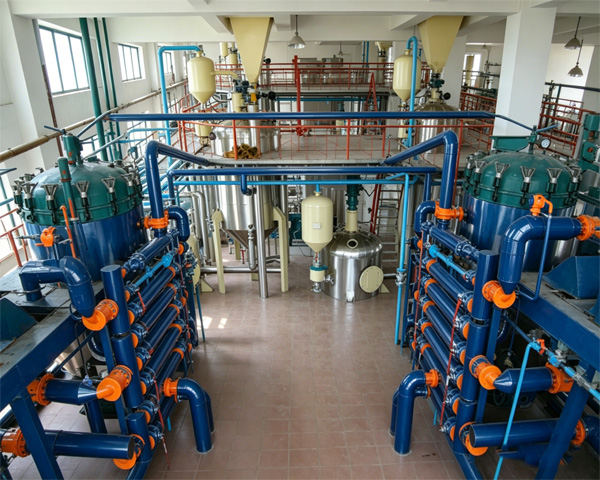
Whether you are planning to build a new flaxseed oil processing plant or looking to upgrade an existing edible oil production line, understanding the transformation from crude flaxseed oil to a refined finished product is essential. Flaxseed oil is highly regarded for its 50-55% alpha-linolenic acid (ALA) content, but crude pressed oil contains impurities, gums, and strong odors that prevent it from meeting the high standards of the food industry. This article leverages advanced oil refining technology to break down the four core systems of flaxseed oil refining and analyze its commercial value and return on investment.
1. What is High-Quality Refined Flaxseed Oil?
Refined flaxseed oil is a clear edible oil obtained by purifying crude oil derived from pressing or solvent extraction using a combination of physical and chemical processes. Unlike crude oil, which is dark in color and has a strong fishy smell, refined flaxseed oil is light yellow, bright and clear, with a mild taste and no off-flavors.
In terms of physicochemical specifications, high-quality refined oil has a free fatty acid (FFA) content controlled at ≤0.1%, a phospholipid content ≤0.01%, and a smoke point elevated to 215-220°C. This stability makes it suitable not only for cold dishes but also an ideal choice for food processing and high-temperature cooking.
2. The Four Core Systems of the Flaxseed Oil Refining Process
Flaxseed oil refining is a multi-stage, continuous process. Depending on capacity requirements (batch, semi-continuous, or fully continuous), we can configure specific edible oil refining equipment to complete the following four key steps:
Step 1: Degumming System — Removing Colloidal Impurities
Crude pressed flaxseed oil contains phospholipids, proteins, and mucilage. These impurities cause the oil to foam, smoke, and darken during heating. This stage is typically handled by efficient oil degumming equipment.
– Water Degumming: Utilizes hot water to hydrate hydrophilic phospholipids, which swell and are then separated as flocs using a disc centrifuge.
– Acid Degumming: Targets non-hydratable phospholipids by adding food-grade phosphoric or citric acid for conversion, combined with a high-efficiency mixer to achieve deep degumming.
– Process Effect: Reduces phospholipid content from 0.5-1.0% to below 0.01%, creating favorable conditions for subsequent neutralization.
Step 2: Neutralization (Alkali Refining) — Reducing Acid Value
High Free Fatty Acid (FFA) levels shorten shelf life and lower the smoke point. In this stage, we utilize automatic alkali refining equipment for neutralization.
– Process Principle: An oil-alkali proportioning system precisely adds sodium hydroxide solution to react with FFAs, forming soapstock.
– Equipment Configuration: Equipped with soapstock collection scrapers and self-cleaning centrifuges to ensure efficient separation of oil and soapstock.
– Value-Added Utilization: The separated soapstock can be used as raw material for fatty acid or vegetable pitch production, achieving added value through by-product processing equipment.
Step 3: Bleaching (Decolorization) System — Improving Color and Stability
Chlorophyll and carotenoids in flaxseed oil affect appearance and oxidative stability. Professional oil bleaching equipment addresses this using adsorbents.
– Process Conditions: Under a vacuum environment, a vacuum bleaching tower and a closed filter press work together. Activated bleaching earth (1-3%) is added at 100-110°C to adsorb pigments.
– Quality Improvement: Oil color is reduced from Yellow 35 Red 10 to below Yellow 20 Red 2.0 (Lovibond scale), and residual trace soapstock and metal ions are further removed.
Step 4: Deodorization System — Removing Odors and Raising Smoke Point
This is the final refining step, aimed at removing the characteristic “fishy” smell and low-molecular-weight aldehydes and ketones from flaxseed oil. The core equipment includes a stainless steel deodorizer tower and a high-vacuum system.
– Working Principle: Under high temperature (180-240°C) and high vacuum, a direct steam injection system strips away volatile odor compounds.
– Key Technology: Utilizes soft-tower deodorization technology with a plate heat exchanger for rapid cooling, minimizing retention time at high temperatures, preventing trans-fatty acid formation, and protecting nutritional components.
3. Equipment Investment Return and Commercial Application Prospects
Investing in a professional flaxseed oil refining line varies in scale depending on capacity and automation level:
– Batch Production Line (1-10 TPD): Suitable for startups, offering investment flexibility with small-scale refining tanks.
– Fully Continuous Production Line (30-100 TPD): Suitable for large-scale enterprises, achieving minimal labor costs and maximum product consistency through a fully automatic control system.
Refined flaxseed oil, with its high smoke point of 215-220°C and mild flavor, is widely used in industrial frying oil production, functional soft-gel health supplements, eco-friendly coatings, and cosmetic base oils. Compared to cold-pressed oil, which has a shelf life of only 6-12 months, refined oil’s shelf life extends to 18-24 months, significantly reducing logistics and storage losses.
The journey from crude pressed oil to clear, first-grade edible oil hinges on having a well-designed and technologically mature oil processing plant setup. Whether it’s the pressing efficiency of a front-end screw oil press or the molecular distillation technology in the backend refining workshop, every step impacts the final alpha-linolenic acid retention rate and acid value control.
Henan Huatai Intelligent Equipment Group is committed to providing turnkey project services ranging from pretreatment and pressing equipment to fully continuous refining plants. Our engineering team can customize and design edible oil production lines based on your specific raw material characteristics and capacity goals, helping you maximize return on investment in the competitive international market.