

How Is Castor Oil Processed? 5 Key Stages from Seed to Refined Oil – Explained Simply
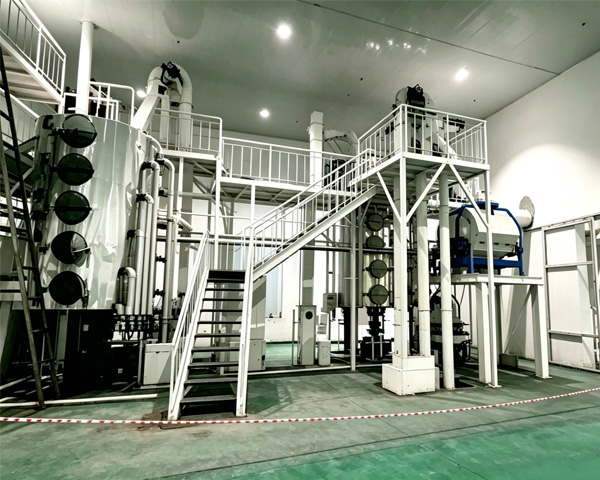
Castor oil is extracted from castor seeds. It is a versatile non-edible oil with significant industrial applications in lubricants, cosmetics, pharmaceuticals, coatings, and biodiesel production. The global castor oil market was valued at approximately $1.58 billion in 2025 and is projected to reach $2.6 billion by 2032, growing at a CAGR of 7.33%. As the market continues to expand, understanding the complete processing workflow and selecting the right equipment is critical for investors and businesses.
So, how is castor oil actually processed? A complete castor seed oil production line typically consists of 5 core stages: pretreatment, pressing/extraction, filtration, refining, and filling. This article breaks down each stage step by step.
Stage 1: Raw Material Pretreatment
Goal: Remove impurities and prepare the seeds for oil extraction
Freshly harvested castor seeds first enter the pretreatment workshop. This stage has a clear objective: remove impurities and prepare the seeds for subsequent oil extraction.
Core Equipment:
– Cleaning Equipment – e.g., vibrating screens, to remove stones, dirt, and husks.
– Dehulling Equipment – Castor seed shells are exceptionally hard and must be removed. Modern dehullers can reduce shell content by up to 85%, significantly improving subsequent oil yield.
– Crushing Equipment – Crushes the dehulled kernels to increase surface area, facilitating oil release.
> 💡 Key Data: Research shows that preheating the equipment before extraction can significantly improve oil yield and purity – compared to unheated systems, preheating can boost extraction rates by up to 61%.
The quality of the pretreatment stage directly determines the efficiency and final output of the entire castor oil production line.
Stage 2: Pressing & Extraction
Goal: Separate the oil from the prepared castor kernels
After pretreatment, the castor kernels enter the pressing/extraction workshop. This is the core stage of the entire production line. Depending on production scale, two main processes are available:
🔹 Mechanical Pressing (for small to medium scale)
Uses screw presses or hydraulic presses to physically squeeze oil from the kernels. This process is simple, requires lower investment, and is suitable for smaller daily capacities.
🔹 Solvent Extraction (for large-scale industrial production)
Huatai’s solvent extraction system can achieve residual oil in the meal below 1% , ensuring maximum oil recovery.
Huatai offers a variety of extractor options:
– Rotocel Extractor – The most widely used continuous extractor, suitable for castor seeds, peanuts, rapeseed, sunflower seeds, soybeans, rice bran, palm kernels, and more.
– Loop Type Extractor – Designed for large-scale extraction plants.
– Drag Chain Extractor – Suitable for direct extraction of soybeans and rice bran, as well as pre-pressed extraction of various oilseeds.
– Batch Tank Extractor – Ideal for small plants with capacities below 20 tons per day.
Whichever process you choose, a reliable castor oil extraction system is key to achieving high oil yields.
Stage 3: Filtration
Goal: Remove solid impurities from the crude oil
The crude oil obtained from pressing or extraction still contains solid particles, gums, and moisture. This stage uses a filtration system to separate these impurities.
Core Equipment:
– Plate-and-Frame Filter Press – Filters out suspended solids and gums from the crude oil.
– Polishing Filter – Provides higher-precision filtration.
> 💡 Key Data: A multi-stage filtration system can achieve over 98% oil clarity.
Although seemingly straightforward, filtration plays a critical role in final oil quality. Filtered oil is purer and ready for the refining stage.
Stage 4: Refining
Goal: Upgrade crude oil into high-quality refined oil
Filtered crude oil still contains free fatty acids, pigments, and odorous substances. It must undergo refining to meet purity and quality standards.
The refining process typically consists of four steps:
| Step | Name | Function | Core Equipment |
|---|---|---|---|
| 1 | Degumming | Removes phospholipids and gums | Degumming tank |
| 2 | Neutralization / Deacidification | Neutralizes free fatty acids with alkali to reduce acid value | Alkali refining tank, centrifuge |
| 3 | Bleaching / Decolorization | Adsorbs pigments and impurities under vacuum | Bleaching tank, leaf filter |
| 4 | Deodorization | Removes odorous compounds to achieve pure flavor | Deodorization tower, vacuum system |
> 💡 Key Data: With a preheating system, the refining production line can achieve efficiency up to 65%. Refined castor oil can reach over 99.5% purity, meeting international standards.
A complete castor oil refining system is the core guarantee of final product quality.
Stage 5: Filling & Packaging
Goal: The final step to market
After passing quality inspection, the refined oil enters the filling workshop. Automatic filling equipment precisely doses the oil into containers and seals them.
Core Equipment and Systems:
– Automatic Filling Machine – Precise dosing and sealing
– Control System – Enables automated intelligent management
– Auxiliary Equipment – Conveyors, storage tanks, cleaning devices
Although this stage is relatively simple, it directly affects the product’s shelf appearance and market competitiveness.
Huatai Castor Oil Production Line Solutions
Henan Huatai Grain and Oil Machinery Co., Ltd. has over 38 years of industry experience and provides complete castor oil processing solutions:
Processing Capabilities:
– 10–5000 tons/day oilseed pretreatment projects
– 20–5000 tons/day solvent extraction projects
– 10–500 tons/day oil refining projects
– Protein and phospholipid projects
Advanced Technology:
– Residual oil in extraction meal below 1%, ensuring high oil yield
– Solvent recovery system, balancing cost efficiency and environmental protection
– PLC automation, ensuring stable product quality and reduced labor costs
Comprehensive Services:
– Turnkey project delivery: design, manufacturing, installation, commissioning, and training
– On-site installation, commissioning, and training, with a one-year warranty
– Equipment certified by CE, ISO, and SGS
Strong Credentials:
– Over 38 years of professional experience in grain and oil machinery (founded in the 1950s)
– Serving more than 70 countries worldwide
– 27 national patents (including 7 invention patents) and 6 international awards
– National “Little Giant” enterprise and national-level green factory
– Complete turnkey solutions from single machines to full production lines
From castor seed to refined oil, the 5 stages are closely interlinked:
1. Pretreatment – Lays the foundation: cleaning, dehulling, crushing
2. Pressing & Extraction – Separates the oil: mechanical pressing or solvent extraction
3. Filtration – Removes impurities and purifies crude oil
4. Refining – Upgrades quality: degumming, neutralization, bleaching, deodorization
5. Filling & Packaging – Prepares for market: automated filling and sealing
Each stage requires scientific process design and reliable equipment. Whether you plan to build a small pressing line processing 1 ton per day or a large extraction plant handling 10,000 tons per day, choosing the right castor oil processing equipment and a professional partner is key to project success.
With 38 years of industry experience, global project execution, and comprehensive turnkey service capabilities, Huatai Group is a partner you can trust. For more details on castor oil processing equipment or to request a customized solution, please contact Huatai Group.