

AI-Driven Predictive Maintenance for Palm Oil Mills: Reducing Unplanned Downtime
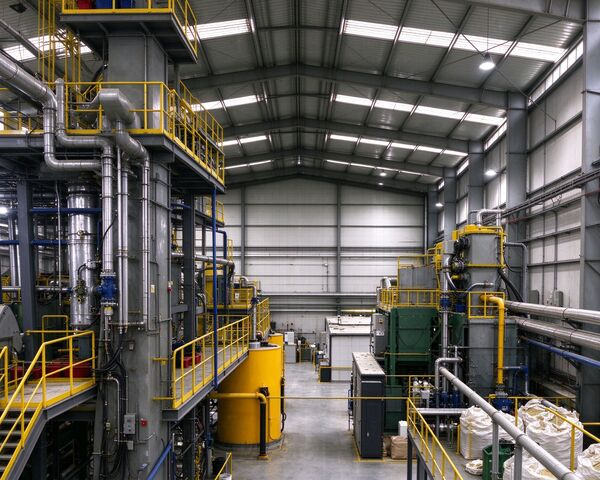
In a palm oil mill, downtime is the most direct killer of profits. When a scraper conveyor stops for one hour, the mill loses approximately 20.8 million Indonesian rupiah in profit. If a boiler tube bursts, forced shutdown for several days can cost over $1 million per day. Even in normally operating mills, Overall Equipment Effectiveness (OEE) is often only around 85% – and a case study of a boiler station found its OEE was just 27.03%, far below the 85% world-class standard, mainly due to reactive maintenance practices, delayed fault response, and lack of early detection mechanisms.
The traditional approach is “fix when broken” or “replace parts on a calendar schedule.” The former leads to sudden shutdowns and cascading losses; the latter often replaces components that are still in good condition. AI-driven predictive maintenance is changing this – but its value is not in “using AI,” but in choosing the right model, managing data well, and calculating the return.
I. Why Do Palm Oil Mills Especially Need Predictive Maintenance?
Palm oil processing is a continuous, high-load, highly abrasive production process. From palm fruit sterilizers, threshers, and screw presses to clarification tanks and centrifuges, every piece of equipment operates long-term in high-temperature, high-humidity, and highly abrasive environments. Once equipment stops, not only is capacity directly lost, but滞留 fresh fruit bunches also cause free fatty acid (FFA) levels to rise, further reducing crude oil quality and selling price.
Industry data reveals three key facts:
Downtime costs far exceed maintenance costs. Studies show that unplanned downtime losses are more than 30 times higher than maintenance costs.
Manual monitoring has systematic biases. A sensor monitoring study of the palm oil extraction process found that reliance on manual monitoring and control systems involves delays, inaccuracies, and potential losses. After introducing sensor monitoring, monthly losses were reduced by 10%–20%.
Automation already has successful precedents. Malaysia’s first AI-driven palm oil mill (located in Kuala Kangsar, with a capacity of 45 t/h) integrated AI, sensors, and predictive tools to reduce annual processing costs by approximately 1.6 million ringgit, cut foreign labor dependence by 33% (from 66 to 44 workers), and save about 1.1 million ringgit in wages. The AI system cost only 5 million ringgit, with a payback period of about two years.
II. AI Model Selection: LSTM or XGBoost?
A complete AI predictive maintenance system includes a perception layer, data transmission layer, analytics layer, and decision layer. Among these, the choice of model in the analytics layer determines prediction accuracy and operational value.
In actual palm oil industry applications, two models have been most widely evaluated and compared: LSTM (Long Short-Term Memory networks) and XGBoost (Extreme Gradient Boosting).
A systematic comparative study on time series forecasting provided clear quantitative data: for a 7-day lag, LSTM’s mean absolute error was $34.38, while XGBoost’s was $47.06; for a 15-day lag, LSTM’s MAE was $56.97 versus XGBoost’s $67.53; for a 26-day lag, LSTM’s MAE was $75.07 versus XGBoost’s $103.67. LSTM outperformed XGBoost at every lag period, primarily because LSTM’s complex architecture can capture longer time dependencies.
However, in real-time oil loss monitoring scenarios at palm oil mills, the situation is different. An AIoT system study based on industrial palm oil mill data evaluated multiple machine learning algorithms, and results showed that XGBoost performed best in predicting fiber residual oil, with an R² value of 0.997, significantly outperforming other models.
What does this mean? There is no “one-size-fits-all” answer for model selection:
- Need to predict “what will happen in the next few days” → LSTM is more suitable; it captures long-term trends in time series such as vibration and temperature.
- Need to determine in real time “whether current oil loss is abnormal” → XGBoost is more suitable; it responds faster and more accurately to immediate features in sensor data.
The ideal architecture for a palm oil mill is a hybrid model: use LSTM to process time series data from vibration sensors and capture long-term equipment degradation trends; use XGBoost to process real-time features such as temperature and current, quickly determining whether current operating conditions deviate from normal ranges.
III. Real Challenges in Deployment: Model Drift and Edge Inference
Choosing the right model is only the first step. When AI models are deployed from the lab to the palm oil mill site, they face two practical challenges.
Challenge 1: Model Drift
Model drift refers to the phenomenon where, after deployment, real-world data patterns change, causing model prediction accuracy to decline. In a palm oil mill environment, sources of drift include: gradual changes in vibration characteristics due to equipment wear, seasonal raw material differences, data format mismatches after introducing new equipment, and signal attenuation from sensor aging.
A systematic review of industrial IoT environments pointed out that static models can achieve near-perfect accuracy on controlled benchmarks, but after deployment to non-stationary industrial environments, F1 scores drop by 15%–22%, and false positive rates surge by 30% during seasonal transitions.
The solution is continuous learning. A method called VAE-CL (Variational Autoencoder Continual Learning) demonstrated significant advantages in experiments simulating 12 months of predictive maintenance data: compared with traditional static ensemble models, VAE-CL suffered less performance loss when data patterns changed, and remained suitable for edge deployment conditions.
Challenge 2: Governance Gaps in Edge Inference
In palm oil mills, many critical pieces of equipment are located in areas with unstable network coverage. Placing AI inference at edge nodes (rather than in the cloud) can reduce latency and bandwidth requirements, but it also introduces governance issues.
A study on edge AI deployment in the energy industry pointed out a fundamental problem: “Once you push an AI model to an edge node embedded in real-time infrastructure, how do you know it is still working as designed six months later?” In distributed environments, drift may go undetected for months – a slightly shifted optimization recommendation, a missed diagnostic pattern, a warning that is too frequent or not frequent enough – each alone may look like noise, but cumulatively they erode operator trust in the system.
Palm oil mills need to establish model monitoring mechanisms: regularly compare model predictions with actual maintenance records, set drift alert thresholds, and retain a human review step. Industry consensus is that AI should play a supporting role, with humans in the loop making final decisions.
IV. ROI Calculation: Real Numbers for a 45 t/h Mill
To make ROI more concrete, we use real data from Malaysia’s first AI palm oil mill, which has a processing capacity of 45 tons per hour.
Base assumptions: 330 operating days per year; crude palm oil price at approximately $800/ton.
First benefit: Processing cost reduction. Through the AI system, the mill reduced annual processing costs by approximately 1.6 million ringgit (about $340,000), mainly from lower oil loss and reduced maintenance expenses.
Second benefit: Labor savings. Foreign workers were reduced from 66 to 44, saving about 1.1 million ringgit (about $235,000) in wages.
Third benefit: Capacity value from OEE improvement. If the mill’s OEE is raised to the 85% world-class standard, downtime is significantly compressed. At a capacity of 45 t/h, every 1% reduction in unplanned downtime translates to approximately 3,564 tons of additional FFB processed per year. At an OER of 20%, this yields about 713 tons of additional crude palm oil, worth approximately $570,000.
Payback period. The AI system installation cost was 5 million ringgit (about $1.07 million), and annual combined benefits (processing cost savings + labor savings) are approximately $575,000. The payback period is about two years.
This set of data illustrates a key fact: AI predictive maintenance is not a “nice-to-have” digital project, but an operational investment that pays back within two years.
V. Phased Implementation Roadmap
Predictive maintenance does not need to cover the entire mill at once. For palm oil mills, it is recommended to proceed in three phases:
Phase 1: Foundation Perception Layer (0–6 months)
Deploy basic sensors on screw presses and palm fruit sterilizers: vibration accelerometers (monitoring bearings and reducers), temperature sensors (monitoring bearing temperature, triggering alerts above 70°C), and motor current monitoring (a slow rise in current under constant load indicates increasing mechanical resistance). Establish a data baseline, recording normal vibration, temperature, and current characteristics.
Phase 2: Model Development and Anomaly Detection (6–12 months)
Based on data collected in Phase 1, train anomaly detection models. Prioritize XGBoost for real-time features (temperature, current) to achieve immediate anomaly alerts. Simultaneously use LSTM for vibration time series to capture long-term equipment degradation trends. Integrate model outputs into the existing maintenance management system for automatic alert push.
Phase 3: RUL Estimation and Predictive Maintenance Closed Loop (12–18 months)
Introduce Remaining Useful Life estimation models to predict the remaining usable time of key components such as screw press screws and bearings. Establish a closed-loop feedback mechanism: after each maintenance, record the deviation between actual replacement time and predicted value for continuous model optimization. Gradually expand to clarification tanks, centrifuges, and conveying systems.
Huatai’s palm fruit double-screw press is already equipped with a PLC control system and IoT remote monitoring module, supporting real-time monitoring and remote maintenance of production parameters, providing a hardware foundation for sensor integration in predictive maintenance. Huatai’s palm fruit sterilizer, palm kernel recovery system, and palm oil refining equipment together form a complete palm oil processing line. Huatai can provide mills with turnkey project services from equipment selection and process design to installation, commissioning, and personnel training, and supports integrating IoT sensors and predictive maintenance modules into existing equipment.
Final Thoughts
The value of AI predictive maintenance is not in how advanced the technology is, but in whether it can answer the simplest question: In the next hour, which equipment will stop?
Choose the right model (LSTM for trends, XGBoost for real-time features), manage data well (establish drift monitoring and continuous learning mechanisms), and calculate the return (a two-year payback investment logic) – when these three links are done well, predictive maintenance can move from “sounds good” to “actually profitable.”
References
The data and case studies in this article are compiled from the following sources:
- Malaysian Palm Oil Board (MPOB): Cost savings and labor reduction data from Malaysia’s first AI palm oil mill
- “A Comprehensive AI-Driven Predictive Maintenance Framework for Oil Palm Processing Systems” (2026): Multi-layer AI predictive maintenance framework, LSTM and RUL modeling
- LSTM vs XGBoost time series forecasting comparative study (2021): MAE comparison data at different lag periods
- “A Cost-Effective AIoT System for Real-Time Oil Content Monitoring” (2026): XGBoost performance data with R²=0.997 in oil loss prediction
- IEEE “Robust Machine Learning Frameworks for High-Variance Industrial Environments” (2026): Data on F1 score decline of 15%–22% due to concept drift
- Enlit World edge AI governance research (2026): Model drift and governance gaps in distributed edge deployment
- “System Predictive Maintenance in Palm Oil Mill” (2025): Boiler station OEE 27.03% case, logistic regression prediction accuracy 77%
To verify specific data sources, please contact the Huatai Group technical team for relevant reference materials.