

Small Oil Mill Cost in Africa: The Three Hidden Variables Beyond the Equipment Quote
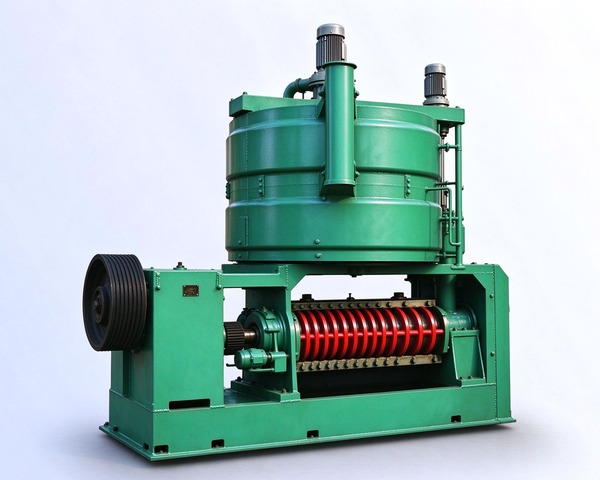
When investing in a small oil mill (1–20 TPD) in Africa, the “FOB price” quoted by equipment suppliers is often the most misleading number. A 1–5 TPD pressing machine can have an FOB China price as low as $5,000–$15,000; a 10–20 TPD press ranges from $35,000–$50,000. But getting that mill to actually run on African soil costs significantly more.
Engineering data from CISH Africa provides a more realistic view: the FOB equipment price accounts for only 35%–55% of the total project cost. In other words, if you build your budget solely around the equipment quote, your actual implementation cost could be double what you expected.
Huatai Intelligent Equipment Group has practical project experience in the African oil processing market, having recently delivered a 50 TPD sunflower oil production line to Tanzania and a 1 T/H palm fruit pressing line to Burundi. This article focuses on three hidden variables that never appear on the quotation but determine the project’s success or failure: landed installation multipliers, seed purchase working capital, and the penetration of financing costs during the installation period.
I. Landed Installation Multipliers: Coastal ×1.25–1.45 vs. Landlocked ×1.45–1.60
The equipment FOB price is a starting point, not the finish line. CISH Africa’s practical data across multiple African markets provides a clear conversion framework: multiplying the Ex-China equipment price by the landed installation multiplier gives the project’s true “landed cost.”
| Market Type | Landed Installation Multiplier | Representative Countries |
|---|---|---|
| Coastal Markets | ×1.25 – 1.45 | Tanzania, Mozambique (Maputo), Ghana, Nigeria |
| Landlocked Markets | ×1.45 – 1.60 | Zimbabwe, Zambia, Uganda |
This multiplier covers: ocean freight and insurance (5%–12%), customs and duties (5%–15%), civil works and buildings (5%–15%), utilities (5%–12%), installation and commissioning (8%–15%), and training and spare parts (3%–8%). Among these, civil works and utilities have the widest variance—an existing facility with hard standing, good drainage, and spare transformer capacity can push the total multiplier toward the bottom of the range, while a greenfield site or an old building requiring power upgrades can push it to the top.
For a 10–20 TPD oil mill, assume an equipment FOB price of $50,000. If the project is in a coastal country (e.g., Tanzania), using a mid-range multiplier of ×1.35, the landed cost is approximately $67,500. If the project is in a landlocked country (e.g., Zambia), using ×1.55, the landed cost rises to $77,500. The $10,000 difference alone could cover a small piece of auxiliary equipment or months of working capital.
II. Seed Purchase Working Capital: The Cash in the Silo Often Exceeds the Cash in the Machines
In the cost structure of small African oil mills, there is a variable that is more easily underestimated than equipment prices, and its magnitude can directly exceed the equipment investment itself: working capital for seed procurement.
CISH Africa repeatedly emphasizes a judgment in its analyses of the Tanzanian and South African markets: “The cash in the silo usually exceeds the cash in the machines.” This is not a rhetorical device, but a quantifiable structural issue.
Take a 20 TPD seed pressing plant as an example. CISH Africa’s data shows that this plant needs to secure 5,000–6,000 tons of oilseeds within a single crushing season, and procurement must be completed within trucking radius. Assuming a conservative seed cost of $500 per ton, the procurement capital for one season is roughly $2.5 million to $3 million. Meanwhile, the equipment investment (FOB) for this plant ranges from $150,000 to $400,000. The scale of the raw material capital is 6 to 20 times the equipment investment.
Early UNIDO research corroborates this logic: in the annual total cost of a small oil mill, variable costs for seed procurement can account for up to 80%, even in the first year of operation. A study in Tanzania provides a concrete comparison: the seed procurement capital requirement for a sunflower oil processing enterprise is approximately 300 million Tanzanian shillings, while the machine investment cost is far lower than this figure.
Implication for Buyers: In Africa, the financing plan must cover both equipment procurement and a season’s seed purchase. If you apply for loans or arrange your own funds based solely on the equipment quote, the project may stall after the equipment arrives because “there is no money to buy seeds.” A pragmatic approach is to treat seed working capital as a financing item with equal priority to equipment investment during the project initiation phase.
III. The Penetration of Financing Costs During the Installation Period: The “Time Tax” Beyond the Equipment Quote
In Africa, the timeline from equipment departure to factory commissioning is often longer than suppliers optimistically estimate. Delays can occur at every stage: ocean transport, customs clearance, civil works, installation, and commissioning. If the project involves equipment financing or commercial loans, the extension of the installation period translates directly into increased interest expenses.
Consider a simplified scenario: assume an equipment FOB price of $50,000, with a landed cost estimated at $67,500 using a coastal multiplier of ×1.35. If 60% requires financing ($40,500) at an 8% annual interest rate, and the installation and commissioning period extends from the supplier’s estimate of 6 months to 9 months (not uncommon in African projects), the additional interest cost for the extra 3 months alone is approximately $810. If the schedule is further delayed due to a lack of skilled food-grade stainless steel pipe welding teams, or if equipment is stranded at the port due to customs issues, this figure will continue to grow.
While $810 may seem small, its significance lies in revealing a flaw in the budgeting logic: if the financing plan is based on an ideal 6-month timeline, the actual 9-month period not only increases interest but also disrupts the cash flow recovery rhythm. Delays in cash flow recovery can be more devastating for a small oil mill dependent on raw material procurement turnover than the interest itself.
IV. Decision Pathway: Answer Five Questions Before Requesting a Quote
- First, is the target product crude oil or refined oil? A 1–5 TPD “pressing only” configuration can be started with an equipment investment of under $20,000, but the product is bulk crude oil with limited sales channels. If bottled refined oil is required, refining equipment (degumming tanks, alkali refining tanks, bleaching towers, deodorization towers) must be configured, at least doubling the equipment cost.
- Second, is the project located in a coastal or landlocked region? Estimate the landed cost using the multipliers of ×1.25–1.45 for coastal and ×1.45–1.60 for landlocked areas, and reserve additional budget for generator fuel in areas with unstable power.
- Third, where is the seed capital for one season coming from? Calculate the seed requirement based on capacity (20 TPD corresponds to 5,000–6,000 tons per season), and treat seed procurement capital as a financing item parallel to equipment investment, rather than “figuring it out after commissioning.”
- Fourth, does the financing plan cover the risk of schedule delays? Include the interest cost corresponding to a pessimistic installation period estimate (rather than the supplier’s ideal timeline) in the financial model.
- Fifth, does the equipment supplier provide local installation and training support in Africa? In Africa, the value of a turnkey project lies not only in the equipment itself but also in whether on-site installation, commissioning, and operator training can actually be delivered. Local support capability is the key link for a small oil mill to move from “equipment arrival” to “stable production.”
Huatai Intelligent Equipment Group provides complete turnkey project services ranging from screw oil presses, hydraulic oil presses, and pretreatment equipment (cleaning screens, dehulling machines, crushers, steam cookers) to refining equipment (degumming tanks, alkali refining tanks, bleaching towers, deodorization towers) and filling equipment. We customize configurations based on the raw material characteristics (palm fruit, sunflower seeds, peanuts, sesame, etc.) and capacity scales of different regions in Africa. If you are planning a small oil mill project in Africa, please contact the Huatai team to obtain equipment and cost solutions based on your raw material conditions, target products, and budget framework.
References
The data and case studies in this article are compiled from the following sources:
- CISH Africa (2026): Landed installation multipliers (coastal ×1.25–1.45, landlocked ×1.45–1.60), equipment accounting for 35%–55% of total project cost, 20 TPD press plant raw material requirement of 5,000–6,000 tons/season, “the cash in the silo exceeds the cash in the machines” judgment.
- CISH Africa (2026): Cost block breakdown (ocean freight 5%–12%, customs 5%–15%, civil works 5%–15%, utilities 5%–12%, installation 8%–15%, training 3%–8%).
- SinoOil Machinery (2024–2026): 1–20 TPD equipment FOB price ranges (pressing only $5,000–$50,000).
- UNIDO: Seed procurement costs can account for up to 80% of the annual total cost for small oil mills.
- Tanzania Sunflower Oil Processing Study: Seed procurement capital of approximately 300 million Tanzanian shillings, exceeding machine investment costs.
- Huatai Intelligent Equipment Group: Project data for the Tanzania 50 TPD sunflower oil production line and the Burundi 1 T/H palm fruit pressing line.
To verify specific data sources, please contact the Huatai Group technical team for relevant reference materials.