

Physical vs. Chemical Refining of Edible Oils: Key Differences Explained
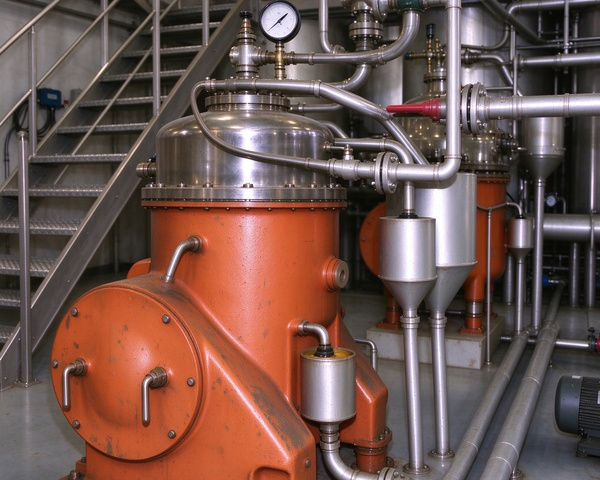
In the edible oil processing industry, refining is the critical step that transforms crude oil into qualified finished oil. The choice of refining method—physical refining or chemical refining—directly determines oil yield, product quality, operating costs, and environmental impact.
The core difference between the two methods lies in how free fatty acids (FFA) are removed: chemical refining converts FFA into soapstock through alkali neutralization, while physical refining removes FFA directly through high-temperature steam distillation. This process difference triggers a chain of effects ranging from equipment configuration to by-product value.
Huatai Intelligent Equipment Group has over 38 years of experience in oil refining equipment manufacturing and provides complete solutions from chemical refining to physical refining for customers worldwide. This article systematically analyzes the key differences between the two refining processes across five dimensions: process principles, quantitative comparison, ROI model, enzymatic degumming technology, and selection decision-making.
I. Process Principles: Two Completely Different Technical Paths
Chemical Refining
Chemical refining is a traditional and widely applied refining method that includes four core steps: degumming, neutralization, bleaching, and deodorization.
Degumming is the first step, in which phospholipids are hydrated with water or acid (such as phosphoric acid), forming gums that are removed by centrifugal separation. In the neutralization stage, alkaline substances such as sodium hydroxide react with FFA through saponification, generating soapstock that is removed by centrifugal separation. During neutralization, the alkali not only reacts with FFA but may also saponify neutral oil, causing additional oil loss. This is followed by water washing and drying to remove residual soap and moisture, then bleaching using activated clay to adsorb pigments and metal ions, and finally deodorization at 220–240°C under high vacuum to remove odorous substances through steam distillation.
Chemical refining is suitable for oils with high phospholipid content (>5 mg/kg), such as soybean oil, rapeseed oil, and cottonseed oil.
Physical Refining
Physical refining is a more streamlined method that omits the neutralization step and integrates deacidification with deodorization into a single step.
Its process flow is: acid degumming (ensuring phosphorus residue is minimized) → bleaching → high-temperature deodorization (removing both FFA and odorous substances simultaneously through steam distillation at 240–270°C under high vacuum). The key prerequisite for physical refining is that degumming must be thorough—the phosphorus content of the feed oil typically needs to be controlled below 5 ppm.
Physical refining is particularly suitable for oils with low phospholipid content and high FFA content, such as palm oil and coconut oil.
In one sentence: Chemical refining removes FFA through “alkali neutralization,” while physical refining strips FFA through “high-temperature steam distillation.” The former produces soapstock; the latter produces PFAD.
II. Quantitative Comparison Across Seven Dimensions
1. Oil Yield and Neutral Oil Loss
Oil yield is the most direct economic difference between the two processes.
Chemical refining has higher neutral oil loss. Studies show that when chemical refining high-acid-value oils (FFA > 5%), neutral oil loss can reach 12%–40%. Soapstock entrainment is the main source of loss—each ton of soapstock contains approximately 10%–20% neutral oil. For rice bran oil, although chemical refining can reduce FFA by 99.5%, it causes 71% oryzanol loss and 15%–37% neutral oil loss.
Physical refining has significantly lower neutral oil loss. Because no soapstock is produced, neutral oil loss in physical refining is typically controlled at 2%–5%, and some processes can reduce loss to below 1%. Research indicates that when processing high-FFA oils, the neutral oil loss of physical refining is only about one-third that of chemical refining.
2. Nutrient Retention
The two processes have trade-offs in nutrient retention.
Chemical refining has a lower deodorization temperature (220–240°C) and relatively mild conditions, allowing better retention of certain micronutrients. For example, for oils rich in sterols, chemical refining results in total sterol loss of approximately 30%, while physical refining may cause greater loss of heat-sensitive components at higher temperatures.
Physical refining at high temperatures (240–270°C) can more efficiently remove FFA and odorous substances, but accelerates the thermal degradation of heat-sensitive antioxidants such as tocopherols, carotenoids, and chlorophyll. Studies show that high-temperature deodorization can lead to a significant decrease in tocopherol content.
Key insight: Chemical refining has a slight advantage in nutrient retention, but this advantage comes at the cost of higher oil loss.
3. Wastewater Discharge and Environmental Impact
Environmental compliance is one of the most significant dimensions of difference between the two processes, and it has been a core driver of the rapid adoption of physical refining in recent years.
Chemical refining generates large amounts of wastewater: the water washing step after neutralization produces high-COD (chemical oxygen demand) wastewater, and soapstock acidification also produces acidic wastewater. The treatment cost of this wastewater is high, and under increasingly strict environmental regulations, it has become a significant burden for oil mills.
Physical refining generates almost no process wastewater—no neutralization step means no washing wastewater; no soapstock means no acidification wastewater. The by-product PFAD from physical refining is a valuable industrial raw material, not a waste that needs treatment. Industry data shows that the global share of physical refining has risen to 65%, with tightening environmental regulations being one of the main drivers.
4. Deodorization Temperature and Energy Consumption
Physical refining requires higher temperatures and vacuum levels. Data shows that the deodorization temperature for chemical refining is typically 220–240°C, while physical refining requires 240–270°C, with higher vacuum (2–4 mbar). Higher temperatures mean greater steam consumption. Steam consumption in physical refining is typically higher than in chemical refining, but its combined advantages—no alkali neutralization, no water washing, and no wastewater treatment—offset this in operating costs.
5. By-Product Value
Chemical refining produces soapstock, which after acidification can produce acid oil with relatively low market value, mainly for industrial use.
Physical refining produces PFAD (Palm Fatty Acid Distillate), a high-value industrial raw material. According to QYResearch, the global PFAD market was valued at approximately $3.651 billion in 2025 and is projected to reach $4.854 billion by 2032, with a CAGR of 4.2% from 2026 to 2032. PFAD is widely used in biodiesel production, oleochemicals (soap, detergents, surfactants), and animal feed. Because its cost is lower than refined oil, PFAD is particularly attractive in industries that emphasize price competitiveness and sustainability.
In terms of price trends, PFAD has experienced a significant “decline–rebound–recovery” cycle. After touching a low of around $843/ton in June 2025, Malaysia FOB prices steadily recovered. In Q4 2025, Malaysia PFAD prices ranged from $980–$1,040/ton. Entering 2026, prices strengthened further, with Q2 2026 Malaysia quotations reaching approximately $1,020/ton, and the global average rising from about $1,010/ton to nearly $1,047.50/ton. Geopolitical tensions (US-Iran conflict) pushed up crude oil prices, which in turn strengthened biodiesel market sentiment and provided additional support for PFAD prices.
6. Equipment Investment
Chemical refining equipment includes neutralization tanks, alkali dosing systems, water washing centrifuges, soapstock treatment systems, and wastewater treatment units. Physical refining requires advanced degumming units, high-vacuum deodorization towers, high-efficiency heat recovery systems, and fatty acid distillate condensers.
Because physical refining operates at higher temperatures and vacuum levels, it requires more robust stainless steel structures and stronger vacuum systems. Its equipment investment is typically 20%–40% higher than chemical refining. However, the oil yield advantage and by-product value of physical refining usually cover the incremental investment within 2–4 years.
7. Process Control Complexity
Chemical refining is relatively easy to control, insensitive to phosphorus content, and highly adaptable to fluctuations in crude oil quality. Physical refining, on the other hand, has extremely strict pretreatment requirements—phosphorus residue must be controlled below 5 ppm, and it is highly dependent on degumming performance.
III. Advanced Technology Supplement: How Enzymatic Degumming Is Changing the Competitive Landscape of Physical Refining
The core prerequisite for physical refining is that “degumming must be thorough.” Although traditional acid degumming is mature, it has limitations such as high chemical consumption and large wastewater generation. In recent years, enzymatic degumming technology has been changing this situation.
The core principle of enzymatic degumming is to use phospholipases (such as phospholipase A1, phospholipase C) to catalyze the hydrolysis of phospholipids, converting them into water-soluble derivatives that are easier to remove by centrifugal separation. Compared with traditional chemical degumming, enzymatic degumming has three major advantages: higher oil yield, lower chemical consumption, and smaller environmental impact.
The latest research data shows that the technical performance of enzymatic degumming has reached industrial levels. A 2026 study showed that under ultrasound-assisted conditions, using phospholipase A1 (200 W, 50°C, 2 hours) or Purifine® 3G (200 W, 40°C, 1 hour), degumming efficiency exceeded 98.6%, an increase of up to 4.55 percentage points compared with traditional enzymatic degumming, with residual phosphorus in degummed oil reduced to below 1.6 mg/kg.
Another study on phospholipase A1 showed that under optimized conditions, saPLA1 reduced the phosphorus content of crude soybean oil from 113.01 mg/kg to 7.27 mg/kg within 2.5 hours, meeting the requirements for physical refining.
From a commercialization perspective, GEA launched its eTOP Degumming enzymatic degumming solution in May 2026, reporting up to 1.4% improvement in oil yield and up to 75% reduction in acid consumption, while eliminating the use of caustic soda. This technology represents a breakthrough in resource efficiency, product quality, and operational reliability in edible oil refining.
Key insight: Enzymatic degumming not only reduces the stringent requirements of physical refining on the degumming stage but also further widens the economic gap between physical refining and chemical refining by increasing oil yield and reducing chemical consumption. For oil mills considering refining process selection, the maturation of enzymatic degumming means the entry barrier for physical refining is being lowered.
IV. Quantitative ROI Model: The Math for a 100 TPD Palm Oil Mill
To make investment decisions more concrete, let’s take a plant processing 100 tons of crude palm oil per day and run a complete calculation.
Base Assumptions
- 300 operating days per year
- Crude palm oil with approximately 5% FFA
- Crude oil purchase price: approximately $800/ton
- RBD palm oil selling price: approximately $950/ton
- Steam cost: approximately $30/ton
- PFAD selling price: based on Q2 2026 Malaysia quotation of approximately $1,020/ton
Annual Revenue Comparison
| Metric | Chemical Refining | Physical Refining |
|---|---|---|
| Neutral oil loss | 6% | 2.5% |
| Annual neutral oil loss | 1,800 tons | 750 tons |
| Annual loss cost | $1,440,000 | $600,000 |
| Annual PFAD output | 0 | ~1,350 tons |
| Annual PFAD revenue | $0 | $1,377,000 |
| Annual wastewater treatment cost | $150,000 | $20,000 |
| Annual combined advantage | — | ~$2,347,000 |
Key conclusion: For a plant processing 100 tons of palm oil per day, physical refining saves approximately $840,000 annually in oil yield loss, generates approximately $1.38 million in PFAD by-product revenue, and saves $130,000 in wastewater treatment, resulting in a combined annual advantage of approximately $2.35 million. Even if physical refining equipment costs $300,000–$500,000 more, the incremental payback period is only about 2–3 months.
Sensitivity Analysis: Impact of PFAD Price Fluctuations
PFAD price is a key variable affecting the economics of physical refining. In June 2025, PFAD FOB Malaysia touched a low of around $843/ton, while by Q2 2026 it had recovered to approximately $1,020/ton. If PFAD price falls 20% to approximately $816/ton, annual PFAD revenue from physical refining would drop to approximately $1.10 million, and the combined annual advantage would still be approximately $2.07 million, with a payback period of about 3 months. Even if PFAD price falls to the 2025 low, the economic advantage of physical refining remains significant.
This sensitivity analysis shows that PFAD price fluctuations will not change the structural economic advantage of physical refining; they will only affect the magnitude of that advantage.
V. Applicability by Oil Type
| Oil Type | Preferred Process | Reason |
|---|---|---|
| Palm oil | Physical refining | Naturally low phospholipid content, high FFA content |
| Coconut oil | Physical refining | Low gum content, high FFA, stable triglyceride structure |
| Soybean oil | Chemical refining | High phospholipid content, requires thorough degumming |
| Rapeseed oil | Chemical refining | Moderate phospholipid content, good adaptability to chemical refining |
| Cottonseed oil | Chemical refining | High phospholipid content, requires thorough removal |
Palm oil is the “ideal candidate” for physical refining due to three natural advantages: low phospholipid content, high FFA content, and stable triglyceride structure. These characteristics allow physical refining to achieve the highest refining efficiency with the lowest loss.
VI. How to Choose? — A Three-Step Decision Framework
Step 1: Evaluate Crude Oil Phospholipid Content
- Phosphorus content < 5 ppm → Proceed to Step 2
- Phosphorus content > 5 ppm → Chemical refining. If physical refining is planned for high-phospholipid oils, incomplete degumming will lead to dark color and poor stability. If physical refining is planned, evaluate the feasibility of introducing enzymatic degumming technology.
Step 2: Evaluate Crude Oil FFA Content
- FFA > 3% → Proceed to Step 3
- FFA < 3% → Chemical refining. For low-FFA oils, chemical refining loss is controllable and nutrient retention is better.
Step 3: Evaluate Plant Scale and Environmental Requirements
- Daily capacity > 50 tons, with strict environmental requirements → Physical refining. At scale, PFAD by-product revenue and wastewater treatment savings are sufficient to cover higher equipment investment.
- Daily capacity < 50 tons, or crude oil quality fluctuates greatly → Chemical refining. Chemical refining has higher tolerance for raw material fluctuations and is more flexible to operate.
VII. Huatai Intelligent Equipment Group’s Physical and Chemical Refining Solutions
Huatai Intelligent Equipment Group has a complete equipment system and extensive engineering experience in the field of oil refining. It can provide a full range of solutions from chemical refining equipment to physical refining production lines:
Chemical Refining Equipment: Neutralization tanks, alkali dosing systems, water washing centrifuges, soapstock treatment systems, wastewater treatment units—suitable for refining high-phospholipid oils such as soybean oil, rapeseed oil, and cottonseed oil.
Physical Refining Equipment: Acid degumming units, high-vacuum deodorization towers, high-efficiency heat recovery systems, fatty acid distillate condensers—suitable for refining low-phospholipid, high-FFA oils such as palm oil and coconut oil.
Huatai’s core equipment, including degumming tanks, bleaching towers, deodorization towers, and leaf filters, can be customized according to specific oil characteristics and capacity requirements. From equipment selection and process design to installation, commissioning, and personnel training, Huatai provides complete turnkey project services, serving customers in multiple countries and regions worldwide.
If you are planning an oil refining project, please contact Huatai Intelligent Equipment Group for a refining system solution tailored to your oil characteristics, capacity scale, and environmental requirements.
References
The data and case studies in this article are compiled from the following sources:
- Wiley Online Library (2026): Review of recent advances in edible vegetable oil deacidification technology (neutral oil loss, nutrient loss comparison data)
- QYResearch (2025): Global PFAD market size and growth forecast report
- Expert Market Research (2026): PFAD price trend analysis and forecast
- Fibre2Fashion (2026): PFAD price trends and biodiesel demand analysis
- ScienceDirect (2026): Study on the effect of ultrasound-assisted enzymatic degumming on soybean oil degumming efficiency and oil quality
- GEA (2026): eTOP Degumming enzymatic degumming technology launch
- Huatai Intelligent Equipment Group: Oil refining equipment technical data and project cases
To verify specific data sources, please contact the Huatai Group technical team for relevant reference materials.