

Cold Pressed Mustard Oil: Complete Process Guide – 5 Key Steps from Cleaning to Filtration
Mustard oil holds a unique position in the global edible oil market. In 2025, the global mustard oil market was valued at approximately $31.66 billion and is projected to reach $38.45 billion by 2031. Among its segments, cold-pressed mustard oil – known as “Kachi Ghani” in India – is the fastest-growing category. Mustard seeds contain 35% to 46% oil, yet cold pressing typically yields only about 28-34%.
Despite coming from the same raw material, cold pressing and hot pressing produce oils with distinctly different flavors, nutritional profiles, and quality characteristics. This article provides a systematic breakdown of the complete cold-pressed mustard oil process, covering 5 key steps from raw material cleaning to filtration and settling.
A Note on Food Safety: Unrefined cold-pressed mustard oil naturally contains breakdown products of glucosinolates. While small amounts are safe for regular consumption, it is not recommended to consume large quantities over extended periods without heating (for example, in cold dishes). The safest practice is to gently heat the oil before use. It is also worth noting that small-scale home pressing equipment typically lacks the quality control systems of industrial production, making its products generally less safe than commercially available refined oils.
Step 1: Raw Material Cleaning – The Foundation of Quality
The very first step in cold-pressed mustard oil production – and the one that sets the foundation for final product quality – is raw material cleaning.
Mustard seeds harvested from the field inevitably contain impurities: dust, shriveled seeds, stems, stones, and even metal fragments. If these contaminants are not thoroughly removed, they will directly impact the lifespan of downstream pressing equipment and the quality of the final oil. Moldy or discolored seeds, in particular, will cause the oil to turn rancid and develop off-flavors quickly.
Core Equipment and Operations in the Cleaning Stage:
First, mustard seeds pass through air/sieve cleaning equipment to remove light impurities such as dust, shriveled seeds, and stems. Next, magnetic separators capture and remove iron filings and metal fragments – this step is not only about oil purity but also about protecting downstream pressing equipment from metal damage. Finally, stones, moldy seeds, and blackened or discolored seeds are removed by hand-picking.
After cleaning, the mustard seeds are uniform in color and plump in appearance, ready for the subsequent pressing stages.
Step 2: Moisture Adjustment – The 6%-8% Sweet Spot
After cleaning, the seeds must undergo moisture adjustment. For cold pressing, the optimal moisture content is 6% to 8%. Patent literature also indicates that the typical moisture content of mustard seeds is around 6% to 7%.
Why Does Moisture Matter So Much?
Moisture content directly determines pressing performance. If the seeds are too moist, the oil will appear cloudy and the press cake will become sticky, preventing proper oil flow. Conversely, if the seeds are too dry, oil release efficiency drops significantly, and the oil yield decreases accordingly.
Traditional Moisture Testing Method: Experienced operators often press a seed with their fingernail as a quick check – if the seed cracks and leaves an oil stain without sticking to the finger or crumbling into powder, the moisture level is considered ideal.
Choosing a Drying Method: Low-temperature air drying or gentle sun drying is recommended. It is important to note that excessive sunlight or high-temperature roasting will raise the seed temperature, destroy myrosinase activity, and effectively turn the cold pressing process into hot pressing.
Critical Warning: Never wash mustard seeds with water directly. Water-washed seeds are extremely difficult to dry thoroughly, making them highly susceptible to mold growth and rancidity, which can ruin entire batches of raw material.
Step 3: Low-Temperature Pressing – Precise Temperature Control Below 60°C
Once moisture is properly adjusted, the seeds enter the core stage of cold pressing – low-temperature pressing. The defining requirement of cold pressing is that oil extraction temperature must be strictly controlled at below 60°C, ideally between 40-50°C.
Core Equipment: Cold-press screw presses or hydraulic cold presses are the essential machines for cold-pressed mustard oil. During operation, the heating function must be turned off, and the pressing chamber temperature must remain below 60°C at all times.
Two-Pass Pressing: To maximize oil yield, a “two-pass pressing” technique can be employed. After the first pass extracts the initial oil, the press cake is crushed and fed back into the oil press for a second pass, recovering more oil that remains trapped in the cake.
Why Is Temperature Control So Critical?
The pungent flavor of mustard comes from a compound called allyl isothiocyanate (AITC), which is produced through the catalytic action of myrosinase. When temperatures exceed 60°C, myrosinase gradually loses activity. Once myrosinase is inactivated, AITC production ceases, and the signature pungent kick of cold-pressed mustard oil is significantly diminished. Beyond its flavor contribution, AITC also exhibits anti-inflammatory and antimicrobial properties.
Step 4: Filtration – Removing Coarse Particles
The oil obtained after pressing is called crude oil. It appears deep yellow and contains fine seed powder and other suspended particles. If these impurities are not removed, they will not only affect the oil’s clarity but also accelerate oxidation and shorten shelf life.
Coarse Filtration is the first step – food-grade cotton cloth or cheesecloth is used to filter the freshly extracted crude oil, removing larger seed particles.
Choosing the Right Filtration Method: Cold-pressed crude oil contains a significant amount of colloidal substances. If ordinary filter paper is used for rapid filtration, these colloids cannot be thoroughly removed. Residual colloids will accelerate oil oxidation and deterioration during storage. For industrial production, plate-and-frame filter presses or vacuum oil filters are recommended to achieve more thorough and efficient filtration.
Step 5: Settling – 7 to 15 Days of Patient Waiting
After filtration, the oil requires one final step – static settling.
The filtered crude oil is placed in a cool, dark location and left to settle for 7 to 15 days. During this period, sediment composed of proteins and fine seed powder (commonly referred to as “foots”) gradually accumulates at the bottom of the container.
After settling is complete, the clear oil from the top is carefully collected. The sediment at the bottom is not recommended for direct consumption – it can be re-filtered for further oil recovery or used as animal feed.
At this point, the complete 5-step journey from mustard seed to clear, cold-pressed mustard oil is complete.
Cold Pressing vs Hot Pressing: At a Glance
| Comparison Dimension | Cold Pressing | Hot Pressing |
|---|---|---|
| Roasting Temperature | Not required | 110-140°C |
| Oil Extraction Temperature | ≤60°C | 100-120°C |
| Oil Yield | 28-34% | 34-40% |
| Flavor Profile | Pungent and intense, prominent mustard aroma | Toasted aroma prominent, reduced pungency |
| Shelf Life | Relatively shorter – oxidation is a concern | Longer – better stability |
| Nutritional Retention | Myrosinase, AITC, and vitamin E fully preserved | Some heat-sensitive nutrients lost |
Huatai Mustard Oil Cold Pressing Solutions
Henan Huatai Intelligent Equipment Group has over 38 years of experience in oil equipment manufacturing, offering complete cold pressing solutions for mustard oil:
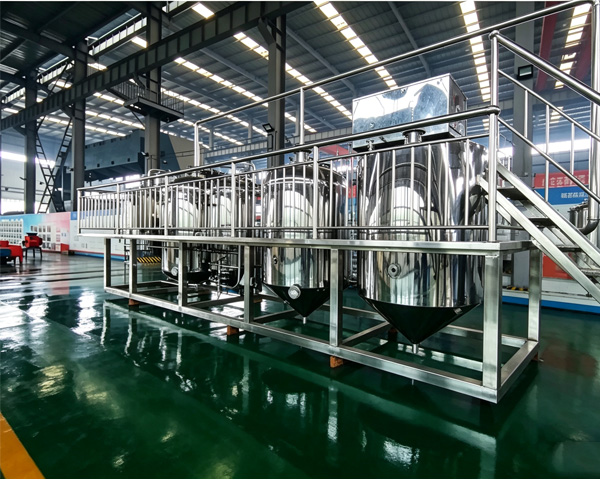
Cold Pressing Equipment Line: Mustard seed cleaning screens, magnetic separators, cold-press screw presses or hydraulic cold presses (with precision temperature control), plate-and-frame filter presses, vacuum oil filters, settling tanks, and automatic filling machines.
From equipment selection and process design to installation, commissioning, and personnel training, Huatai provides complete turnkey engineering services, serving customers in over 130 countries and regions worldwide.
Final Thoughts
The complete cold-pressed mustard oil process can be summarized in 5 key steps:
- Raw Material Cleaning – Removing impurities and defective seeds to build a foundation of quality
- Moisture Adjustment – Achieving the 6%-8% sweet spot for optimal pressing
- Low-Temperature Pressing – Keeping temperatures below 60°C to preserve myrosinase and pungent flavor
- Filtration – Removing coarse particles to improve clarity
- Settling – 7 to 15 days of aging to obtain clear finished oil
Each step requires precise process control and professional mustard oil processing equipment. If you are planning a mustard oil cold pressing project, please contact Huatai Group for professional process recommendations and equipment configuration guidance.