

Mustard Oil: Cold Pressed vs Hot Pressed – Which Process Is Right for You?
Mustard seed is one of the world’s most important oilseed crops, with mustard oil having a long culinary history across South Asia, Southeast Asia, and parts of Europe. Mustard seeds contain 35% to 46% oil. The global mustard oil market was valued at approximately $31.66 billion in 2025 and is projected to reach $38.45 billion by 2031, with cold-pressed mustard oil showing particularly strong demand growth.
Why do some mustard oils have a pungent, sharp bite while others are mild and mellow? The answer lies in the extraction process.
This article provides a systematic comparison of cold pressing and hot pressing for mustard oil across five key dimensions – oil yield, flavor profile, nutritional retention, shelf life, and equipment configuration – to help you choose the right process for your market positioning and product strategy.
I. Process Differences: Temperature Is the Dividing Line
The core difference between cold pressing and hot pressing lies in extraction temperature:
Cold Pressing: Mustard seeds are pressed without roasting or cooking, fed directly into mustard cold pressing equipment (such as hydraulic cold presses or low-temperature screw presses), with oil extraction temperature strictly controlled at ≤60°C – ideally between 40-50°C. Under these low-temperature conditions, myrosinase – the enzyme responsible for mustard’s pungent flavor – remains intact.
Hot Pressing: Mustard seeds are first roasted at high temperatures (110-140°C) in oilseed roasters, then pressed with extraction temperatures reaching 100-120°C. The high heat alters the internal structure of the seeds, making the oil easier to release.
II. Oil Yield Comparison: Hot Pressing Produces More
This is the most apparent difference between the two processes:
Hot Pressing Yield: 34%–40%
High temperatures break down cell walls and reduce oil viscosity, allowing the oil to flow more freely. A hot pressing line equipped with industrial-grade screw presses can achieve oil recovery rates of 85%–90%.
Cold Pressing Yield: 28%–34%
At lower temperatures, cell disruption is limited and oil release is less complete. Despite mustard seeds containing 35-46% oil, cold pressing typically yields only 28-34%.
Core Difference: Hot pressing yields approximately 6-10 percentage points more oil than cold pressing. For large-scale production, this gap directly determines raw material costs and profit margins.
III. Flavor Profile: Pungent vs Mellow
Cold Pressing – Preserves Natural Pungency
The pungent flavor of mustard comes from a natural compound called allyl isothiocyanate (AITC). Its formation process is as follows: when mustard seeds are crushed, myrosinase converts glucosinolates (GLS) into AITC.
Cold pressing keeps temperatures at ≤60°C, preserving myrosinase activity, allowing AITC to form and remain in the oil. This is what gives cold-pressed mustard oil its pungent, sharp, and intensely flavorful character – and it is precisely why India’s traditional “Kachi Ghani” (cold-pressed) mustard oil has been cherished for thousands of years.
Hot Pressing – Flavor Becomes Milder
When temperatures exceed 100°C, myrosinase loses activity, and the conversion of glucosinolates to AITC is blocked. The roasting process develops nutty, toasted aromas, but the pungency diminishes significantly. Hot-pressed mustard oil has a milder, more mellow flavor with nutty undertones.
Flavor Positioning: Cold pressing = pungent and intense – ideal for “authentic” and traditional flavor markets. Hot pressing = mellow and nutty – suitable for mainstream consumer tastes.
IV. Nutritional and Bioactive Compounds: Cold Pressing Preserves More
Cold pressing offers advantages not only in flavor but also in nutritional and bioactive compound retention:
Bioactive Compounds Preserved in Cold Pressing:
- Allyl isothiocyanate (AITC): Exhibits anti-inflammatory and antimicrobial properties
- Vitamin E: Natural antioxidant
- Polyphenolic compounds: Hot pressing loses approximately 40%
- Glucosinolates (GLS): Hot pressing loses over 60%
Nutritional Losses in Hot Pressing:
- High temperatures degrade heat-sensitive nutrients
- Polyphenolic compounds – approximately 40% lost
- Glucosinolates – over 60% lost
- May form trans fatty acids (0.5%–1.2%)
A study on mustard oil found that cold-pressed oil better maintains quality during 60 days of storage.
V. Shelf Life and Stability
Cold-Pressed Mustard Oil: As it is not refined, it contains more gums and trace moisture, resulting in a shorter shelf life and greater susceptibility to oxidation. The crude oil has a deep yellow color and cloudy appearance, requiring settling and filtration to become clear finished oil.
Hot-Pressed Mustard Oil: High-temperature processing reduces moisture content, giving it a longer shelf life.
Key Note: While cold-pressed oil is more nutritious, it requires stricter storage conditions. If your product is positioned for the premium market, you will need light-protective packaging and proper shelf life management.
VI. Complete Cold-Pressing Process for Mustard Oil
If you choose the cold-pressing route, the complete process consists of the following key stages – requiring a full set of mustard oil processing equipment:
1. Raw Material Cleaning: Air/sieve cleaners remove dust, shriveled seeds, and stems; magnetic separators remove iron filings; stones and moldy or blackened seeds are hand-picked – inferior seeds cause rapid oil rancidity and off-flavors.
2. Moisture Adjustment: Optimal moisture content for cold pressing is 6%–8%. Too much moisture → cloudy oil and poor pressing performance; too little moisture → significantly reduced oil yield. Some production lines can be equipped with seed dryers to precisely control incoming moisture.
3. Low-Temperature Pressing: Use cold-press screw presses or hydraulic cold presses with the heating function turned off, keeping the pressing chamber temperature below 60°C (ideally 40-50°C). Two-pass pressing can be applied: the first pass extracts oil, then the press cake is crushed and returned for a second pass to increase total oil yield.
4. Filtration and Settling: Crude oil is filtered through plate-and-frame filter presses or vacuum oil filters to remove coarse seed particles. It is then left to settle in a cool, dark place for 7-15 days, allowing the “foot” (sediment composed of proteins and fine seed powder) to collect at the bottom. The clear oil from the top is collected, while the bottom sediment can be re-filtered or used as animal feed.
5. Filling: Precise filling and sealing are carried out using automatic filling machines.
VII. How to Choose? – A Decision Guide
| Decision Factor | Recommended Cold Pressing | Recommended Hot Pressing |
|---|---|---|
| Product Positioning | Premium health oils, traditional flavors | Mass market, everyday cooking oils |
| Target Market | Health food stores, export markets | Supermarket retail, food service |
| Production Scale | Small to medium (<20 TPD) | Large scale (>30 TPD) |
| Yield Requirement | 28-34% acceptable | Target 34-40% |
| Flavor Goal | Pungent and intense | Mellow and nutty |
| Shelf Life Expectation | Shorter (requires proper storage) | Longer |
Huatai Mustard Oil Processing Solutions
Henan Huatai Intelligent Equipment Group has over 38 years of experience in oil equipment manufacturing, offering complete solutions for both cold pressing and hot pressing of mustard oil:
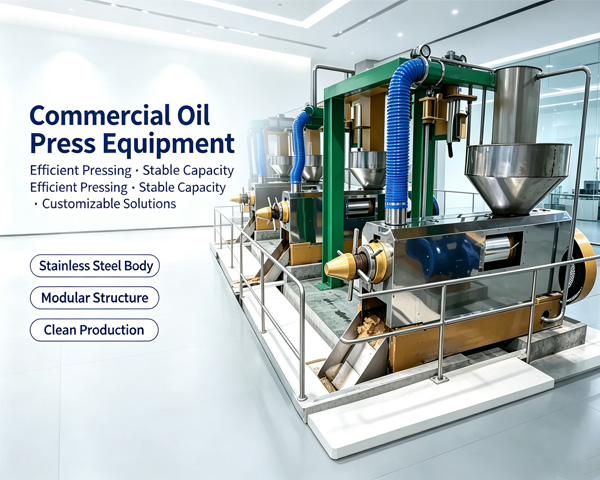
Cold Pressing Equipment Line: Mustard seed cleaning screens, magnetic separators, hydraulic cold presses or low-temperature screw presses (with precise temperature control), plate-and-frame filter presses, vacuum oil filters, settling tanks, and automatic filling machines. Ideal for small to medium-scale production of high-value-added products.
Hot Pressing Equipment Line: Mustard seed cleaning screens, magnetic separators, drum-type oilseed roasters (110-140°C temperature control), industrial-grade screw presses, plate-and-frame filter presses, and refining equipment. Ideal for large-scale, continuous production.
From equipment selection and process design to installation, commissioning, and personnel training, Huatai provides complete turnkey engineering services, serving customers in over 130 countries and regions worldwide.
Final Thoughts
There is no absolute “better” or “worse” between cold pressing and hot pressing for mustard oil – only what is “more suitable” or “less suitable” for your needs:
- Cold Pressing: ≤60°C low-temperature pressing, fully preserves myrosinase and AITC, oil yield 28-34%, flavor pungent and intense, nutrition fully retained – ideal for premium health oil markets and traditional flavor products
- Hot Pressing: 110-140°C roasting, oil yield 34-40%, flavor mellow and nutty, shelf life longer – ideal for mass markets and large-scale production
Your choice depends on your product positioning, target market, and production capacity planning. If you are planning a mustard oil processing project, please contact Huatai Group for professional process recommendations and equipment configuration guidance.