

Cottonseed Oil Refining Process Explained: A Detailed Guide to Degumming, Neutralization, Bleaching, and Deodorization
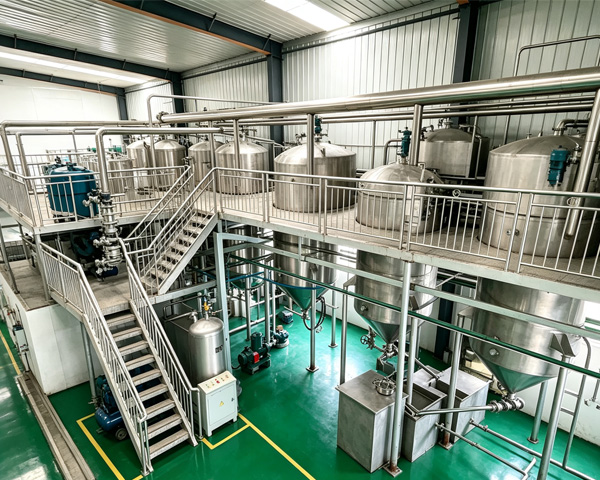
After extraction from cottonseed kernels, crude cottonseed oil appears dark red and contains various impurities including gossypol, phospholipids, free fatty acids, pigments, and odorous compounds. Among these, gossypol is a unique risk component in cottonseed oil – present at approximately 1% in crude oil – giving the oil its deep red color while also exhibiting physiological toxicity. This is the fundamental reason why crude cottonseed oil is not suitable for direct consumption.
The core objective of refining is to remove these impurities layer by layer, reducing gossypol content from approximately 1% to below 0.02%, ultimately meeting national food safety standards. Once refined, cottonseed oil is not only safe for consumption but also rich in essential fatty acids including linoleic acid (44.9%–55.0%) and palmitic acid (21.6%–24.8%), with a digestibility rate as high as 98%.
This transformation does not happen in a single step. It is achieved progressively through four core stages – degumming, neutralization, bleaching, and deodorization. Each stage targets specific impurities and requires specialized refining equipment, working together to form a complete cottonseed oil refining production line.
I. Degumming: Removing Phospholipids and Gums
Why Is Degumming Necessary?
Crude cottonseed oil contains gummy impurities such as phospholipids, proteins, and mucilaginous substances. Phospholipids tend to foam and form dark precipitates when heated, affecting the oil’s stability and appearance. If these gums are not removed early in the refining process, they can interfere with the efficiency of subsequent neutralization and bleaching stages.
Principle and Operation of Degumming
The core principle of degumming is separating gums from the oil. The most common method is acid degumming: phosphoric acid (typically 0.02%–0.1% by weight of the oil) is added to the crude cottonseed oil at 70–80°C with thorough mixing, causing phospholipids to hydrate, swell, and agglomerate into gum particles. These agglomerated gums are then removed by centrifugal separation or natural settling.
Huatai’s degumming tanks, equipped with heating and agitation systems, precisely control temperature and mixing time to ensure consistent and reliable degumming performance. After degumming, the gum content in the oil is significantly reduced, creating optimal conditions for the subsequent neutralization stage.
II. Neutralization: Removing Free Fatty Acids
Why Is Neutralization Necessary?
The free fatty acid (FFA) content in crude cottonseed oil typically ranges from 0.8%–1.2%. Free fatty acids are the primary cause of rancidity and off-flavors in oils – high-acid-value oils not only have poor taste but also shorter shelf life. The core goal of neutralization is to convert these free fatty acids into separable soapstock.
Principle and Operation of Neutralization
Neutralization uses the alkali refining method: sodium hydroxide (caustic soda) solution is added to the degummed cottonseed oil, and the alkali reacts with free fatty acids through saponification to form soapstock, which is insoluble in oil.
In practice, the alkali solution concentration is typically maintained at 12–16°Bé, the reaction temperature at 60–70°C, and the reaction time at approximately 25–40 minutes. To achieve optimal deacidification, the process typically employs a 1.0% excess alkali strategy – meaning slightly more alkali is added than theoretically required to ensure complete neutralization of free fatty acids.
After the reaction is complete, the mixture is heated to agglomerate the soapstock, which is then separated from the oil using a centrifugal soap separator. The separated oil is washed with 85°C soft water to remove residual soap and alkali, reducing residual soap content to below 30 ppm.
The alkali refining reactors and centrifugal soap separators used in the neutralization stage are core components of any cottonseed oil refining equipment system, directly influencing deacidification efficiency and the stability of the finished oil.
III. Bleaching: Adsorbing Pigments and Impurities
Why Is Bleaching Necessary?
After degumming and neutralization, the acid value of the oil meets standards, but the color often remains dark. Cottonseed oil contains pigments such as chlorophyll and carotenoids, as well as dark-colored compounds formed from gossypol degradation. Additionally, trace amounts of soapstock, metal ions, and oxidation products may still be present in the oil. These pigments and impurities not only affect appearance but also reduce the oxidative stability of the oil.
Principle and Operation of Bleaching
Bleaching uses the adsorption method: under vacuum conditions, activated bleaching clay is added to the oil. The porous structure of the clay adsorbs pigments and impurities, which are then removed by filtration.
In practice, bleaching clay is typically added at 0.8%–1.5% by weight of the oil (some processes may use up to 2%), with bleaching temperatures of 90–110°C, a vacuum level of approximately 0.098 MPa, and an agitation time of 20–30 minutes. Some processes employ two-stage bleaching, allowing the clay to reach full adsorption capacity during the second stage.
Huatai’s bleaching equipment system consists of three core units: the bleaching tank, vacuum system, and leaf filter. The bleaching tank operates under vacuum to prevent oil oxidation during high-temperature bleaching. After bleaching, the leaf filter removes the spent clay with adsorbed pigments, yielding cottonseed oil with significantly improved color.
IV. Deodorization: Removing Odorous Compounds
Why Is Deodorization Necessary?
Even after the first three refining stages, residual volatile odorous compounds – including low-molecular-weight aldehydes, ketones, and free fatty acids – may still be present in the oil. These compounds impart unpleasant odors that negatively impact consumer acceptance. Deodorization is the final refining stage and a critical step in determining the finished oil’s flavor and aroma.
Principle and Operation of Deodorization
Deodorization uses high-temperature, high-vacuum steam distillation: oil is heated to 210–240°C under high vacuum (absolute pressure 1.3–2.6 mbar), and direct steam is injected to carry away volatile odorous compounds.
In practice, the amount of stripping steam is typically 1%–3% of the oil weight, with a deodorization time of 60–90 minutes. Higher temperatures, lower vacuum levels, and greater steam volumes generally result in more thorough deodorization. However, excessive temperatures may cause oil oxidation and nutrient loss. Research indicates that to minimize quality degradation, deodorization temperatures should not exceed 220°C, and the duration should be kept under 3 hours.
Huatai’s deodorization equipment system includes the deodorization tower, vacuum system, and fatty acid trap. The deodorization tower uses a tray or packed design to create a thin film of oil, reducing high-temperature residence time. The vacuum system maintains a stable high-vacuum environment to ensure effective deodorization. After this stage, the cottonseed oil has a pure, neutral flavor and stable quality, with gossypol content reduced to below 0.02%, making it ready for filling as finished edible oil.
Key Operating Parameters at a Glance
| Refining Stage | Temperature Range | Time / Key Parameters | Primary Target |
|---|---|---|---|
| Degumming | 70–80°C | Phosphoric acid 0.02%–0.1% | Phospholipids, gums |
| Neutralization | 60–70°C | 1.0% excess alkali, 25–40 min | Free fatty acids |
| Bleaching | 90–110°C | Clay 0.8%–1.5%, vacuum 0.098 MPa | Pigments, residual soap |
| Deodorization | 210–240°C | Vacuum 1.3–2.6 mbar, 60–90 min | Odorous compounds |
From dark red crude cottonseed oil to clear, safe refined edible oil, the four stages of degumming, neutralization, bleaching, and deodorization are interconnected and indispensable:
- Degumming – removes phospholipids and gums, clearing the path for subsequent stages
- Neutralization – removes free fatty acids, lowers acid value, and improves stability
- Bleaching – adsorbs pigments and impurities, giving the oil a clear, bright appearance
- Deodorization – removes odorous compounds, delivering a pure, neutral flavor
Each stage targets specific impurities and requires precise control of parameters including temperature, time, and vacuum level, along with specialized cottonseed oil refining equipment – from degumming tanks, alkali refining reactors, and centrifugal soap separators, to bleaching tanks, vacuum systems, and leaf filters, and finally to deodorization towers and fatty acid traps. Every piece of equipment plays an irreplaceable role in the refining chain.
If you are planning a cottonseed oil processing project, please contact Huatai Group for professional refining process recommendations and equipment configuration guidance.