

Soybean Conditioning Process Explained: How Heating Optimizes Pressing and Extraction Efficiency
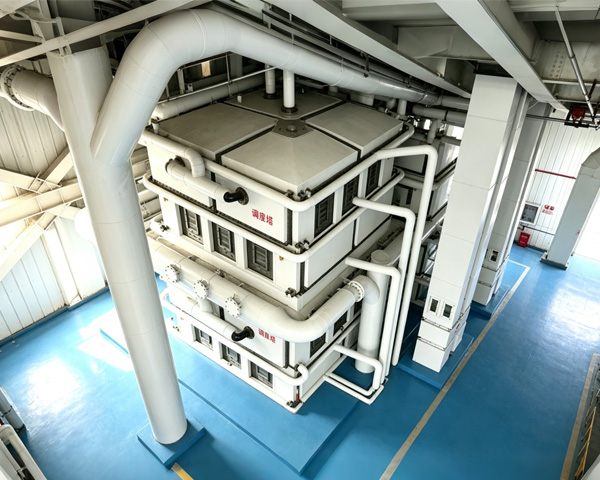
In the edible oil processing industry, soybean conditioning is a critical step in the pretreatment plant. Conditioning (also known as heat treatment) uses heating and moisture adjustment to significantly improve the physical and chemical properties of soybeans, creating optimal conditions for subsequent crushing, dehulling, flaking, pressing, and extraction. Unconditioned soybeans have dense cell structures and poor oil fluidity, leading to low oil yield and high energy consumption. This article provides an in-depth analysis of the scientific principles of soybean conditioning and its impact on the entire edible oil pretreatment line.
I. Why Do Soybeans Need Conditioning?
The cotyledon cells of mature soybeans are tightly arranged, with almost no intercellular spaces, resulting in a dense, damage-resistant structure. The oil inside the cells exists as tiny droplets covered by a protein membrane. This natural structure hinders oil release. Through conditioning, using heat and moisture, we can:
– Disrupt cell wall structure and increase oil permeability
– Alter protein properties and reduce oil droplet surface tension
– Adjust moisture content to optimize material plasticity
– Facilitate separation of soybean hulls from cotyledons
These changes lay the foundation for the efficient operation of soybean pretreatment equipment (such as crushers and flaking mills).
II. Key Changes During Conditioning
Soybean conditioning is typically carried out in a conditioning tower, using steam and hot air to heat soybeans to 60-75°C and adjust moisture to approximately 10%. The core scientific principles during conditioning are as follows:
1. Protein Denaturation: Releasing Oil
Oil in soybeans is encased by protein membranes. When heated to 65-75°C, the proteins on the oil body surface begin to denature, coagulate, swell, and soften. After the protein structure is disrupted, the previously trapped oil droplets can aggregate and be released. The pressure generated by protein denaturation causes many relatively independent oil droplets to coalesce into finer droplets, while the affinity between liquid oil and solid surfaces decreases, achieving optimal oil-oil separation.
2. Phospholipase Activation: Modifying Phospholipid Form
Another important effect of heating on soybeans is the change in phospholipase activity. Phospholipase is activated at approximately 55°C and its activity can be maintained up to about 100°C. Within this temperature range, given sufficient exposure area and time, phospholipase decomposes non-fatty acid components of phospholipids, converting phospholipids from a hydratable form to a non-hydratable form. The resulting calcium and magnesium salts of phosphatidic acid are generally more soluble in oil than in water. This conversion directly affects the process design of the subsequent degumming stage.
3. Moisture Changes: Disrupting Cell Structure
Water in soybeans exists as free water, bound water, and adsorbed water. At high temperatures, water in the cells expands and evaporates through capillaries, causing the cell wall to be subjected to expansion forces that disrupt its structure. Simultaneously, the soybean hull also experiences expansion forces, reducing the adhesion between hull and cotyledon, sometimes even causing automatic separation. This makes the dehulling process after pressing easier, with hulls separating more readily from the cotyledons.
4. Cell Wall Softening: Improving Solvent Permeability
High temperatures also induce changes in the cell wall, weakening the “bonding” between cells, reducing the cell’s protective capacity, and increasing oil permeability. During subsequent solvent extraction, the solvent can easily penetrate the cells and carry out the oil. Furthermore, conditioning imparts proper plasticity to soybeans, making them easy to stretch and flatten during rolling, minimizing breakage and producing uniform thin flakes. This improves the forming effect of the flakes and reduces the energy consumption of the flaking mill.
III. Conditioning Process Parameters and Objectives
| Parameter | Typical Range | Objective |
| Temperature | 60-75°C (initial stage); 90-110°C (before pressing) | Protein denaturation, reduce oil viscosity |
| Moisture | Approx. 10% | Optimize plasticity, promote cell structure disruption |
| Heating method | Steam + hot air | Uniform heating, avoid localized overheating |
For the pre-pressing + extraction process, soybeans are typically heated to 90-110°C to reduce oil viscosity, facilitate oil discharge during pressing, and obtain a high-quality pre-pressed cake. This heating is usually carried out in two stages: first, heating to about 65°C before flaking, and then final heating to about 100°C before entering the soybean pressing equipment (oil press). High temperature reduces the viscosity of the oil inside the press, making it easier to discharge. Intense drying and the evaporation and expansion of internal water greatly disrupt the cellular structure of the soybeans. The final low moisture content maximizes friction inside the press, thereby maximizing internal pressure. All these characteristics improve oil extraction yield and minimize residual oil in the press cake.
IV. Impact of Conditioning on Downstream Processes
1. Impact on Crushing and Dehulling
Proper conditioning makes soybean hardness uniform, enabling the crusher to work efficiently, while reducing the adhesion between hull and cotyledon for more thorough dehulling.
2. Impact on Flaking
Conditioned soybeans have appropriate plasticity and moisture, allowing them to be rolled into thin, uniform flakes in the flaking mill without breaking easily. This increases the contact area between solvent and oil, improving the extraction efficiency of soybean extraction equipment.
3. Impact on Pressing and Extraction
Conditioning reduces oil viscosity and improves fluidity, making it easier for oil to be discharged from the oil press and reducing residual oil rate. At the same time, disrupted cell structures allow solvent to penetrate easily, shortening extraction time and reducing energy consumption.
4. Impact on Energy Consumption and Equipment Wear
Uniform conditioning reduces the generation of fines during crushing and flaking, lowering equipment wear and energy consumption. Proper conditioning improves oil extraction efficiency and reduces energy consumption and wear on flaking and expansion equipment.
V. Technical Advantages of Huatai Soybean Conditioning Tower
Henan Huatai Grain and Oil Machinery Co., Ltd. provides complete soybean pretreatment equipment, including conditioning towers, crushers, flaking mills, expanders, and more. The Huatai conditioning tower features:
– Efficient heat transfer design: Multi-tray structure ensures full contact between soybeans and hot air/steam for uniform heating
– Precise temperature control system: Automatically adjusts steam volume and air temperature to meet conditioning requirements for different oilseeds
– Energy saving and environmental protection: Waste heat recovery system reduces energy consumption
– Versatility for multiple oilseeds: Suitable not only for soybeans but also for rapeseed, cottonseed, peanuts, etc.
Huatai can provide a complete edible oil pretreatment line from conditioning, crushing, flaking to pressing and extraction, helping oil mills achieve high oil yield, low energy consumption, and high-quality production.
Soybean conditioning is not simply heating and drying; it is a comprehensive technology involving protein chemistry, enzymology, cell biology, and fluid dynamics. A scientific conditioning process can significantly improve the efficiency of subsequent crushing, flaking, pressing, and extraction, reduce energy consumption and equipment wear, and ultimately increase oil yield and economic benefits.
Whether you are planning a new soybean oil plant or retrofitting an existing line, choosing efficient soybean conditioning tower and scientific process parameters is a key step toward high profitability. Please contact Huatai Group for professional conditioning process solutions and equipment quotes.