

How Much Does a Sunflower Oil Production Line Cost in 2026? The Hidden Cost Variables Buyers Miss
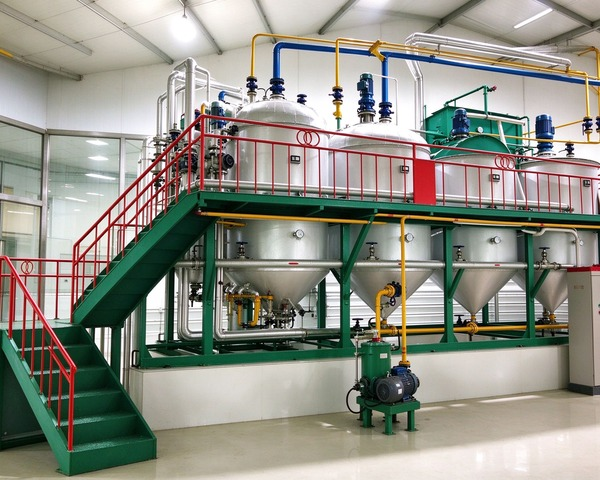
“How much does it cost to build a sunflower oil production line?”—Every investor asks this question, but the “quote” provided by equipment suppliers often only covers the equipment itself.
Industry data for 2026 reveals that equipment CAPEX only accounts for a portion of the initial project capital. One feasibility study breaks down the costs to show that equipment CAPEX accounts for about 48% of initial capital, direct construction accounts for 10%, and utility connections account for 8%, with the rest allocated to land, permits, and contingencies. This means that if you build your budget solely based on equipment quotes, the actual implementation cost could be more than 50% higher than expected.
Huatai Intelligent Equipment Group, with over 38 years of engineering experience in oil processing equipment, does not provide a “one-size-fits-all quote.” Instead, this article focuses on three hidden variables that do not appear on an equipment quotation but significantly alter the total investment and payback period: installation fees, dewaxing operating energy, and the absolute dominance of raw material costs on profitability.
I. Installation Costs: The “Silent Cost” of 15%–25% Beyond the Equipment Quote
When requesting quotes from suppliers, buyers typically receive an FOB (Free on Board) or ex-factory price. However, this number is still a long way from a “running production line.”
Installation and commissioning costs typically account for 15%–25% of the equipment investment. High-spec stainless steel pipe welding, non-destructive testing, and system integration debugging are high-risk areas for budget overruns. If the project site lacks skilled food-grade pipe welders, this cost can escalate to 25%–30%.
Taking a 50 TPD sunflower oil production line as an example, assuming the main equipment quote is $600,000, and estimating installation at 20%, the actual implementation cost requires a reserve of $720,000. If the site also requires new plant construction or transformer capacity expansion, civil works and utilities will add further layers. A viable budgeting principle is: reserve at least a 30% buffer on top of the equipment quote to cover installation, civil works, and utility connections.
II. The Dehulling Decision: The First 15%–25% Budget Swing
Before discussing pressing versus extraction, an earlier decision directly changes the budget structure: whether to dehull.
Sunflower seed hulls account for 30%–40% of the seed weight. Not dehulling lowers the initial equipment investment, but the hulls absorb oil and reduce the oil yield; more critically, waxes in the hulls enter the crude oil, significantly increasing the burden and cost of subsequent refining and dewaxing. Choosing the dehulling process requires additional sunflower seed dehulling machines and kernel-hull separation equipment, but it yields high-protein sunflower meal (a valuable by-product) and produces a lighter-colored crude oil. Industry data explicitly states that the “dehull vs. no-dehull” decision can swing the budget by 15%–25%.
Furthermore, conditioning (cooking) in the pretreatment stage is an easily underestimated hidden cost factor. The moisture and temperature of sunflower kernels need precise adjustment to properly denature proteins and prevent “slipping” inside the pressing chamber of the screw oil press—a common process failure point in small oil mills. The configuration and temperature control accuracy of the conditioning equipment directly affect pressing efficiency and equipment stability.
III. Dewaxing: Not Just Equipment Cost, But the Hidden Electricity Cost in OPEX
For projects producing Grade 1 transparent finished oil, dewaxing (winterization) is an indispensable stage. The natural wax content in sunflower oil is higher than in soybean oil and rapeseed oil. Without dewaxing, the oil will become cloudy at low temperatures, failing to enter supermarket shelves or pass export cold tests.
However, the cost structure of dewaxing has an easily overlooked characteristic: cooling energy is the largest recurring operating cost, not a one-time equipment investment. The cooling and holding cycle for sunflower oil is longer—typically requiring 6 to 8 hours of slow agitation to ensure wax crystals grow to a filterable size. The longer the cooling cycle, the higher the electricity consumption of the chiller units.
Industry data shows that with energy-efficient optimized designs for chilled water units, the electricity consumption per winterization cycle can be reduced by 30%–40%. This means that when evaluating dewaxing solutions, the energy efficiency rating and rational cooling capacity configuration of the chiller units are more worthy of attention than the purchase price of the equipment itself. A 100 TPD scale crystallizer and plate-and-frame filter press may cost around $20,000 in equipment investment, but the electricity costs of the chiller units over several years could easily exceed this figure. Buyers should incorporate the monthly electricity consumption of the dewaxing section into their OPEX budget, rather than just comparing equipment quotes.
IV. Raw Material Cost: 85%–94% of OpEx Determines Where the Profit Leverage Is
When the budget shifts from CAPEX to OPEX, the cost structure undergoes a fundamental change.
Multiple authoritative data sources point to the same conclusion: raw material costs absolutely dominate sunflower oil operating expenses. A FAO AGRIS study on the Kazakh oil and fat industry shows that material costs account for over 94% of unit product costs, indicating the industry’s high dependence on raw material price fluctuations. IMARC Group’s feasibility report also points out that raw materials (crude oil/oilseeds) account for 85%–90% of total operating expenses in edible oil manufacturing, while utilities (electricity, steam, etc.) account for only 5%–10%.
The implication of this data is very clear: the improvement in profit from a 1 percentage point increase in oil yield is far greater than any single cost saved on the processing side. Taking raw material prices in June 2026 as an example, the purchase price for oil-type sunflower seeds (with hulls) is about 2.98–3.82 RMB/jin (approx. $0.41–$0.53/kg), and the cost of dehulled sunflower kernels is about 7–9 RMB/jin; converted at an oil yield of 36%–45%, the raw material cost per jin of sunflower oil is approximately 7–9 RMB. Processing-side costs like electricity, steam, and labor are secondary in the face of this magnitude.
Therefore, for capacities above 50 TPD, investing in pre-pressing + solvent extraction to reduce the residual oil rate in the meal is economically justified—not because money can be saved on the processing side, but because the additional oil recovered directly corresponds to savings in raw material costs. Pre-pressing reduces the oil content in the meal to about 18%, and then a rotocel extractor or loop-type extractor extracts the residual oil, bringing the residual oil rate down to below 0.5%. Combined with a DTDC desolventizer-toaster and a solvent recovery system (recovery rate ≥99.5%), this maximizes the value of the raw material.
V. Budget Framework for Buyers: Define the Boundaries First, Then Discuss Numbers
Before requesting quotes from any supplier, it is recommended to frame the investment scope with the following four questions:
First, what is the daily processing capacity?
Below 20 TPD, mechanical pressing is a pragmatic choice; above 50 TPD, the residual oil rate economics of pre-pressing + extraction should be seriously evaluated; above 100 TPD, continuous refining and dewaxing are standard configurations.
Second, should you dehull?
If the target market is premium transparent oil or export, dehulling is almost mandatory—the increase in dewaxing OPEX caused by hull wax entering the crude oil often offsets the equipment investment saved upfront.
Third, has the dewaxing electricity budget been calculated?
Incorporate the monthly power consumption of the chiller units paired with the crystallizer into the operating estimates, rather than just comparing the purchase price of the dewaxing equipment.
Fourth, is the leverage of raw material costs fully utilized?
In a reality where raw materials account for over 85% of OpEx, prioritize evaluating process combinations that can minimize the residual oil rate.
Huatai Intelligent Equipment Group provides complete turnkey project services ranging from pretreatment equipment (cleaning screens, dehulling machines, crushers, softening conditioners, flaking mills) to screw oil presses, solvent extraction equipment, refining equipment, and dewaxing units (crystallizers, plate-and-frame filter presses). If you are planning a sunflower oil processing project for 2026, please contact the Huatai team to obtain equipment configuration and budget frameworks based on your capacity targets, raw material characteristics, and product positioning.
References
The data and case studies in this article are compiled from the following sources:
- QIE Group (2026): The 15%–25% impact of the dehulling decision on budget, 30 TPD pressing residual oil rate (5%–8%), pre-pressing + extraction residual oil rate (≤0.5%), necessity of dewaxing.
- Feasibility Study (2026): Equipment CAPEX at 48% of initial capital, direct construction at 10%, utilities at 8%.
- Fostechnos (2026): Dewaxing cooling energy as the largest recurring operating cost, 6–8 hour cooling cycle for sunflower oil, dewaxing OPEX characteristics.
- Kansa Chillers (2026): Energy-efficient chilled water unit designs can reduce electricity consumption per winterization cycle by 30%–40%.
- FAO AGRIS (2026): Material costs account for over 94% of unit product costs in the sunflower oil industry.
- IMARC Group (2026): Raw materials account for 85%–90% of OpEx, utilities for 5%–10%.
- Sohu/Zhihu (2026): Oil-type sunflower purchase price, kernel cost, and raw material cost converted from oil yield.
- Huatai Intelligent Equipment Group: Sunflower oil processing equipment technical data and project cases.
To verify specific data sources, please contact the Huatai Group technical team for relevant reference materials.