

Crude, Refined or Unrefined Oil: What Should Your Plant Produce?
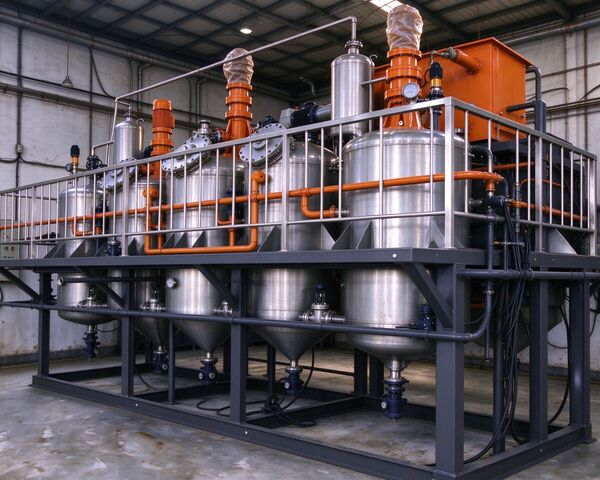
In the edible oil processing industry, a seemingly simple yet often blurred question is: What should your plant actually produce—crude oil, refined oil, or unrefined oil?
The reason this question is difficult is that in the consumer context, “refined” and “unrefined” are often reduced to a binary opposition of “healthy” vs. “unhealthy.” However, from the perspective of a plant decision-maker, the real dimensions to consider are smoke point, acid value, neutral oil loss (NOL), and product premium—these quantifiable metrics determine the profitability and market positioning of a production line.
Huatai Intelligent Equipment Group has over 38 years of engineering experience in oil processing equipment. This article breaks down the essential differences between the three product types across three dimensions—chemical boundaries, safety risks, and refining economics—using real research data to help you make decisions that align with your capacity and market positioning.
I. The Chemical Boundaries of the Three Products: Acid Value, Smoke Point, and Oxidative Stability
1. Acid Value: Unrefined Oils Have a Higher Average Acid Value
Acid value is a core indicator of free fatty acid content. A study published by FAO AGRIS compared the biochemical parameters of refined oils and unrefined oils (extra virgin olive oil, pumpkin seed oil), concluding definitively: the average acid value of unrefined oils is higher than that of refined oils. Higher acid value means the oil is more prone to rancidity and has a shorter shelf life. For supermarket channel products where shelf-life stability is a priority, refining is a necessary process choice.
2. Smoke Point: The “Hard Constraint” of Unrefined Oil
Smoke point determines the cooking methods for which the oil is suitable. The difference between refined and unrefined is extremely significant in smoke point:
| Oil Type | Unrefined Smoke Point | Refined Smoke Point |
|---|---|---|
| Sunflower oil | 107°C | 252–254°C |
| Avocado oil | 200°C | 271°C |
| Olive oil | 160°C | 271°C |
The Austrian Agency for Health and Food Safety (AGES) explicitly states: refined edible oils have better thermal stability, a near-neutral flavor, and a longer shelf life than unrefined oils; unrefined oils have poorer thermal stability and a shorter shelf life, and cold-pressed oils cannot withstand high temperatures. The low smoke point of unrefined oil means it is not suitable for high-temperature frying scenarios, but it perfectly matches the consumer scenarios of cold dishes, dipping, and low-temperature cooking.
II. Safety Risks: The “Hidden Costs” of Unrefined Oil
Unrefined oil retains more natural components, but it also retains potential contaminants from the raw materials.
The FDA’s food hazard guide lists non-highly refined oils such as cold-pressed oils as products requiring attention for pesticide residues and aflatoxins, particularly cold-pressed oils derived from peanuts, tree nuts, sesame, and sunflower seeds. The degumming, deacidification, bleaching, and deodorization processes during refining remove impurities while also removing a significant proportion of contaminants.
This means: the high premium of unrefined oil must be premised on strict raw material quality control. If the raw material source cannot be guaranteed to be organic or low-contamination, the safety barrier provided by the refining process is irreplaceable.
III. The Refining Economic Equation: The Quantitative Impact of NOL Loss and Enzymatic Degumming
Refining is not “free.” Each process step removes a portion of neutral oil along with the impurities. But refining loss is not a fixed cost—process selection and technological upgrades can directly change this equation.
1. Baseline Data for NOL
According to the U.S. Soybean Export Council (USSEC), the median neutral oil loss (NOL) for chemical refining of soybean oil is 0.90% in the U.S. and 1.58% in Brazil. Adding the fixed losses in the bleaching and deodorization stages, the comprehensive refining loss is approximately 1.65%–2.33%. Academic research gives a wider range: chemical refining NOL typically ranges from 5%–15%, while physical refining can reduce losses to 2%–5%.
2. NOL Economic Calculation for a 50 TPD Soybean Oil Plant
Taking a plant processing 50 tons of soybean oil per day as an example, assuming a crude oil price of $1,100/ton and a refined oil (RBD) price of $1,250/ton (referencing the Q2 2026 U.S. RBD soybean oil price of $1,298/ton and the global average price range of $1,224-$1,350/ton).
| Metric | Chemical Refining (NOL 1.5%) | Physical Refining + Enzymatic Degumming (NOL 0.8%) |
|---|---|---|
| Daily refining loss | 0.75 tons | 0.40 tons |
| Annual refining loss (300 days) | 225 tons | 120 tons |
| Annual loss cost | $247,500 | $132,000 |
| Annual loss difference | — | $115,500 |
Key Conclusion: Reducing NOL from 1.5% to 0.8% recovers an additional 105 tons of oil annually, generating an additional annual revenue of approximately $115,500 at refined oil prices. This calculation isn’t in the oil yield number; it’s in the loss control of the refining workshop.
3. Enzymatic Degumming: The Technological Lever for Reducing NOL
Enzymatic degumming is a key technological breakthrough in reducing refining losses in recent years. FAO AGRIS research data shows that compared with traditional water degumming, PLA1 single-enzyme degumming increased oil yield by 0.86 percentage points, and PLC combined with PLA1 dual-enzyme degumming increased oil yield by 1.41 percentage points. Another study indicates that enzymatic degumming can increase oil yield by at least 2%, while reducing phosphorus content to below 10 mg/kg, or even as low as around 5 mg/kg, making it directly compatible with physical refining processes.
For a 50 TPD plant, a 1 percentage point increase in yield means recovering an additional 0.5 tons of oil per day. Enzymatic degumming not only reduces NOL but also further compresses operating costs by reducing chemical consumption and wastewater generation in the degumming process.
IV. Market Reality: Refined Is “Volume,” Unrefined Is “Value”
From the global market structure, refined oil remains the absolute mainstream. In 2025, refined oil holds a 72.8% share of the edible oil market, driven primarily by neutral flavor, long shelf life, and high-temperature cooking suitability. However, unrefined oil is the fastest-growing segment, expected to grow at a 6.72% CAGR.
The implication of this data is clear: refined oil is the “volume” base, while unrefined oil is the “value” growth point. The relationship between the two is not substitution, but stratification.
Taking cold-pressed walnut oil as an example, the global production in 2025 is approximately 39,500 tons, with an average price reaching $10,800/ton and a gross margin of approximately 32%. This price is far higher than that of bulk refined oil (e.g., RBD soybean oil at approximately $1,250/ton). The premium space comes from natural flavor, nutritional perception, and “minimally processed” positioning. However, the premise of this premium is: traceable raw materials, strict quality control, light-protective packaging, and proper shelf-life management.
V. Decision Tree: What Should Your Plant Produce?
Step 1: Is your daily processing capacity over 50 tons?
- Yes → Proceed to Step 2.
- No → Proceed to Step 3.
Step 2: Is your raw material single-sourced and stable in supply?
- Yes → Refined oil recommended (Chemical refining or Physical refining + enzymatic degumming). Core rationale: Economies of scale can absorb NOL losses, and refined oil has better compliance for supermarket and export channels.
- No → Refined oil recommended (Chemical refining, adaptable to raw material fluctuations). Core rationale: Chemical refining has higher tolerance for crude oil quality fluctuations.
Step 3: Is your raw material organic/traceable high-value oilseeds (walnut, tea seed, avocado)?
- Yes → Unrefined oil recommended (Cold-pressed). Core rationale: Low smoke point matches cold dishes, raw material quality control covers safety risks, and product premium is sufficient to cover the oil yield loss.
- No → Proceed to Step 4.
Step 4: Does your target market require high-temperature cooking suitability?
- Yes → Refined oil recommended. Core rationale: High smoke point, suitable for frying and food service channels.
- No → Unrefined oil (cold-pressed) or Refined oil (depending on brand positioning). Suggestion: Choose cold-pressed if the brand emphasizes “natural/minimally processed”; choose refined if it emphasizes “safe/stable.”
Combination Strategy: Many successful companies adopt a dual cold and hot pressing line strategy—a refining line for volume, and a cold pressing line for brand building. The two lines share pretreatment equipment (cleaning screens, destoners, magnetic separators, crushers), but are equipped with dedicated oil presses and refining equipment.
VI. Huatai Intelligent Equipment Group’s Product and Equipment Solutions
Huatai Intelligent Equipment Group offers a full range of solutions from cold press oil machines to edible oil refining equipment:
Cold Pressing Line Equipment: Hydraulic oil presses, low-temperature screw oil presses (temperature controlled ≤50°C), plate-and-frame filter presses, vacuum oil filters, automatic filling machines. Suitable for producing unrefined oil from high-value oilseeds such as walnuts, tea seeds, and avocados.
Refining Line Equipment: Degumming tanks (capable of integrating enzymatic degumming), alkali refining tanks, bleaching towers, deodorization towers, leaf filters. Customized chemical refining or physical refining solutions can be provided based on crude oil quality and NOL targets.
From equipment selection and process design to installation, commissioning, and personnel training, Huatai provides complete turnkey project services. If you are planning an oil processing project, please contact Huatai Intelligent Equipment Group for product and equipment solutions tailored to your raw material characteristics, capacity scale, and NOL targets.
References
The data and case studies in this article are compiled from the following sources:
- FAO AGRIS (2010): Comparative study of biochemical parameters and oxidative stability between refined and unrefined vegetable oils.
- AGES (Austrian Agency for Health and Food Safety): Thermal stability and smoke point comparison among refined, unrefined, and cold-pressed edible oils.
- U.S. FDA: Chemical hazard assessment guide for non-highly refined oils (cold-pressed oils) in oil products.
- USSEC (U.S. Soybean Export Council): Soybean oil neutral oil loss (NOL) data.
- FAO AGRIS (Enzymatic Degumming Study): Oil yield data for PLA1 single-enzyme and PLC+PLA1 dual-enzyme degumming.
- Expert Market Research (2026): RBD soybean oil price trends (Q2 2026 global average price $1,224-$1,350/ton).
- Market Research (2026): Global cold-pressed walnut oil market size, average price ($10,800/ton), and gross margin data.
- Straits Research (2026): Edible oil market refined and unrefined segment shares and growth forecasts.
To verify specific data sources, please contact the Huatai Group technical team for relevant reference materials.