

Batch vs. Continuous Oil Refining: How to Choose the Right Process for Your Business
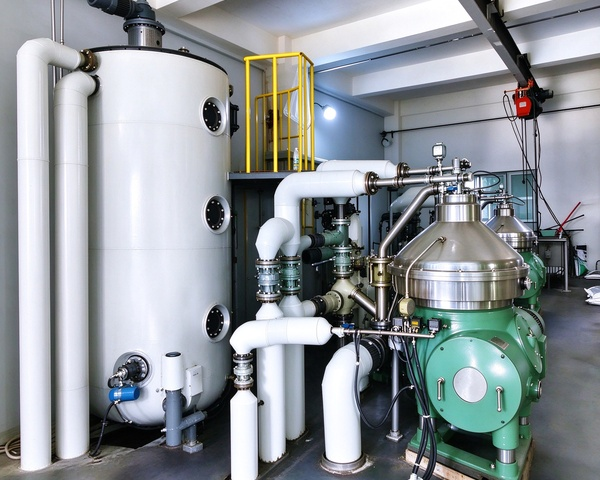
When planning an oil refining project, one of the most critical decisions investors face is choosing between batch refining and continuous refining. The process logic of these two systems is fundamentally different—batch refining processes each stage sequentially on a batch-by-batch basis, while continuous refining allows oil to flow uninterrupted through each processing unit. The choice directly impacts operating costs, product quality consistency, and capacity expansion potential for the next 5–10 years.
However, this decision is not simply a matter of “the more advanced, the better.” Batch systems remain the most practical choice for daily capacities below 20 tons, while the economic advantages of continuous systems only truly emerge above 50 tons per day. Between these two, semi-continuous systems (10–50 TPD) are becoming the “sweet spot” for a growing number of medium-sized oil mills.
This article systematically compares three refining systems across seven dimensions—capacity range, steam consumption, refining loss, footprint, automation level, product quality, and investment cost—and provides a quantitative ROI model and decision framework based on real data.
I. Process Logic Differences Among the Three Systems
Batch refining systems process oil in independent batches. The four stages—degumming, neutralization, bleaching, and deodorization—are carried out sequentially in four separate processing tanks; once one batch is complete, the next batch begins. A single batch cycle takes approximately 8–12 hours. This “complete one step, then move to the next” approach offers operational flexibility but requires frequent heating and cooling cycles.
Semi-continuous refining systems represent a middle ground. The front-end stages (degumming, deacidification, bleaching) use batch processing, while the deodorization stage is upgraded to a continuous deodorization tower, using steam to further remove free fatty acids for more thorough deodorization. This hybrid design balances flexibility and efficiency, with a typical capacity range of 10–50 TPD.
Fully continuous refining systems use sealed piping and towers. Oil continuously enters the system, and all processing stages occur simultaneously in different sections. Deodorization tanks are replaced by deodorization towers, and bleaching tanks are converted to tower designs. Some systems integrate degumming with bleaching and deacidification with deodorization in the same tower. Oil forms a thin film inside the deodorization tower, resulting in shorter high-temperature residence time and better peroxide value control. Typical capacity ranges from 50 to 1,000 TPD.
In one sentence: Batch refining is like “cooking in batches,” continuous refining is like “assembly line production,” and semi-continuous refining is “preparing ingredients in batches, then serving on a continuous line.”
II. Quantitative Comparison Across Seven Dimensions
1. Capacity Range
| System Type | Applicable Capacity Range |
|---|---|
| Batch | 0.5–20 TPD |
| Semi-continuous | 10–50 TPD |
| Fully continuous | 50–1,000 TPD |
UNIDO research clearly states that approximately 50 TPD is the minimum scale at which continuous operation becomes economically viable. For plants processing less than 20 TPD, batch refining is the more practical choice.
2. Steam Consumption
Steam consumption is one of the most significant differences among the three systems. Data shows:
| System Type | Deodorization Steam Consumption (kg/ton oil) |
|---|---|
| Batch | ~750 |
| Semi-continuous | ~700 |
| Fully continuous | ~472 |
Batch refining consumes approximately 750 kg of steam per ton of oil in the deodorization stage, while continuous systems consume only about 472 kg/ton. Semi-continuous systems consume approximately 700 kg/ton, falling between the two.
Continuous refining systems further reduce energy consumption through multi-stage waste heat recovery (using hot finished oil to preheat incoming crude oil), achieving 20–30% lower comprehensive energy consumption per ton of oil compared to batch systems. Heat recovery systems can save over 30% of steam consumption.
3. Refining Loss
Refining loss directly affects economic returns. Batch systems typically have a refining loss of 5–8%, while continuous systems can control it to 1–3%. Continuous systems use sealed continuous centrifugal separation to minimize oil loss. Continuous systems outperform batch systems in refining loss, refined oil color, alkali consumption, and bleaching performance. In continuous deodorization, oil loss is approximately 0.2%, compared to about 0.3% in a well-managed batch system.
4. Water Consumption
Water consumption is an often-overlooked indicator that equally affects operating costs. Data shows: batch refining consumes approximately 80 kg of water per ton of oil, while continuous refining consumes only about 32 kg/ton. In regions with water scarcity or high wastewater treatment costs, the cumulative effect of this difference cannot be ignored.
5. Automation Level and Labor Requirements
Batch systems typically require 3–5 operators per shift. Operators must manually monitor reaction endpoints and take samples for testing each batch. Product quality depends heavily on operator skill levels.
Continuous systems use PLC-based automatic closed-loop control to precisely regulate flow rate, temperature, alkali dosage, and bleaching clay addition. Only 1–2 operators per shift are needed, primarily for instrument monitoring and equipment inspection. At the same capacity, continuous systems require 60–70% less labor than batch systems.
6. Product Quality Consistency
Batch systems are more affected by operator skill levels and raw material variations, potentially resulting in batch-to-batch quality fluctuations. Research data shows that batch refining can have a batch-to-batch coefficient of variation (CV%) of ≥8%, while continuous systems can control the CV to ≤2%.
Continuous systems ensure product quality consistency through automated process control. Oil forms a thin film inside the deodorization tower, resulting in shorter high-temperature residence time and better peroxide value control.
7. Investment Cost
The investment costs of the three systems differ significantly:
| Capacity Scale | System Type | Equipment Investment Range (USD) |
|---|---|---|
| 10–30 TPD | Batch | $200,000 – $500,000 |
| 30–100 TPD | Semi-continuous | $500,000 – $1,500,000 |
| 100–500+ TPD | Fully continuous | $1,500,000 – $6,000,000+ |
Batch systems have the lowest initial investment, suitable for small to medium-sized investors with limited budgets. However, it should be noted that core mechanical equipment accounts for only 50%–70% of the total budget, with steam boilers, civil works, installation, and commissioning making up the remainder.
Semi-continuous systems have a single-unit equipment price of approximately 300,000 RMB, with low upfront investment and fast payback. Fully continuous systems require significantly higher initial investment, including complex towers, centrifuges, heat exchange systems, explosion-proof electrical equipment, and fire safety facilities.
III. Quantitative ROI Model: The Math for a 50 TPD Oil Mill
To make investment decisions more concrete, let’s take a medium-sized oil mill processing 50 tons of crude oil per day and run a complete calculation.
Base Assumptions
- 300 operating days per year
- Crude oil purchase price: approximately $800/ton
- Refined oil selling price: approximately $950/ton
- Steam cost: approximately $30/ton
- Electricity price: approximately $0.1/kWh
Annual Cost Difference Calculation
| Metric | Batch | Semi-continuous | Fully Continuous |
|---|---|---|---|
| Daily capacity | 50 tons | 50 tons | 50 tons |
| Refining loss | 6% | 4% | 2% |
| Annual refining loss | 900 tons | 600 tons | 300 tons |
| Annual loss cost | $720,000 | $480,000 | $240,000 |
| Steam consumption (kg/ton oil) | 750 | 700 | 472 |
| Annual steam consumption | 10,575 tons | 9,870 tons | 6,655 tons |
| Annual steam cost | $317,250 | $296,100 | $199,650 |
| Operators per shift | 4 | 3 | 1.5 |
| Annual labor cost | $180,000 | $135,000 | $67,500 |
| Annual total operating cost | $1,217,250 | $911,100 | $507,150 |
Payback Analysis
- Batch line: Equipment investment approximately $350,000, annual operating cost $1,217,250.
- Semi-continuous line: Equipment investment approximately $800,000, annual operating cost $911,100. Compared to batch, annual savings of approximately $306,150, with an equipment investment difference of $450,000. Incremental payback period: approximately 1.47 years.
- Fully continuous line: Equipment investment approximately $2,500,000, annual operating cost $507,150. Compared to semi-continuous, annual savings of approximately $403,950, with an equipment investment difference of $1,700,000. Incremental payback period: approximately 4.21 years.
Key Conclusion: For a 50 TPD oil mill, the semi-continuous system offers the best value—with an incremental payback period of only about 1.5 years, far faster than the 4.2 years for fully continuous. Although the fully continuous system has the lowest annual operating cost, its high initial investment requires a longer payback period. Only when daily capacity exceeds 100 tons do the scale benefits of fully continuous systems fully materialize.
IV. Semi-Continuous Systems: The “Sweet Spot” for Medium-Sized Oil Mills
Semi-continuous systems have become the ideal choice for medium-sized oil mills because of their precise balance across several dimensions:
Moderate investment threshold: Equipment investment of approximately $500,000–$1,500,000, falling between batch and fully continuous systems, making it manageable for medium-sized investors.
Balanced energy performance: Steam consumption of approximately 700 kg/ton oil, higher than fully continuous (472 kg/ton) but significantly lower than batch (750 kg/ton). More importantly, the deodorization stage of semi-continuous systems uses a continuous design, allowing further energy reduction through heat recovery systems.
Significantly improved quality consistency: Through partial automation and continuous production, semi-continuous systems elevate product quality consistency above batch systems, with batch-to-batch variation controlled at a lower range—suitable for product positioning that requires certain quality standards but has not yet reached export-grade requirements.
Moderate operational difficulty: Semi-continuous systems have lower technical requirements for operators than fully continuous systems. Technical teams at medium-sized oil mills can become proficient after training.
Modular upgrade path: An important advantage of semi-continuous systems is their modular design. When capacity needs grow, continuous bleaching towers, heat recovery modules, and other components can be gradually added to the existing semi-continuous system, enabling a smooth transition to a fully continuous system. This phased investment strategy reduces initial capital pressure while preserving future expansion space. For oil mills starting with batch systems, semi-continuous is the best intermediate step toward fully continuous.
Core Positioning: Semi-continuous systems are the critical springboard for small and medium-sized oil mills transitioning from “workshop-style production” to “scaled operations.”
V. How to Choose? — A Three-Step Decision Tree
For mill decision-makers, the following framework can help quickly determine the right choice:
Step 1: Is your daily processing capacity over 50 tons?
- Yes (≥50 TPD) → Proceed to Step 2.
- No (<50 TPD) → Proceed to Step 3.
Step 2: Is your oil type single and raw material supply stable?
- Yes (single oil type, stable supply) → Fully continuous refining system recommended. At scale, the continuous system has the lowest unit processing cost and the best product quality consistency.
- No (multiple oil types or unstable raw material supply) → Semi-continuous refining system recommended. Retains some flexibility while enjoying the efficiency and quality improvements of continuous deodorization.
Step 3: Is your daily processing capacity over 20 tons?
- Yes (20–50 TPD) → Semi-continuous refining system recommended. Moderate investment threshold, with energy consumption and quality superior to pure batch systems.
- No (<20 TPD) → Batch refining system recommended. Lowest investment, highest flexibility—suitable for specialty oils and small-batch export orders.
VI. Huatai Intelligent Equipment Group’s Three Refining System Solutions
Huatai Intelligent Equipment Group has a complete equipment system and extensive engineering experience in the field of oil refining. The group offers a full range of solutions from batch refining equipment, semi-continuous refining equipment to fully continuous refining production lines:
- Batch refining equipment: 1–20 TPD, low investment, flexible operation—suitable for small oil mills and specialty oil production
- Semi-continuous refining equipment: 10–50 TPD, balancing flexibility and production efficiency—suitable for medium-sized oil mills and factories with multiple product types
- Fully continuous refining production lines: 50–1,000+ TPD, PLC automatic control, multi-stage heat recovery, refining loss as low as 1–3%
Huatai’s core equipment, including degumming tanks, alkali refining tanks, bleaching towers, deodorization towers, and leaf filters, can be customized according to specific capacity requirements and oil characteristics. From equipment selection and process design to installation, commissioning, and personnel training, Huatai provides complete turnkey project services, serving customers in multiple countries and regions worldwide.
If you are planning an oil refining project, please contact Huatai Intelligent Equipment Group for a refining system solution tailored to your capacity scale, oil characteristics, and budget conditions.
References
The data and case studies in this article are compiled from the following sources:
- UNIDO: Comparative study of vegetable oil refining costs (continuous system operating cost advantages, 50 TPD economic threshold data)
- QFOILPressMachine (2025): Batch vs. continuous refining system steam and water consumption comparison data
- Industry technical data: Semi-continuous refining system steam consumption (700 kg/ton oil) and electricity consumption parameters
- Huatai Intelligent Equipment Group: Oil refining equipment technical data and project cases
To verify specific data sources, please contact the Huatai Group technical team for relevant reference materials.