

How Much Does It Cost to Build a Palm Oil Mill? The CAPEX and Hidden Revenue Levers Most Buyers Miss
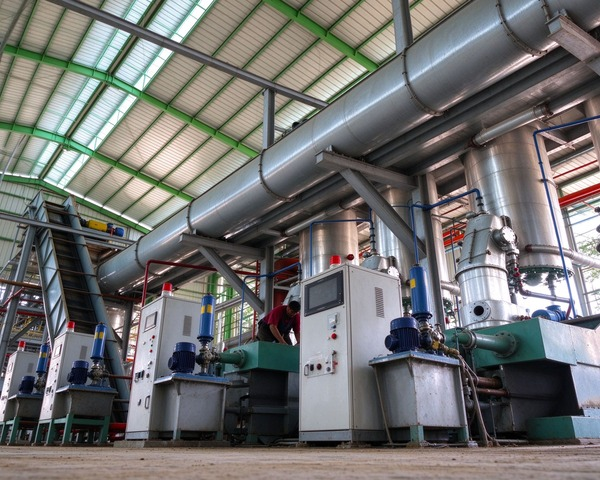
“How much does it cost to build a palm oil mill?”—Every investor asks this question when starting a project. However, the “quote” provided by equipment suppliers often only covers the process equipment itself.
Industry data for 2026 reveals that the process equipment package only accounts for a portion of the initial capital investment. A techno-economic assessment points out that total plant costs (including equipment, buildings, installation, and piping) account for about 47% of total capital investment. If you build your budget solely around the equipment quote, the actual implementation cost can exceed expectations by more than 50%.
Huatai Intelligent Equipment Group, with over 38 years of engineering experience in palm oil processing equipment, does not offer a “one-size-fits-all quote.” Instead, this article focuses on three hidden variables that do not appear on the equipment quotation but significantly alter the total investment and payback period: the true penetration of installation and financing costs, the leverage effect of by-product revenue, and the forced logic of equipment selection driven by raw material costs.
I. Capacity Scale and CAPEX: The Real Ranges from Small to Large
The capital expenditure of a palm oil mill grows non-linearly with capacity scale. Public data for 2026 provides the following reference ranges:
| Capacity Scale | Processing Capacity (FFB) | Total Investment Reference Range (USD) | Data Characteristics |
|---|---|---|---|
| Small | 1–5 tons/hour | $100,000 – $800,000 | Primarily process equipment packages, suitable for entry-level investors |
| Medium | 10–30 tons/hour | $1,500,000 – $5,000,000 | Includes more complete auxiliary systems and automation |
| Large/Integrated | >30 tons/hour | $5,000,000 – $50,000,000+ | Includes refining, fractionation, utilities, and environmental facilities |
It should be noted that these ranges cover the core process section from fresh fruit bunch (FFB) reception to crude palm oil clarification. If the project also includes palm kernel pressing, refining, or fractionation, the investment will increase further.
For investors with limited capital looking to enter at a lower threshold, the equipment package for a small pressing line (1–5 tons/hour) can be controlled at $100,000–$390,000. However, the automation level and product consistency of such configurations cannot compare to industrial-scale production lines, making them more suitable for local direct sales or regional markets.
II. Installation and Financing: The True Penetration Beyond Equipment Quotes
When requesting quotes from suppliers, buyers receive the FOB or ex-factory price of the equipment. But this number is still a long way from a “running production line,” and the cost of this distance is magnified in the 2026 financing environment.
Baseline proportions for installation and commissioning: According to breakdowns from multiple equipment suppliers, installation, commissioning, and training typically account for 5%–10% of the initial investment (QIE data). However, this proportion is specifically for equipment installation. When civil works and utilities are included, the proportion rises significantly—infrastructure and site preparation account for 20%–30%, and utility systems (boilers, generators, water treatment) account for 10%–18%.
The penetration of financing costs: This is the most easily overlooked variable in 2026. If the project requires equipment financing or commercial loans, the extension of the installation period will directly increase interest expenses. Consider a simplified scenario: assume the equipment quote is $600,000, and installation and civil works require an additional $300,000 (estimated at a 50% increment), bringing total project capital to $900,000. If 60% of this requires financing at an 8% annual interest rate, and the installation and commissioning period extends from 6 to 9 months, the interest cost alone increases by approximately $10,800. If the schedule is delayed due to a lack of skilled food-grade stainless steel pipe welding teams, this figure will be further amplified.
Therefore, a more robust budgeting principle is: reserve a buffer of at least 30% on top of the equipment quote, and include financing interest in the financial model based on a pessimistic estimate of the installation period (rather than an ideal one).
III. The Leverage of By-Product Revenue: What a 43% PKO Premium Changes
A palm oil mill does not only produce crude palm oil. Palm kernel recovery and Palm Fatty Acid Distillate (PFAD) are two easily underestimated revenue streams, and under the 2026 price structure, the leverage effect of the former on investment returns is particularly significant.
The PKO premium signal: Market data from October 2026 shows that the FOB Malaysia price of Crude PKO is $1,557/ton, while Crude Palm Oil (CPO) is $1,089/ton, representing a PKO premium of $468/ton, or 43%. This means that every additional ton of palm kernels recovered and successfully sold contributes significantly more revenue than an equivalent weight of CPO.
Translating this signal into a revision of investment returns is straightforward. Assume a palm oil mill with a capacity of 10 t/h FFB, operating 300 days a year, processing 240 tons of FFB per day. At a typical Kernel Extraction Rate (KER) of about 5%, the daily output of palm kernels is approximately 12 tons. If the efficiency of the palm kernel recovery system is inadequate, leading to a higher broken kernel rate or kernels entrained in the fiber, the quantity of sellable palm kernels decreases, and their grade drops. Conversely, an efficient fiber separation and palm kernel recovery system (such as the specialized separation equipment configured by Huatai) can keep the broken kernel rate to a minimum, ensuring palm kernels enter the market at a higher grade.
The positive cash flow of PFAD: For investors planning to extend into refining, PFAD is a by-product of physical refining with stable downstream demand in biodiesel and oleochemicals. In 2026, the FOB Malaysia price of PFAD ranged from $985–$1,063/ton. Although PFAD revenue does not directly come from the pressing stage, when evaluating “whether to configure refining,” the annual sales revenue of PFAD (depending on refining capacity and PFAD yield) should be included as a positive cash flow in the return model, rather than focusing solely on the refined oil premium.
Key Insight: Most existing cost guides focus on “how much it costs to build the mill” while ignoring “how much can be earned back from by-products after construction.” Under a market structure with a 43% PKO premium, the completeness and efficiency of the palm kernel recovery system is itself an ROI decision, not merely an “auxiliary equipment” choice.
IV. Raw Material Cost Dominance: The Profit Leverage of 1% Residual Oil Outweighs Any Single Saving on the Processing Side
When the budget shifts from CAPEX to OPEX, the cost structure undergoes a fundamental change.
QIE’s OPEX breakdown shows that in the processing-side unit cost, power and utilities account for 20%–28%, labor for 12%–18%, and maintenance for 8%–12%. But these figures are secondary to raw material costs. A FAO AGRIS study on the oil industry explicitly states that material costs account for over 94% of unit product costs, indicating the industry’s high dependence on raw material price fluctuations.
The forced logic for equipment selection is direct: if raw material costs are absolutely dominant, then improving oil yield (reducing residual oil) has a far greater impact on profit than saving any single cost on the processing side.
Take a plant processing 500 tons of FFB per day as an example. Assume the CPO price is $1,089/ton (referencing the October 2026 CPO FOB price). If the cake residual oil rate of the screw press drops from 6% to 5%, it means recovering about 5 additional tons of oil per day (based on FFB), or about 1,500 tons annually. At the CPO price, this translates to additional annual revenue of approximately $1.63 million.
The significance of this figure is that the incremental investment for a palm fruit twin-screw press with superior wear-part design and pressing chamber pressure control (compared to standard single-screw models) is typically in the range of tens of thousands to over a hundred thousand dollars. A 1 percentage point improvement in residual oil rate is sufficient to cover the incremental equipment cost in a short period at scale. This is the most direct coercion of raw material cost dominance on equipment selection—not “buying cheaper equipment,” but “buying equipment that can press the residual oil rate to the absolute minimum.”
The design of Huatai Intelligent Equipment Group’s palm fruit twin-screw press in terms of wear-part lifespan and PLC pressure control is precisely targeted at this economic logic. It works in conjunction with the palm fruit sterilizer (ensuring thorough cell disruption in the mesocarp) and the clarification system (reducing oil loss in wastewater) to form a complete efficiency chain from pressing to recovery.
V. Budget Framework for Buyers: Define the Boundaries First, Then Discuss Numbers
Before requesting quotes from any supplier, it is recommended to frame the investment scope with the following five questions:
- First, what is the daily processing capacity? 1–5 tons/hour corresponds to a small pressing line; 10–30 tons/hour corresponds to a medium configuration; above 30 tons/hour requires evaluating an integrated solution (including refining and fractionation).
- Second, has the penetration of installation and financing beyond the equipment package been calculated? Reserve 5%–10% of the equipment investment for installation and commissioning (QIE baseline), and 20%–30% for civil works and utilities. If financing is involved, include the interest cost corresponding to a pessimistic estimate of the installation period (rather than the ideal schedule) in the total capital.
- Third, has the leverage of by-product revenue been fully utilized? Under a market structure with a 43% PKO premium, prioritize evaluating the completeness and separation efficiency of the palm kernel recovery system, and include the annual sales revenue of PKO as a positive cash flow in the return calculation.
- Fourth, has the leverage of raw material costs been fully utilized? In a reality where raw materials absolutely dominate operating expenses, prioritize evaluating the pressing solution that can minimize the cake residual oil rate. Calculate the annual incremental revenue corresponding to a 1 percentage point reduction in residual oil rate, and compare it with the incremental investment of the equipment.
- Fifth, has PFAD been included in the refining decision? If a refining section is planned, include the annual sales revenue of PFAD (estimated within the $985–$1,063/ton range) in the refining investment return model.
Huatai Intelligent Equipment Group provides complete turnkey project services ranging from the palm fruit sterilizer, thresher, palm fruit twin-screw press, and clarification system to the palm kernel recovery system and refining equipment. If you are planning a palm oil processing project, please contact the Huatai team to obtain equipment configuration and budget frameworks based on your FFB characteristics, capacity targets, and product positioning.
References
The data and case studies in this article are compiled from the following sources:
- Oil Palm World (2026-10): PKO FOB Malaysia $1,557/ton, CPO $1,089/ton, premium $468 (43%)
- Expert Market Research (2026-10): PFAD FOB Malaysia 2026 price range $985–$1,063/ton
- QIE Machinery (2026): Installation, commissioning, and training at 5%–10% of initial investment; utilities at 10%–18%; civil works and steel structures at 10%–15%
- Huatai / Guance (2025–2026): Infrastructure and site preparation at 20%–30%; installation and commissioning at 5%–10%
- QIE Machinery (2026): Process equipment package at 45%–60% of initial capital
- FAO AGRIS: Material costs account for over 94% of unit product costs in the oil industry
- Huatai Intelligent Equipment Group: Palm oil processing equipment technical data and project cases
To verify specific data sources, please contact the Huatai Group technical team for relevant reference materials.