

Hydraulic vs. Screw Press: Why the Highest Oil Yield Doesn’t Always Win
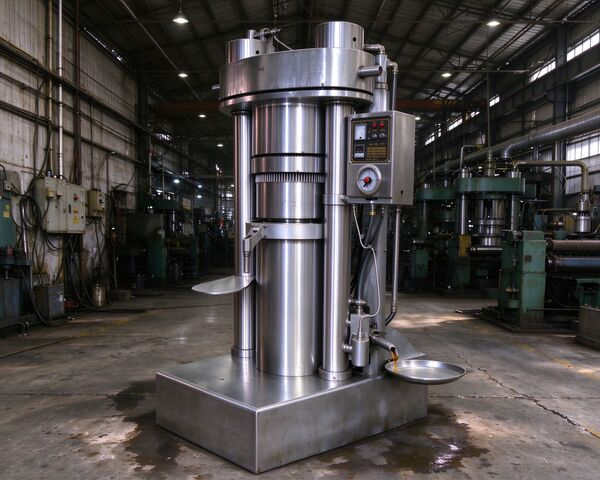
When selecting oil pressing equipment, a common intuition is: the higher the oil yield, the better the return on investment. Following this logic, hydraulic oil presses should be the first choice for all oil mills.
But the reality is that over 90% of commercial oil mills worldwide choose screw presses, not hydraulic presses.
Why isn’t oil yield the sole determining factor? The answer doesn’t lie in a single oil yield number, but at the intersection of capacity, temperature, refining costs, and business models. Huatai Intelligent Equipment Group, with over 38 years of equipment manufacturing experience in the oil pressing field, breaks down the fundamental differences between hydraulic and screw presses across four dimensions: working principles, hidden costs of cold pressing quality, multi-oilseed ROI, and selection decision-making.
I. Working Principles: Static Pressure vs. Dynamic Shearing
Hydraulic oil presses use a high-pressure oil pump to drive a hydraulic cylinder, applying static pressure to oilseeds loaded in the pressing chamber. Operating pressure is typically between 300–800 bar. Pressing is intermittent: loading, pressing, and cake discharging take 30–60 minutes per batch. Because there is no continuous friction between a screw and the material, the temperature rise in hydraulic pressing is extremely low, maintaining working temperatures between ambient temperature and 50°C—very close to strict cold pressing conditions.
Screw oil presses rely on a rotating screw shaft to continuously push material through the pressing chamber, generating pressure as the space gradually decreases. The friction heat between the material and the chamber/screw raises the pressing temperature to 50–130°C, and even higher in hot pressing modes. This continuous operation mode brings extremely high throughput, with a single machine capacity reaching 2–14 tons per day, while hydraulic presses typically only achieve 0.05–0.3 tons.
In one sentence: Hydraulic relies on “static pressure and slow extraction”—low temperature and good quality but limited capacity; screw relies on “dynamic shearing”—high capacity but with unavoidable temperature rise.
II. The Hidden Cost of Cold Pressing Quality: How Phosphorus Content Determines the Refining Equation
The true advantage of hydraulic pressing in cold pressing scenarios is not in the oil yield number, but in an easily overlooked indicator—phosphorus content.
Phospholipids are naturally occurring colloidal substances in oils. Pressing temperature directly determines the amount of phospholipids that enter the oil. Oils pressed at low temperatures (<45°C) typically have phosphorus content below 20 ppm; while high-temperature pressing can result in phosphorus content as high as 125–476 ppm. A study on Jatropha curcas seed oil showed that hydraulic cold pressing yielded a phosphorus content of approximately 10 ppm.
Why does this number matter? Physical refining requires the feed oil’s phosphorus content to be below 5 ppm, ideally below 3 ppm. When phosphorus content exceeds standards, the oil mill faces two choices: either increase chemical consumption in the degumming process or accept higher refining losses.
Research explicitly states: “Crude oil (whether obtained by screw pressing or solvent extraction) will precipitate gums during storage, reducing refining yield and increasing oil loss.” The higher the phosphorus content, the heavier the degumming burden and the greater the refining loss.
Key Insight: If producing premium cold-pressed oil, the low-temperature advantage of hydraulic pressing directly translates into savings in refining costs. This calculation isn’t in the oil yield number; it’s in the refining workshop.
III. Multi-Oilseed ROI Model: Different Oils, Different Logic
The equipment with the highest oil yield does not necessarily bring the highest return. Below is an ROI calculation using three typical premium cold-pressed oilseeds.
Base Assumptions
- 250 operating days per year
- Hydraulic option: oil yield taken at a conservative 42% (cold pressed, no refining required)
- Screw option: oil yield taken at 46% (hot pressed, refining required)
- Refining cost: approximately $150/ton of crude oil
Oilseed 1: Walnut Oil
| Metric | Hydraulic Option (Cold Pressed) | Screw Option (Hot Pressed + Refined) |
|---|---|---|
| Daily capacity | 1 ton | 1 ton |
| Annual crude oil output | 105 tons | 115 tons |
| Product type | Cold pressed (no refining) | Hot pressed refined oil |
| Selling price | ~$10,800/ton | ~$6,500/ton (estimated) |
| Annual gross revenue | ~$1,134,000 | ~$747,500 |
| Refining cost | None | ~$17,250 |
| Equipment investment | ~$15,000-$20,000 | ~$8,000-$12,000 |
Walnut Oil Conclusion: The hydraulic option generates approximately $386,500 more in annual gross revenue. The premium for cold-pressed walnut oil (about $10,800/ton vs. about $6,500/ton for refined oil) completely covers the oil yield gap.
Oilseed 2: Avocado Oil
| Metric | Hydraulic Option (Cold Pressed) | Screw Option (Hot Pressed + Refined) |
|---|---|---|
| Daily capacity | 1 ton | 1 ton |
| Annual crude oil output | 105 tons | 115 tons |
| Selling price | ~$5,000-$6,500/ton (cold pressed crude) | ~$3,500/ton (estimated) |
| Annual gross revenue | ~$525,000-$682,500 | ~$402,500 |
Avocado Oil Conclusion: The premium space for the hydraulic option still exists, but the margin is smaller than for walnut oil. Fine-tuned calculations based on specific market prices and raw material costs are required.
Oilseed 3: Pumpkin Seed Oil
| Metric | Hydraulic Option (Cold Pressed) | Screw Option (Hot Pressed + Refined) |
|---|---|---|
| Daily capacity | 1 ton | 1 ton |
| Annual crude oil output | 105 tons | 115 tons |
| Selling price | ~$15,860/ton (Italian cold pressed) | ~$10,000/ton (estimated) |
| Annual gross revenue | ~$1,665,300 | ~$1,150,000 |
Pumpkin Seed Oil Conclusion: The premium advantage of the hydraulic option is extremely significant, with annual gross revenue higher by approximately $515,000. Pumpkin seed oil is one of the categories with the highest cold-pressed premium, and the low-temperature characteristics of hydraulic pressing are the key support for its product value.
Multi-Oilseed Comparison Summary: At a daily capacity of 1 ton, for high-premium oilseeds like walnut oil and pumpkin seed oil, the return advantage of the hydraulic option is very obvious. But when capacity rises to 2–10 tons/day, the continuous operation capability of the screw press begins to dominate, and the single-machine capacity limit of hydraulic pressing means it cannot support large-scale production.
IV. Three-Dimensional Decision Matrix: Match Your Business Model
| Daily Capacity | Raw Material Type | Target Market | Recommended Option | Core Rationale |
|---|---|---|---|---|
| <0.5 tons | Walnut, avocado, pumpkin seeds and other high-value oilseeds | Premium cold-pressed, organic, artisanal brands | Hydraulic oil press | Low temperature, low phosphorus, no refining required; product premium is sufficient to cover capacity disadvantage |
| 0.5–2 tons | Primarily high-value oilseeds | Regional premium markets, gifting | Hydraulic (multiple units in parallel) or small screw press (cold pressing mode) | Balance between “ultimate quality” and “moderate scale” |
| 2–10 tons | Peanut, rapeseed, sunflower seeds and other conventional oilseeds | Mass market, food service | Screw oil press | Continuous operation, capacity matching, optimal unit cost |
| >10 tons | Soybean, cottonseed, palm kernel, etc. | Commodity, industrial raw materials | Screw oil press (multiple/large units) | Economy of scale is the only viable economic logic |
V. Huatai Intelligent Equipment Group’s Oil Press Solutions
Huatai Intelligent Equipment Group offers a full range of equipment from hydraulic oil presses to screw oil presses, customized according to your raw material characteristics and product positioning:
Hydraulic Oil Press Series: Suitable for premium cold pressing scenarios, with high temperature control precision and gentle pressing that maximizes the retention of natural flavors and active ingredients. Ideal for high-value oilseeds such as walnuts, avocado oil, and pumpkin seed oil.
Screw Oil Press Series: Suitable for large-scale continuous production, including single-screw oil presses and twin-screw oil presses, configurable for cold or hot pressing modes, adaptable to peanuts, rapeseed, soybeans, sunflower seeds, and more.
From equipment selection and process design to installation, commissioning, and personnel training, Huatai provides complete turnkey project services. If you are planning an oil processing project, please contact Huatai Intelligent Equipment Group for an oil press selection solution tailored to your business model.
References
The data and case studies in this article are compiled from the following sources:
- Hydraulic pressing optimization and physicochemical characterization of Jatropha curcas seed oil (2022): Hydraulic cold pressing phosphorus content data (10 ppm)
- Polish Journal of Natural Sciences: Phosphorus content comparison data between cold pressing (<45°C) and high-temperature pressing
- Attempts of Physical Refining of Sterol-Rich Sunflower Press Oil (2021, FAO AGRIS): Physical refining phosphorus content requirements (<10 mg/kg)
- Screw Press vs Hydraulic Press — Which Oil Press Should You Buy? (2025): Capacity, oil yield, temperature, and investment cost comparison data
- Global Cold-pressed Walnut Oil Market Growth 2026-2032: Cold-pressed walnut oil average price ($10,800/ton)
- Tridge Pumpkin Seed Oil Italy Market Overview: Cold-pressed pumpkin seed oil Italian price (~$15.86/kg)
- Cold Pressed Crude Avocado Oil: Avocado cold-pressed crude oil price reference
- Huatai Intelligent Equipment Group: Hydraulic and screw oil press technical data and project cases
To verify specific data sources, please contact the Huatai Group technical team for relevant reference materials.