

Expeller Pressing vs. Solvent Extraction: Yield, Cost and Quality Compared
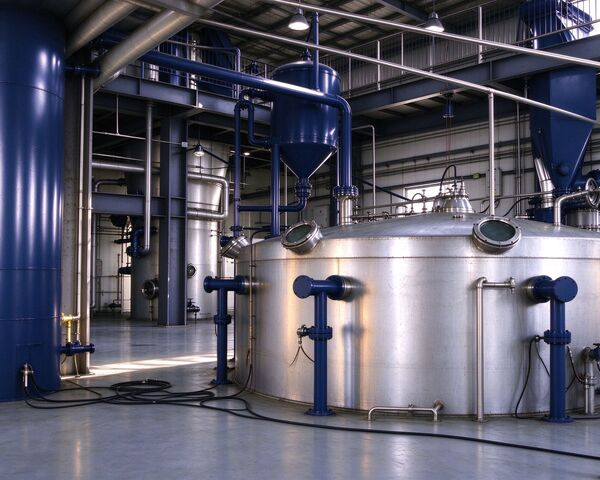
In the edible oil processing industry, the choice of extraction method directly determines oil yield, production cost, quality positioning, and market price. Yet most consumers—and even many industry professionals—are unclear about the fundamental differences between “expeller pressing” and “solvent extraction.”
A common situation is that the production method of an oil is not always clearly labeled. Sometimes the information appears in the product name, sometimes as an abbreviation, and sometimes only in the detailed specifications. Some suppliers have limited quality control capabilities, and the relevant documents do not mention the oil’s production process at all.
This article uses canola oil as a primary example to systematically compare expeller pressing and solvent extraction in terms of oil yield, energy efficiency, cost structure, and quality differences. It also provides an ROI model based on real data and a process selection decision tree to help you make the right choice based on your product positioning.
I. Process Principles: Two Completely Different Extraction Logics
Solvent extraction begins by grinding oilseeds into a paste, then washing or rinsing the ground seeds with a food-grade solvent (usually n-hexane) to dissolve the oil. To separate the solvent from the oil, the mixture is heated in a closed vessel to rapidly vaporize the solvent, then heated to about 100°C for distillation. With proper processing, the final oil contains virtually no detectable solvent residue. The extracted oil then undergoes refining—the industry’s “RBD” process (refining, bleaching, and deodorizing)—and some oils are also degummed and/or dewaxed.
Physical pressing uses a press to mechanically squeeze oil from seeds without any chemical solvent. The press is typically a screw-type device that uses friction and continuous pressure to force oilseeds through a cage-like cylindrical chamber. The screw pushes forward, squeezing oil directly from the compressed seeds. Although no external heat is applied, the pressure and friction generated during pressing raise the equipment temperature, typically between 60°C and 99°C. Therefore, strictly speaking, this process is not “cold pressing.” After pressing, the remaining solid material forms a hard cake, which is sold as meal for animal feed.
Cold pressing is a special form of physical pressing. According to EU regulations (Commission Implementing Regulation (EU) No 29/2012), olive oil labeled “virgin cold pressed” must be obtained by the first mechanical pressing of olive paste using a hydraulic press at below 27°C. This temperature limit was lowered from the earlier 30°C to 27°C and applies to the entire processing chain. Cold pressing is typically achieved using hydraulic presses or low-speed screw presses.
In one sentence: Solvent extraction relies on “chemical dissolution + distillation,” physical pressing relies on “mechanical squeezing,” and cold pressing adds a strict temperature constraint on top of physical pressing.
II. Oil Yield Comparison: Data Speaks
Oil yield is the most intuitive difference between the two methods. The following data comes from multiple independent studies and industry reports:
| Oilseed Variety | Expeller Pressing Recovery | Solvent Extraction Recovery | Data Source |
|---|---|---|---|
| Pequi fruit | 72.1–78.0% | 86.4% | ScienceDirect (2019) |
| Almond oil | 40.9% | 43.5% | PMC supplementary data |
| Black sesame oil | 39.6% | 40.8% | PMC supplementary data |
| Peanut oil | 34.8% | 40.5% | PMC supplementary data |
| Sunflower seed oil | 37.6% | 37.0% | PMC supplementary data |
| Walnut oil | 48.3% | 60.1% | PMC supplementary data |
| Tea seed oil | 22.8% | 40.4% | PMC supplementary data |
In the Pequi fruit comparison, expeller pressing recovered 72.1% and 78.0% of the oil from whole and broken kernels, respectively, while n-hexane extraction achieved 86.4%. Large-scale oil processing plants using solvent extraction can achieve efficiencies of up to 98%, whereas mechanical pressing methods typically yield 60–85%.
This means that after expeller pressing, a significant amount of oil remains in the cake. For a plant processing 100 tons of rapeseed per day, assuming 40% oil content, the residual oil in the cake from expeller pressing could be 5–10 percentage points higher than from solvent extraction, resulting in annual oil losses of hundreds of tons. This is one reason why solvent-extracted oils are among the lowest-priced on the market.
III. Energy Efficiency: Another Dimension Revealed by FER Data
Oil yield is not the only criterion for evaluating a process. The Fossil Energy Ratio (FER) is a core indicator of energy efficiency in oil extraction, representing the amount of oil energy produced per unit of fossil energy consumed.
In the Pequi fruit study, the FER for n-hexane extraction was 4.9, while for expeller pressing it was 3.4 and 3.1 (for broken and whole kernels, respectively), indicating that solvent extraction has a clear energy efficiency advantage over expeller pressing.
In terms of specific energy consumption, the energy demand for expeller pressing varies by raw material, preheating level, and press scale, with literature reporting a range of 0.1 to 1 kWh per liter of oil. Although solvent extraction systems require additional steam for solvent recovery and distillation, their electricity consumption per ton of raw material is about 29 kWh (continuous extraction system), lower than the 45–55 kWh for pressing. However, solvent extraction has significantly higher steam consumption (about 280–700 kg per ton of raw material), meaning that in regions with high steam costs, the energy economics of solvent extraction may be weakened.
Key insight: FER data shows solvent extraction has an advantage in energy efficiency, but this advantage is highly dependent on local energy price structures—in regions where electricity is cheap and steam is expensive, pressing may be more economically competitive.
IV. ROI Quantitative Model: The Math for a 100 TPD Rapeseed Plant
To make investment decisions more concrete, let’s take a medium-sized oil mill processing 100 tons of rapeseed per day and run a complete calculation.
Base Assumptions
- 300 operating days per year
- Rapeseed oil content: 40%
- Rapeseed purchase price: approximately $500/ton
- Crude oil selling price: pressed oil $1,200/ton, solvent-extracted refined oil $800/ton
- Equipment investment reference: According to UNIDO data, a 30 TPD mechanical pressing unit costs about $167,000; a 50–100 TPD solvent extraction plant costs about $200,000–$500,000
Annual Revenue Calculation
| Metric | Expeller Pressing Line | Solvent Extraction Line |
|---|---|---|
| Daily processing capacity | 100 tons | 100 tons |
| Oil yield | 40% (estimated at 90% pressing recovery) | 39.2% (estimated at 98% extraction recovery) |
| Daily crude oil output | 36 tons | 39.2 tons |
| Annual crude oil output | 10,800 tons | 11,760 tons |
| Crude oil selling price | $1,200/ton | $800/ton |
| Annual crude oil revenue | $12.96 million | $9.408 million |
| Annual raw material cost (300 days × 100 tons × $500) | $15 million | $15 million |
| Annual gross profit (before other costs) | -$2.04 million | -$5.592 million |
ROI Analysis
The above calculation reveals a counterintuitive conclusion: under this set of pricing assumptions, the expeller pressing line actually has a higher gross profit. The reason is that the premium for pressed oil ($1,200/ton vs. $800/ton, a 50% premium) is sufficient to cover the yield gap (36 tons vs. 39.2 tons, an 8.9% difference).
However, this conclusion is highly dependent on whether the pressed oil can be sold at a premium. If pressed oil can only be sold at the same price as extracted oil ($800/ton), the annual crude oil revenue for the expeller pressing line drops to $8.64 million, and gross profit falls to -$6.36 million, significantly lower than the solvent extraction line.
Key conclusion: The economic viability of pressing depends on whether you can convert the quality premium of pressed oil into an actual selling price. If the target market is premium health oils or exports to Europe and America, a premium strategy is feasible; if you can only enter the mass market, the scale efficiency of solvent extraction is more advantageous.
V. Cost Analysis: Upfront Investment vs. Long-Term Operation
Solvent extraction requires higher upfront equipment investment, including a complete solvent recovery system, boiler, explosion-proof electrical equipment, and fire safety facilities. A 50–100 TPD solvent extraction plant costs about $200,000–$500,000, and with refining equipment, total investment may exceed $800,000.
Physical pressing has lower upfront investment and relatively simple equipment. According to UNIDO reference data, a 30 TPD mechanical pressing unit costs about $167,000. The FOB price of a direct solvent extraction unit was $952,000 (at the then-current exchange rate), and a batch extraction unit was $571,000. These figures come from an earlier UNIDO report; actual current prices need to be adjusted according to market conditions.
From an energy consumption perspective, pressing consumes about 45–55 kWh of electricity per ton of raw material, while continuous solvent extraction consumes about 29 kWh. However, pressing requires only about 30 kg of steam per ton of raw material, far lower than the 280–700 kg for solvent extraction. This means that in regions with high steam costs, the overall energy cost of pressing may be more advantageous.
VI. Quality and Flavor: Completely Different Product Positioning
Solvent-extracted oil after RBD refining has a light color and neutral flavor. Degumming, bleaching, and deodorizing remove gums, pigments, and odorous substances, giving the product stable quality and a longer shelf life. This makes it very suitable for mass-market cooking oils and food processing ingredients. Notably, the refining process reduces the tocopherol content in rapeseed oil by more than 40%.
Expeller-pressed oil retains more natural flavor and color. Because it is unrefined or only simply filtered, natural trace components (such as tocopherols and polyphenols) are better preserved. For flavor-oriented oils such as peanut oil and sesame oil, the primary reason consumers choose them is their “fragrance”—this is the core competitiveness of the pressing process.
Cold-pressed oil goes a step further in quality preservation. According to ICAR research, cold-pressed oils generally surpass refined oils in nutritional value, containing more natural beneficial components such as tocopherols, sterols, carotenoids, and phospholipids. Because the entire process is kept below 27°C, heat-sensitive nutrients are preserved most completely. However, cold pressing has the lowest oil yield and is therefore the least efficient and most costly production method.
VII. Solvent Residue: The Core of the Safety Debate
The primary solvent used in solvent extraction is n-hexane. Regarding its safety, major global regulatory bodies have set strict residue limits:
- European Union: The hexane residue limit in edible oils is 1 mg/kg (i.e., 1 ppm). A 2017 test of 40 edible oils in the Iranian market showed that although hexane residues were detected in 90% of samples, concentrations were far below the EU limit, with the highest value being 0.04 mg/kg in rapeseed oil.
- India: After refining, hexane residues in solvent-extracted oil must not exceed 5.0 ppm, while expeller-pressed oil is required to be “hexane-free.” Notably, Indian food safety standards explicitly distinguish the compliance requirements for the two processes—pressed oil must be “hexane-free,” while solvent-extracted oil only needs to meet the 5.0 ppm limit.
- Codex Alimentarius: The FAO/WHO standard defines cold-pressed oil as “edible vegetable oil obtained by mechanical pressing without the application of heat during production.”
Core difference: The EU’s 1 mg/kg limit is five times stricter than India’s 5 mg/kg. This means that solvent-extracted oil exported to the EU requires stricter refining process control. For producers targeting the European market, this difference may affect the parameter selection and cost structure of the refining process.
VIII. Process Selection Decision Tree: Three Steps to Find Your Best Fit
For mill decision-makers, the following framework can help quickly determine the right choice:
Step 1: Is your target market premium or mass?
- Premium (organic food, health oils, exports to Europe and America) → Expeller pressing recommended. The flavor retention and natural attributes of pressed oil are the core support for a premium.
- Mass (cooking oil, food processing ingredients) → Proceed to Step 2.
Step 2: Is your daily processing capacity over 50 tons?
- Yes (≥50 tons/day) → Solvent extraction recommended. At scale, the profit increment from higher oil yield far exceeds the increase in equipment investment.
- No (<50 tons/day) → Proceed to Step 3.
Step 3: Is your oilseed oil content below 20% (e.g., soybean)?
- Yes (low-oil-content oilseeds) → Solvent extraction recommended. Low-oil-content oilseeds are difficult to process profitably with pressing alone.
- No (high-oil-content oilseeds) → Pre-pressing + extraction combination recommended—first use a screw oil press to extract about 60–70% of the oil, then send the cake to a solvent extraction plant to recover residual oil.
Combination strategy: Many successful companies adopt a “pre-pressing + extraction” combination process, balancing the high quality of pressed oil with the high recovery of extraction. The two lines share pretreatment equipment (cleaning screens, destoners, magnetic separators, crushers, softening conditioners, flaking mills), but are equipped with dedicated oil presses and extraction equipment.
IX. Equipment Configuration: Two Different Production Lines
Expeller Pressing Equipment Configuration: Cleaning screen → Destoner → Magnetic separator → Crusher → Softening conditioner → Flaking mill → Steam cooker → Screw oil press → Plate-and-frame filter press or vacuum oil filter → Automatic filling machine. Pressed crude oil can be refined or not depending on product positioning.
Solvent Extraction Equipment Configuration: Cleaning screen → Destoner → Magnetic separator → Crusher → Flaking mill → Extractor (Rotocel extractor / Loop-type extractor / Drag chain extractor) → DTDC desolventizer-toaster → Evaporator → Stripping column → Solvent recovery system → Refining equipment (Degumming tank, Alkali refining tank, Bleaching tower, Deodorization tower) → Leaf filter → Automatic filling machine.
Final Thoughts
Expeller pressing and solvent extraction are not a matter of “good” versus “bad,” but rather a strategic choice between two different product positionings. FER data reveals the quantitative advantage of solvent extraction in energy efficiency, but this advantage is highly dependent on local energy price structures. The ROI model shows that the economic viability of pressed oil depends on whether you can convert the quality premium into an actual selling price. Regional differences in solvent residue regulations (EU 1 mg/kg vs. India 5 ppm) remind export-oriented enterprises to adjust refining process parameters according to target markets.
Whichever process you choose, the right oil pressing equipment configuration is the cornerstone of quality and profitability. Huatai Group has over 38 years of experience in oil equipment manufacturing and can provide a complete range of solutions from screw oil presses, hydraulic oil presses to solvent extraction equipment and refining equipment, and customize the process route according to your oilseed characteristics and product positioning. Contact Huatai Group for customized equipment selection advice and process solutions.
References
The data and case studies in this article are compiled from the following sources:
- ScienceDirect (2019): Comparative study of expeller pressing and n-hexane extraction of Pequi fruit oil (FER data, oil yield data)
- UNIDO: Reference data on oil processing equipment investment costs (comparison of steam, electricity, and solvent consumption between pressing and extraction units)
- EU Regulation: Commission Implementing Regulation (EU) No 29/2012 (cold pressing temperature definition 27°C)
- Indian Food Safety Standards: Hexane residue limit for solvent-extracted oil (5.0 ppm) and “hexane-free” requirement for pressed oil
- ICAR (Indian Council of Agricultural Research): Nutritional comparison data between cold-pressed and refined oils
- Tandfonline (2026): Review of hexane residue detection in global edible oils and cold-pressed oil market data
To verify specific data sources, please contact the Huatai Group technical team for relevant reference materials.