

Inside the Pressure Kettle: How Sterilizer Design and Software Quietly Decide Your Palm Oil Yield
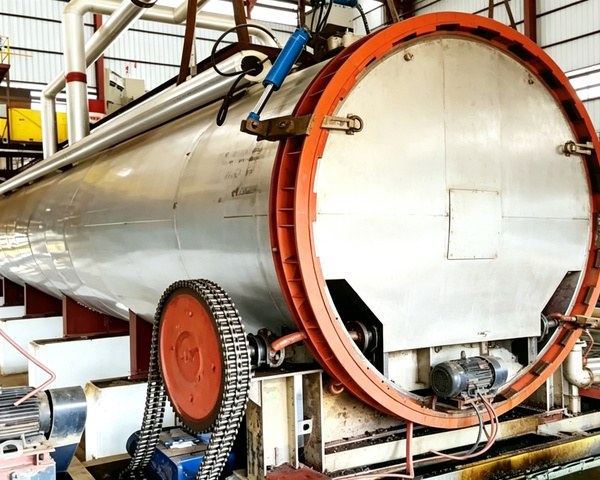
In the entire processing chain of a palm oil mill, the sterilizer is often the most unassuming piece of equipment. It lacks the roar of the screw press and the complex structure of the refining tower. Yet it is precisely this “pressure kettle” that silently determines your oil yield, free fatty acid content, and steam bill.
From the moment fresh fruit bunches are harvested to the time they arrive at the mill, lipase enzymes in the oil continue to act. These enzymes hydrolyze triglycerides into free fatty acids, directly degrading crude oil quality. Research shows that heating at 40°C for 60 minutes leaves lipase largely active; raising the temperature to 60°C and holding for 30 minutes reduces free fatty acid content by about 61%; while at 80°C, only 30 minutes is needed to bring free fatty acids down to approximately 0.27%, completely inactivating the enzyme.
The core mission of the sterilizer is to completely inactivate lipase in the shortest possible time with the most uniform heat. The quality of this task does not depend on how much steam pressure you apply, but on how heat penetrates the fruit bunches, how evenly it distributes, and how precisely it is controlled.
I. Enzyme Inactivation: The Sterilizer’s “Invisible Battlefield”
The inactivation temperature threshold for lipase lies between 60-80°C. Below this range, extending heating time has limited effect. The sterilizer, however, operates at temperatures typically between 120-140°C, far above this threshold. So where does the problem lie?
The problem lies in the uniformity of heat penetration. Fruit bunches in the sterilizer are stacked, and the air gaps between them act as a poor conductor of heat, hindering steam penetration. If steam cannot reach every fruit uniformly, “cold spots” emerge—some fruits fail to reach inactivation temperature, lipase continues to act, and free fatty acids quietly rise.
This is why, despite identical settings of 120°C and 60 minutes, different sterilizers can produce vastly different free fatty acid control results. And increasingly, the key to solving this problem lies in software.
II. Fuzzy Logic Control: Teaching the Sterilizer to “Think”
Traditional sterilizer operation relies heavily on manual experience—operators judge when to raise pressure, when to vent, and when to end the cycle based on observation. The problem with this approach is that human judgment involves delays and deviations. A study published on ScienceDirect notes that many sterilization processes remain manually operated, with insufficient observational precision and significant time delays between steps, leading to frequent over-cooking or under-cooking.
More critically, conventional PLC control systems typically only control valve open/close timing and cannot dynamically adjust based on actual pressure deviations. This means a sterilizer set to 4 bar may deviate from its target pressure if the steam supply fluctuates, resulting in uneven heat penetration.
The introduction of fuzzy logic controllers has changed this. Fuzzy logic does not require a precise mathematical model; instead, it uses a set of “if-then” rules to map real-time pressure readings, fruit loading, and other input parameters to specific control actions. A study conducted in Indonesia on crude palm oil mills developed a fuzzy controller called the PLC Sawit Fuzzy Controller (PSFC), specifically designed to optimize the sterilization stage.
The core difference between a fuzzy controller and a conventional PLC lies in dynamic response capability. A conventional PLC opens and closes valves according to a preset schedule, while a fuzzy controller can automatically adjust steam injection volume and duration for each cycle stage based on real-time pressure deviations. When pressure is low, the controller extends injection time; when pressure approaches the target, it closes the inlet valve early to avoid over-cooking.
For palm oil mills, the real value of fuzzy logic control is not “automation” itself, but batch-to-batch consistency. When every sterilization cycle strictly follows the same optimized pressure-time curve, each batch of fruit receives identical treatment—meaning stable free fatty acid content, predictable oil yield, and accountable steam consumption.
III. Steam Consumption: The Economics of Vertical vs. Horizontal
The sterilizer is the largest steam consumer in a palm oil mill. Industry data shows that sterilization accounts for 30%-60% of the mill’s total process steam. More alarmingly, a significant portion of this steam is not effectively utilized—studies estimate that 50%-70% of the steam input to sterilizers is lost as exhaust or condensate.
Steam consumption varies significantly among sterilizer types:
| Sterilizer Type | Steam Consumption (kg/ton FFB) | Operating Pressure/Temperature |
|---|---|---|
| Horizontal (low pressure) | ~110-130 | ~1.5 bar |
| Horizontal (conventional) | ~200-300 | 3-4 bar |
| Vertical (triple-peak cycle) | ~305-355 | ~4 bar / 143°C |
| Continuous | ~300-360 | 98°C, ~60 min |
Data shows that horizontal sterilizers have a clear advantage in steam efficiency. A comparative analysis indicates that horizontal systems can save approximately 35% of steam compared to vertical systems.
Let’s put this gap into a concrete cost scenario. Assume a medium-sized palm oil mill processing 500 tons of FFB per day, operating 330 days per year:
- Horizontal sterilizer (taking 250 kg/ton FFB as midpoint): Annual steam consumption = 500 × 250 × 330 = 41,250 tons of steam
- Vertical sterilizer (taking 330 kg/ton FFB as midpoint): Annual steam consumption = 500 × 330 × 330 = 54,450 tons of steam
- Annual steam difference: 13,200 tons
At an industrial steam price of approximately $25-35 per ton, the annual steam cost difference for this mill ranges from $330,000 to $460,000. This is only the direct steam cost, not yet accounting for the additional boiler fuel, carbon emissions, and boiler maintenance costs associated with steam waste.
Choosing between vertical and horizontal is not simply a question of “which is better.” It is a comprehensive trade-off involving site conditions, capacity scale, steam supply capability, and maintenance team expertise. Vertical sterilizers occupy less floor space and rely on gravity-assisted discharge, making material flow simpler—suitable for space-constrained, small-to-medium mills. Horizontal sterilizers, with their steam efficiency advantage, offer more significant economic benefits for mills with larger daily throughput.
IV. The Overlooked Hidden Cost: Water Consumption
When discussing sterilizer efficiency, most attention focuses on steam consumption. But water consumption—an indicator that equally affects operating costs and environmental compliance—is often overlooked.
In traditional industrial sterilization systems, the boiler and sterilizer are separate units connected by piping, consuming large amounts of water. A study published in the Journal of Food Engineering provides specific data: the specific water consumption (water consumed per kilogram of FFB) of a conventional sterilizer averages 0.256 kg-water/kg-FFB.
The study proposed a direct steaming solution that integrates the boiler and sterilizer into a single unit, eliminating connecting piping and continuous heating requirements. Experimental results showed that under 2.5 bar, 60 minutes operating conditions, specific water consumption dropped to 0.0587 kg-water/kg-FFB—approximately 4.34 times lower than conventional methods.
For a mill processing 500 tons of FFB per day, conventional sterilization consumes about 128 tons of water daily, while direct steaming requires only about 29 tons. The annual water consumption difference exceeds 30,000 tons. In a context of increasing water scarcity and rising wastewater treatment costs, this difference is significant.
More importantly, direct steaming not only reduces fresh water consumption but also reduces the volume of sterilization condensate produced. Sterilization condensate (commonly called “white water” in the industry) contains 0.86% oil; direct discharge means oil loss and wastewater treatment burden. Reducing condensate volume directly lowers the load on downstream wastewater treatment and oil recovery systems.
V. Huatai Sterilizer Technology Solutions
Henan Huatai Intelligent Equipment Group has independently developed core technologies in palm fruit sterilization equipment. Its vertical palm fruit sterilizer has obtained a national patent (ZL 2016 2 0745156.7), featuring a compact vertical structure, uniform discharge, and resistance to clogging—suitable for space-constrained small-to-medium palm oil mills.
For larger projects requiring higher capacity and better steam efficiency, Huatai offers horizontal sterilizers equipped with automatic steam control systems to ensure uniform heat distribution and efficient energy utilization. Huatai’s palm fruit press and palm oil refining equipment integrate with the sterilization stage to form a complete palm oil processing line, covering everything from fresh fruit bunch reception to crude oil clarification.
From equipment selection and process design to installation, commissioning, and personnel training, Huatai provides complete turnkey engineering services, serving customers in over 130 countries and regions worldwide.
Final Thoughts
The sterilizer will not appear on the cover of a palm oil mill’s brochure, but it determines whether your free fatty acids stay under control, whether your oil yield can be maximized, and whether your steam bill can be managed. Choosing vertical or horizontal, equipping fuzzy logic control or not, setting the cycle curve—these seemingly technical decisions ultimately show up on the profit and loss statement.
If you are planning a palm oil processing project, please contact Huatai Group for a customized sterilization solution and equipment configuration recommendations tailored to your capacity scale, site conditions, and steam supply capability.