

From 1 to 1,000 Tons: The Complete Guide to Refining Capacity and Process Selection
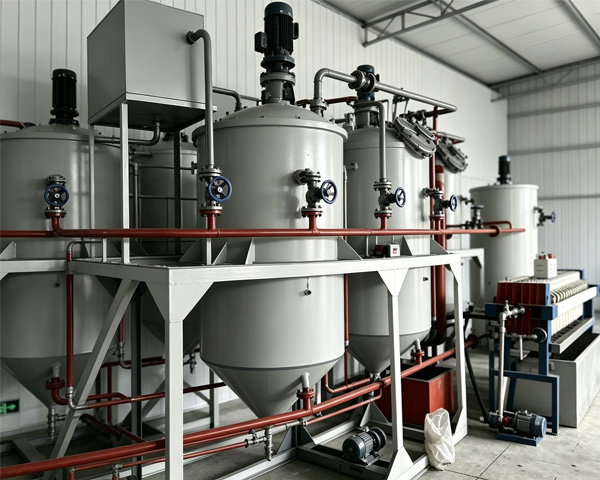
In the edible oil processing industry, refining is the critical step that determines the quality, stability, and market value of the final product. Yet, when faced with the enormous capacity range from 1 to 1,000 tons per day, investors inevitably confront a core question: Which refining process is right for my oil mill?
There is no single answer that fits all situations. The choice depends on your capacity targets, oil types, investment budget, and market positioning. This article provides a systematic comparison of the three mainstream refining processes – batch refining, semi-continuous refining, and full-continuous refining – across capacity range, technical features, and application scenarios, helping you make an informed decision.
I. Why Does Refining Process Selection Matter So Much?
Crude oil contains impurities such as phospholipids, free fatty acids, pigments, and odorous compounds that must be removed through refining to produce edible-grade oil. The choice of refining process directly impacts:
- Product quality: Color, flavor, and stability of the finished oil
- Production costs: Energy consumption, refining losses, and labor costs
- Operational flexibility: Ability to switch between different oil types quickly
- Return on investment: Initial capital outlay versus long-term operating efficiency
Choosing the wrong refining process can lead to idle equipment, runaway costs, or inconsistent product quality. That is why process selection is the first and most critical decision when planning a refining project.
II. Batch Refining: The Flexible Choice for Small Batches and Multiple Oil Types
Batch refining is the most traditional approach, in which all refining steps – degumming, deacidification, bleaching, and deodorization – are carried out sequentially in a single vessel. Once a batch is completed, the next batch begins.
Capacity Range and Suitable Applications
Capacity: 1–20 tons per day
Batch refining is best suited for:
- Small-scale oil mills: Limited initial investment and modest capacity requirements
- Specialty oil production: High-value oils such as tea seed oil, walnut oil, and flaxseed oil
- Frequent oil type switching: Rapid changeovers between rapeseed oil, peanut oil, coconut oil, palm oil, and animal fats
- Small-batch export orders: Small quantities with high quality standards
Key Advantages
Low entry barrier: Simple equipment design with no complex towers or control systems, and minimal demands on plant infrastructure.
Excellent switching flexibility: Quick and straightforward cleaning between oil types, making it ideal for mills producing multiple oils.
Adaptability to raw material variation: When crude oil quality fluctuates, operators can manually adjust temperature, alkali dosage, and reaction time based on the actual condition of each batch.
Main Limitations
Higher refining losses: Typical refining loss of 5–8%, with some oil retained in residues and adhering to vessel walls.
Higher energy consumption: Each batch requires repeated heating and cooling cycles, with no heat recovery capability, resulting in high steam consumption.
Reliance on operator skill: Product quality depends heavily on operator experience, requiring skilled workers for continuous monitoring and adjustment.
Risk for heat-sensitive oils: Prolonged high-temperature exposure during deodorization can cause oxidation and discoloration in heat-sensitive oils such as flaxseed oil and walnut oil.
III. Full-Continuous Refining: The High-Efficiency Path to Scale and Standardization
Full-continuous refining uses sealed piping and tower systems, with material flowing continuously through each processing unit – degumming, deacidification, bleaching, and deodorization – all operating simultaneously without interruption.
Capacity Range and Suitable Applications
Minimum capacity: ≥30 tons per day, up to several hundred tons or even over 1,000 tons per day
Full-continuous refining is best suited for:
- Large-scale oil processing plants: Pursuing economies of scale
- Commodity oil production: Single oil types such as soybean oil, palm oil, and rapeseed oil
- Stable raw material supply: Consistent crude oil quality and predictable availability
- Mass market: Large volumes with consistent product quality
Key Advantages
Extremely low refining losses: Just 1–3%, with sealed continuous centrifugal separation minimizing oil loss.
Significantly lower energy consumption: Multi-stage waste heat recovery preheats incoming crude oil using heat from hot finished oil, reducing energy consumption per ton of oil by 15–25% compared to batch refining.
Highly consistent quality: PLC-based closed-loop control precisely manages flow rates, temperatures, alkali dosage, and bleaching clay addition, ensuring excellent batch-to-batch consistency.
High automation: Substantially fewer operators required for the same throughput, with staff primarily focused on instrumentation monitoring and equipment inspection.
Low oxidation risk: Oil forms a thin film in the deodorization tower, with short high-temperature residence time, effectively controlling peroxide values.
Main Limitations
High initial investment: Requires complex towers, centrifuges, heat exchange systems, tall buildings, and robust steam/vacuum infrastructure.
Not suitable for frequent oil changes: Switching oil types requires extensive cleaning of piping and towers, incurring high transition costs.
Sensitive to raw material quality: Significant fluctuations in crude oil acid value or gum content require upstream pretreatment; otherwise, refining performance suffers.
Cannot operate intermittently: Frequent starts and stops are inefficient and can cause substantial losses.
IV. Semi-Continuous Refining: The Balance Between Flexibility and Efficiency
Semi-continuous refining offers a middle ground between batch and full-continuous processes. The typical configuration uses batch processing for the front-end steps (degumming, deacidification, bleaching) and a continuous deodorization tower for the final step.
Capacity Range and Suitable Applications
Capacity: 20–50 tons per day
Semi-continuous refining is best suited for:
- Medium-sized oil mills with capacity needs that fall between small and large scales
- Operations requiring both throughput and product flexibility
- Transitional solutions for planned future capacity expansion
Key Characteristics
- Investment and operating costs fall between batch and full-continuous
- Retains some flexibility for oil type switching
- Continuous deodorization improves thermal efficiency and product quality stability
- Provides a foundation for future upgrade to full-continuous refining
V. How to Choose? – A Three-Step Decision Framework
Step 1: Evaluate Your Capacity
| Daily Capacity | Recommended Process |
|---|---|
| Under 20 TPD | Batch Refining |
| 20–50 TPD | Semi-Continuous Refining |
| Over 30 TPD | Full-Continuous Refining |
Step 2: Consider Your Oil Types
- Processing 1–2 fixed commodity oils (soybean oil, palm oil, rapeseed oil) → Full-continuous
- Frequent switching between multiple oils (rapeseed, peanut, coconut, animal fats) → Batch
- Processing heat-sensitive specialty oils (flaxseed, walnut, tea seed) → Batch or continuous with thin-film deodorization
Step 3: Assess Budget and Long-Term Strategy
- Limited budget, small-scale start → Batch
- Medium scale with flexibility needs → Semi-continuous
- Sufficient capital, pursuing economies of scale → Full-continuous
VI. Huatai Refining Equipment Solutions
Henan Huatai Intelligent Equipment Group has over 38 years of experience in grain and oil machinery manufacturing, offering a full range of refining equipment solutions covering batch, semi-continuous, and full-continuous processes:
Batch Refining Equipment: 1–20 TPD capacity, low investment, flexible operation – ideal for small mills and specialty oil production.
Semi-Continuous Refining Equipment: 20–50 TPD capacity – balancing flexibility and production efficiency.
Full-Continuous Refining Equipment: From 30 TPD upward – PLC automation, multi-stage heat recovery, and refining losses as low as 1–3%.
From equipment design and manufacturing to installation, commissioning, and personnel training, Huatai provides complete turnkey engineering services to help customers worldwide achieve efficient, stable, and sustainable edible oil refining operations.
VII. Looking Ahead
From 1 ton to 1,000 tons, there is no single “best” refining process – only the one that best fits your specific needs.
- Batch refining: The ideal choice for small batches, multiple oil types, and specialty oils
- Semi-continuous refining: The balance point between flexibility and efficiency
- Full-continuous refining: The high-efficiency path to scale and standardization
Choosing the right refining process means choosing a development path that aligns with your capacity, oil types, budget, and strategic goals. If you are planning a refining project, please contact Huatai Group for professional process selection advice and customized solutions.